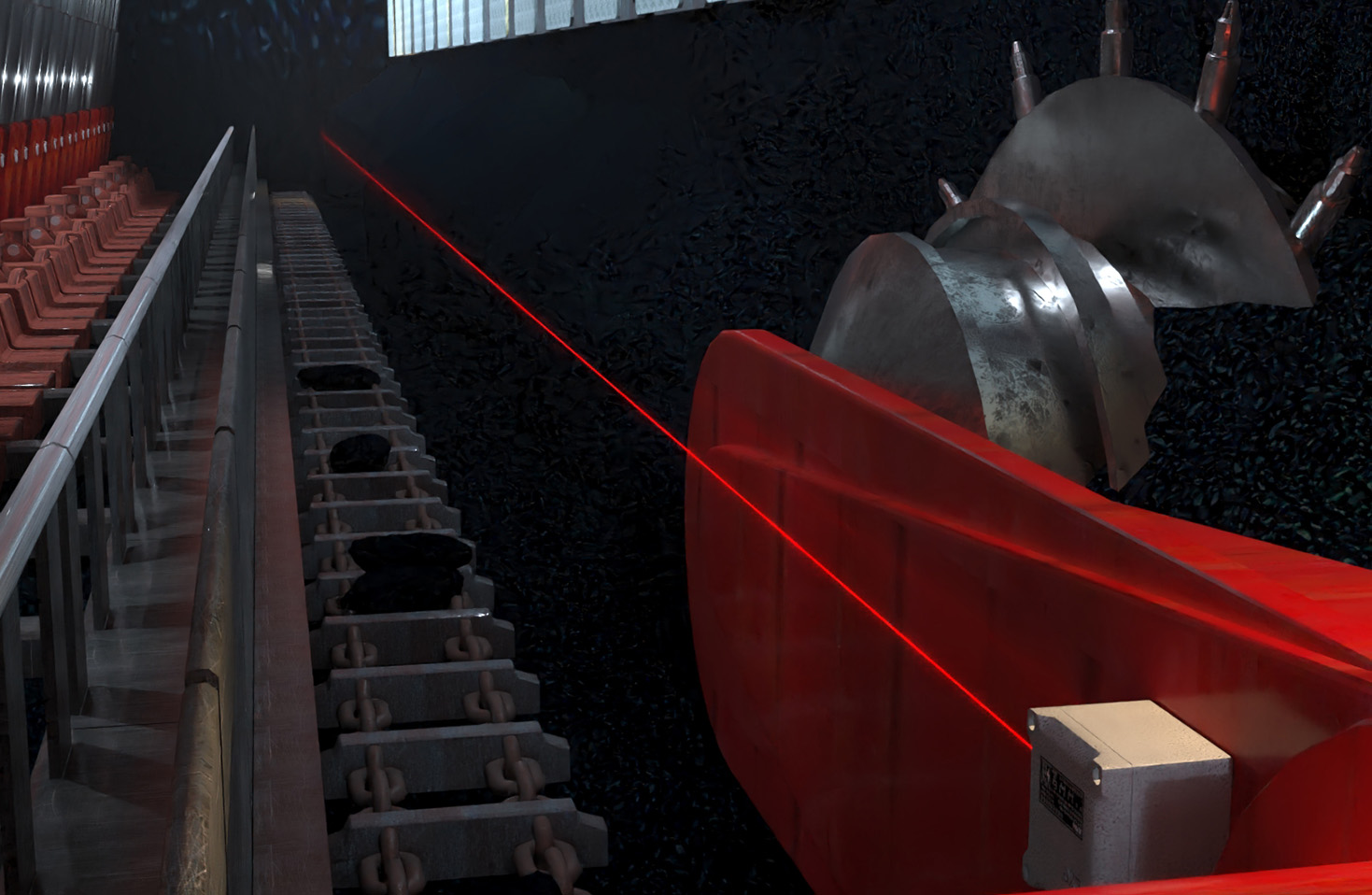
In the realm of precision industrial measurement, point displacement laser sensors have emerged as a cornerstone technology, offering non-contact, high-accuracy solutions for a vast array of applications. Unlike area-scanning or profile sensors, these devices focus on measuring the distance, displacement, or vibration of a single, precisely defined point on a target surface. Their operation is fundamentally based on the principle of optical triangulation or, in more advanced models, time-of-flight or confocal chromatic sensing.
The most common type, the triangulation sensor, projects a focused laser spot onto the target surface. The reflected light is imaged onto a position-sensitive detector (PSD) or a CMOS/CCD array. Any change in the target's distance causes the position of the reflected spot on the detector to shift. This displacement is calculated with high precision by the sensor's internal processor, converting optical information into a precise digital or analog distance value. Key performance parameters include measuring range, standoff distance, resolution (often in the micron or sub-micron range), linearity error, and spot size. The choice of laser type (typically red or blue-violet) also influences performance, especially on challenging surfaces; blue lasers, with their shorter wavelength, often provide better performance on organic or translucent materials.
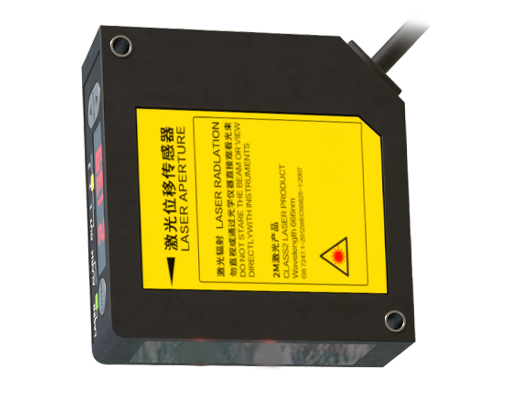
The industrial applications for point displacement laser sensors are extensive and critical. In automotive manufacturing, they measure the gap and flushness between body panels, ensuring quality and aesthetic standards. In electronics, they verify the coplanarity of Ball Grid Array (BGA) solder balls and measure component height on printed circuit boards. They are indispensable in vibration analysis for predictive maintenance, monitoring the oscillation of shafts, turbines, and other rotating machinery. Furthermore, they control thickness in rolling mills for metals, films, and glass, and inspect the dimensional accuracy of machined parts in CNC quality control.
Selecting the appropriate point displacement laser sensor requires careful consideration of several factors beyond basic specifications. The target material and surface finish are paramount. Highly reflective, mirror-like surfaces can cause saturation of the detector, while dark, absorptive surfaces may return insufficient light. Rough or textured surfaces can scatter the laser beam, affecting signal stability. Modern sensors often feature advanced algorithms and automatic exposure control to compensate for these variations. Environmental conditions such as ambient light, temperature fluctuations, dust, and coolant mist must be accounted for, often necessitating sensors with high IP ratings and robust housings. The required output interface—analog voltage/current, digital RS-422, or industrial Ethernet protocols like EtherCAT or PROFINET—must integrate seamlessly with the existing control system.
Integration and setup are crucial for optimal performance. Correct mounting, alignment, and calibration against a master reference are essential. The sensor's standoff distance and measuring range must be chosen so the target remains within the specified "dead zone" and effective range during all expected variations. For dynamic measurements, the sensor's response frequency or sampling rate must be sufficiently high to capture the speed of the target's movement.
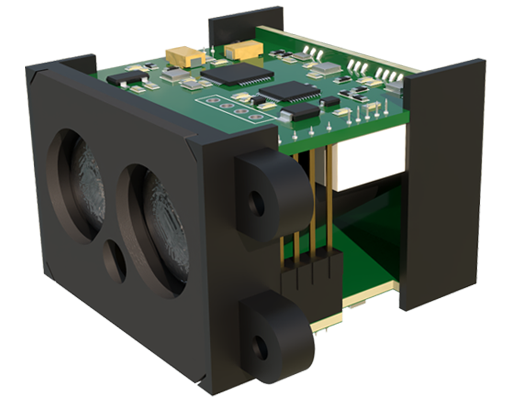
Looking ahead, the evolution of point displacement laser sensors continues. Integration with smart factory concepts is leading to sensors with embedded IO-Link functionality, providing detailed parameterization, condition monitoring, and simplified diagnostics directly to the PLC. Enhancements in laser safety (Class 1 or 2), miniaturization for installation in tight spaces, and improved resistance to harsh industrial environments are ongoing trends. Their role in enabling precise, reliable, and non-contact measurement solidifies their position as an indispensable tool for engineers driving automation, quality assurance, and efficiency in modern industry.