In the realm of industrial automation, security systems, and consumer electronics, the need for reliable, non-contact switching is paramount. Among the various technologies that fulfill this role, the proximity reed sensor switch stands out for its simplicity, durability, and effectiveness. This guide delves into the fundamental principles, applications, and advantages of this widely used component.
At its core, a proximity reed sensor switch is a magnetically operated device. It consists of two primary elements: a reed switch and an actuating magnet. The reed switch itself is a hermetically sealed glass capsule containing two ferromagnetic reeds, typically made of nickel-iron. These reeds overlap at their ends with a small gap separating them. Each reed is plated with a durable metal like rhodium or ruthenium to ensure excellent electrical conductivity and long life. The inside of the capsule is filled with an inert gas, such as nitrogen, to prevent corrosion of the contacts.
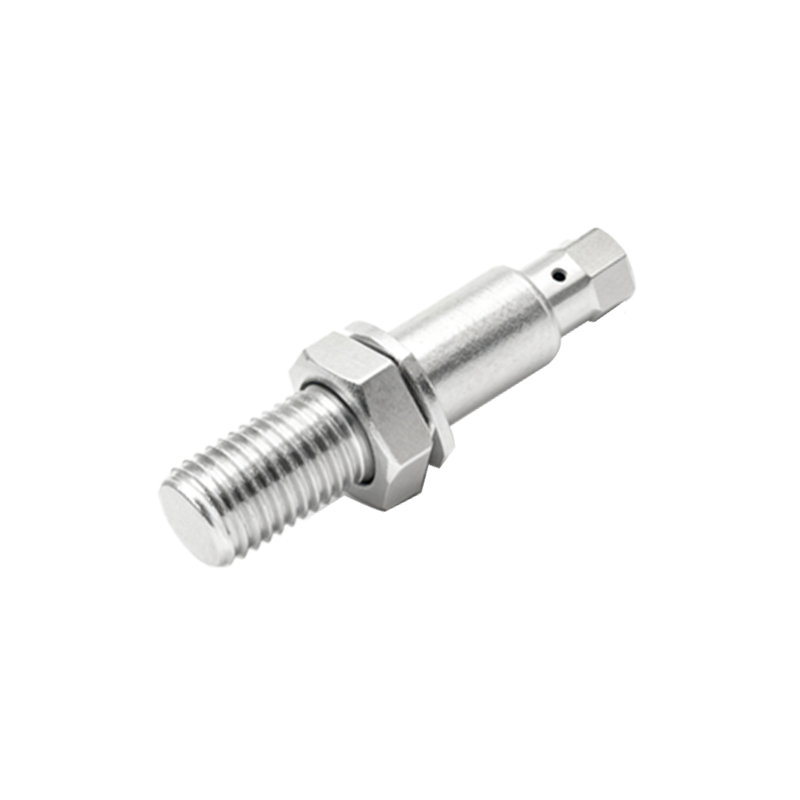
The operating principle is elegantly simple. In its normal, non-actuated state, the two reeds are separated, and the switch is open. When an external magnetic field of sufficient strength—provided by the actuating magnet—is brought near the switch, the ferromagnetic reeds become magnetized. This magnetic attraction causes the flexible reeds to bend, bringing their contacts together. This closes the electrical circuit. Once the magnetic field is removed, the inherent springiness of the reeds forces them apart, breaking the connection and opening the switch again. This action can be used to detect the presence or absence of a magnetic object, effectively sensing proximity without any physical contact.
Proximity reed sensors are categorized based on their configuration. The most common types are the "normally open" (NO) switch, as described above, and the "normally closed" (NC) variant, where the reeds are in contact until a magnetic field forces them apart. Another sophisticated type is the "bistable" or latching reed switch, which changes state with a magnetic pulse and remains in that state until an opposite polarity pulse is applied.
The applications for these sensors are vast and varied. In the automotive industry, they are used in gearbox position sensing, brake fluid level detection, and door/window open-close monitoring. Security systems employ them in door and window contact sensors, where a magnet on the moving part and a reed switch on the frame create a tamper-proof alarm circuit. In consumer appliances, they can be found in washing machine lid switches and refrigerator door alarms. Industrial automation relies on them for position sensing in cylinders, conveyor systems, and robotic arms, where their sealed design protects against dust, moisture, and corrosive environments.
Several key advantages contribute to the enduring popularity of proximity reed sensor switches. First is their exceptional reliability. With no mechanical linkages to wear out and contacts sealed in an inert atmosphere, they can perform billions of operations without failure. They are completely passive devices, requiring no external power to operate the switching mechanism itself. Their sealed construction makes them highly resistant to environmental contaminants like dirt, oil, and water, often achieving IP67 or higher ratings. They operate silently and can switch relatively fast, suitable for many medium-speed applications. Furthermore, they are cost-effective and easy to integrate into circuits.
However, understanding their limitations is crucial for proper implementation. The sensing distance is relatively short, typically a few millimeters to a couple of centimeters, depending on magnet strength. Strong external magnetic fields from motors or other equipment can cause false triggering. While the contacts can handle low-level signals and moderate loads, they are not suited for directly switching high inductive loads like large motors without protective circuitry, as arcing can degrade the contacts over time. The glass capsule, while robust, can be susceptible to physical shock or vibration if not properly mounted.
When selecting a proximity reed sensor switch, engineers must consider several parameters: the required operating distance, the type of output (NO, NC, or changeover), the electrical rating (voltage, current, and power), the switching speed, the environmental protection rating, and the physical size and mounting style. Proper installation is also vital; the sensor should be mounted securely to minimize vibration, and the alignment between the magnet and the switch must be precise to ensure consistent operation.
In conclusion, the proximity reed sensor switch remains a fundamental and highly reliable solution for non-contact position sensing. Its blend of simplicity, ruggedness, and low cost ensures its continued relevance in an increasingly digital world. By understanding its operating principles, strengths, and ideal use cases, designers and engineers can effectively leverage this classic technology to create robust and dependable sensing solutions across countless industries.