Proximity sensors are fundamental components in modern automation, robotics, and countless consumer devices. Their primary function is to detect the presence or absence of an object within a specified range without physical contact. A critical parameter defining their performance and application suitability is the sensing distance. This distance, often called the nominal sensing distance (Sn), is not a single fixed value but a range influenced by a complex interplay of factors.
The nominal sensing distance specified in a datasheet is typically defined under ideal laboratory conditions: a standard target (usually a square of mild steel), a temperature of 23°C (73°F), and a rated operating voltage. This value serves as a benchmark for comparison. However, in real-world applications, the actual effective sensing distance can vary significantly.
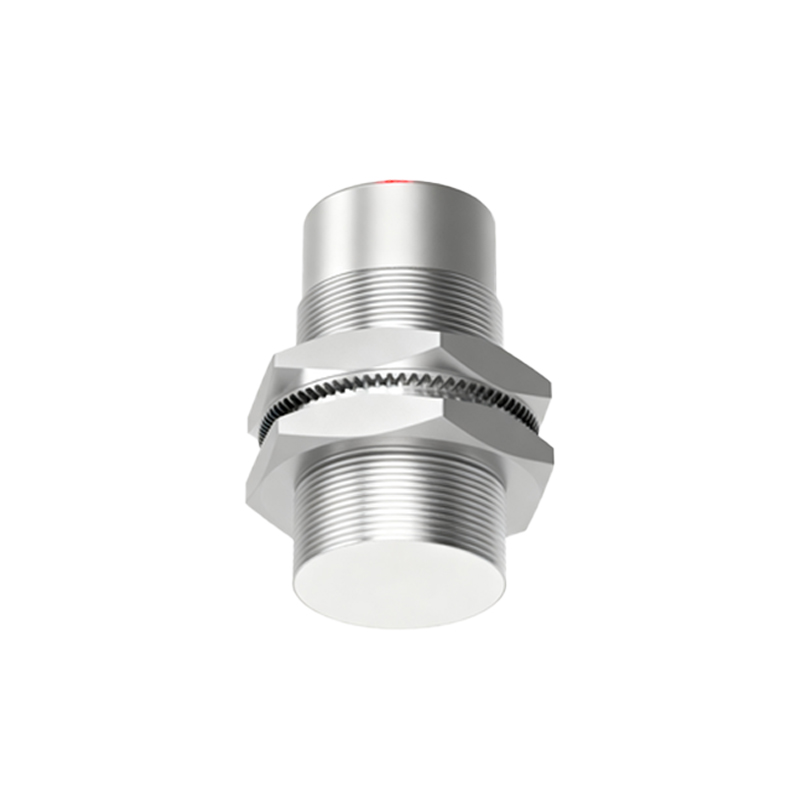
Several key factors directly impact the achievable sensing range. First and foremost is the target material. Inductive sensors, which generate an electromagnetic field, are optimized for metals. Ferrous metals like iron and steel are detected at the full nominal distance. Non-ferrous metals such as aluminum, copper, or brass cause a reduction in sensing distance, often requiring a correction factor (e.g., sensing distance may be 60% of Sn for aluminum). Capacitive sensors, which detect changes in an electrostatic field, can sense both metallic and non-metallic materials (plastics, liquids, wood), but the material's dielectric constant greatly affects the range. A material with a high dielectric constant is detected from a farther distance.
Target size and shape are equally crucial. The standard target for specification is typically a square with sides equal to the diameter of the sensor's active face or three times the nominal sensing distance, whichever is smaller. If the target is smaller than this standard, the sensing distance decreases. A thin wire, for instance, will be detectable only at a fraction of the nominal range. The target's approach axis also matters; the sensor is calibrated for a head-on approach. An oblique angle reduces the effective sensing distance.
Environmental conditions play a substantial role. Temperature fluctuations can affect the electronic components and oscillation characteristics of the sensor, leading to drift in the sensing point. High humidity or the presence of dust, oil, or other contaminants can attenuate the sensor's field, particularly for capacitive and ultrasonic types. For inductive sensors, the presence of other metals in the background or adjacent to the sensor—known as flanking or shielding—can reduce the effective range or cause false triggering.
The sensor's own design and installation method are fundamental. Shielded (flush-mountable) inductive sensors have a shorter, more focused magnetic field, allowing them to be installed flush in metal without triggering on the surrounding material. Unshielded (non-flush) sensors have a longer range but require a clearance zone free of metal around the sensing face. The size of the sensor coil generally correlates with potential sensing distance; larger sensors often achieve longer ranges. Furthermore, ensuring a stable, regulated power supply is essential, as voltage variations can affect the sensor's output characteristics and stability.
Understanding the concept of "operating distance" is vital for reliable system design. This includes the assured operating distance (Sa), which is a guaranteed sensing distance under all specified tolerances (temperature, voltage, etc.), and is typically 70-90% of Sn. Designers must use Sa, not Sn, to ensure fail-safe operation. The hysteresis (the difference between the switch-on and switch-off points) is another built-in feature that prevents output oscillation when a target is at the exact sensing threshold.
In practice, selecting the right sensor involves careful calculation. One must consider the worst-case material, smallest target size, highest temperature, and most challenging environmental conditions expected. Always derate the nominal sensing distance from the datasheet using the appropriate correction factors. For critical applications, allowing a safety margin of 15-25% beyond the calculated required distance is a standard engineering practice to accommodate unforeseen variables and ensure long-term reliability.
By comprehensively understanding the variables that influence proximity sensor sensing distance—target properties, environmental factors, and sensor specifications—engineers and technicians can make informed selections, ensure robust system integration, and troubleshoot detection issues effectively, thereby maximizing the efficiency and reliability of automated systems.