In the realm of industrial automation, laser sensors have become indispensable tools for precision measurement, object detection, and quality control. A critical aspect of their application is the concept of "laser sensor zones," which refers to the specific areas or fields where the sensor's laser beam is active and capable of detecting objects or measuring parameters. These zones are defined by the sensor's range, beam shape, and scanning patterns, and their proper configuration is essential for optimal system performance.
Laser sensors typically operate by emitting a focused beam of light, often in the infrared or visible spectrum, and analyzing the reflected signal. The primary zones include the detection zone, where objects are identified; the measurement zone, where precise dimensions or distances are calculated; and the safety zone, often integrated with safety light curtains to protect personnel. The detection zone's size and shape depend on factors such as the laser's divergence angle, lens configuration, and environmental conditions. For instance, a tightly collimated beam creates a narrow, long-range zone suitable for alignment tasks, while a diverging beam covers a wider area for presence sensing.
In practical applications, defining these zones accurately prevents false triggers and ensures reliable operation. In automotive assembly lines, laser sensors with precisely calibrated zones monitor part placement, verifying components like windshield installation within millimeter tolerances. In logistics, they facilitate parcel sorting by detecting items on conveyor belts within designated zones, triggering diverters accordingly. Advanced sensors feature adjustable zones via software, allowing engineers to tailor the field of view without physical realignment. This flexibility is crucial in dynamic environments where production layouts change frequently.
Environmental factors significantly impact zone integrity. Dust, fog, or ambient light can scatter or absorb the laser beam, causing zone shrinkage or false readings. To mitigate this, sensors often incorporate background suppression technologies, filtering out reflections beyond a set distance, or use modulated light signals to distinguish against interference. Regular maintenance, including lens cleaning and calibration checks, is vital to sustain zone accuracy.
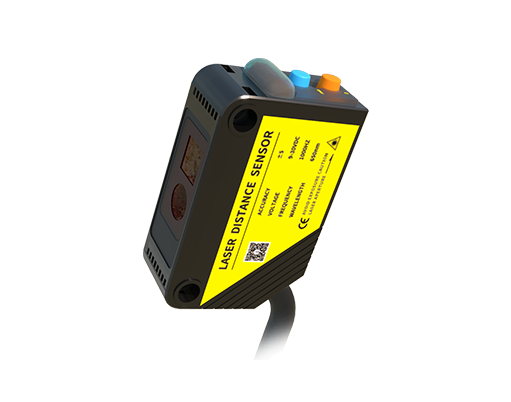
Moreover, safety regulations govern laser sensor zones, especially when high-power lasers are involved. Standards like IEC 60825-1 classify lasers by risk levels, mandating protective measures such as enclosures or warning labels for hazardous zones. In collaborative robot cells, laser zones define safe working perimeters, halting robots if humans encroach, thereby preventing accidents.
The evolution of laser sensor technology continues to expand zone capabilities. 3D laser scanners, for example, create volumetric zones for complex shape analysis, while time-of-flight sensors enable large-area monitoring with rapid response times. As Industry 4.0 advances, integrating these zones with IoT platforms allows real-time data analytics, predicting maintenance needs or optimizing processes based on zone activity patterns.
In summary, mastering laser sensor zones is key to leveraging their full potential in automation. By understanding zone parameters, environmental influences, and safety requirements, engineers can design robust systems that enhance efficiency, accuracy, and workplace safety. As innovations emerge, these zones will grow more adaptive, driving smarter, more responsive industrial operations.