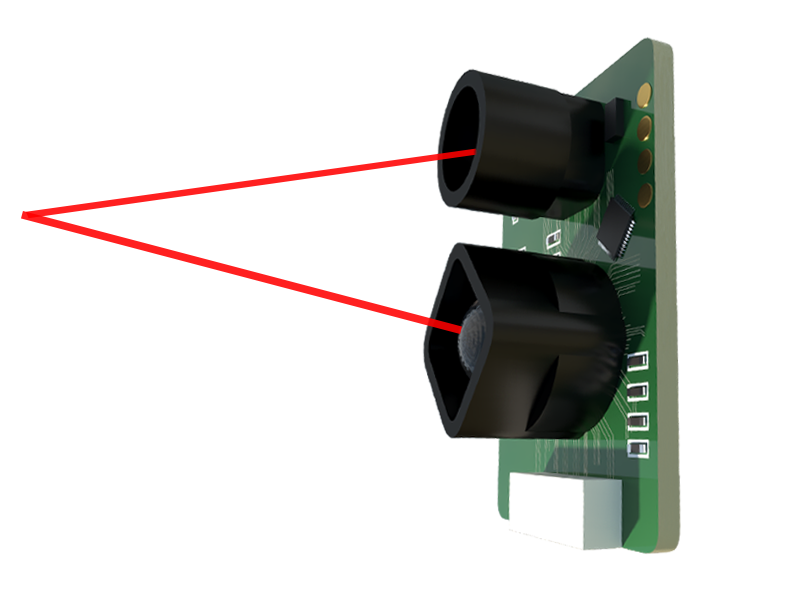
In the rapidly evolving landscape of precision instrumentation, quantum laser sensors have emerged as a transformative force, pushing the boundaries of what is measurable and detectable. These sophisticated devices leverage the fundamental principles of quantum mechanics, particularly quantum entanglement and superposition, to achieve levels of sensitivity, accuracy, and resolution that were once considered unattainable with classical sensing methodologies. At their core, quantum laser sensors utilize precisely controlled laser light to interact with target systems—be it gravitational fields, magnetic disturbances, minute displacements, or chemical compositions. The quantum states of photons within the laser beam are exquisitely sensitive to external perturbations. By measuring changes in these quantum states—such as phase shifts, polarization, or intensity correlations—these sensors can extract information about the environment with unprecedented fidelity.
The operational paradigm of quantum laser sensors often hinges on interferometric techniques, enhanced by quantum resources. A prime example is the use of squeezed light, a non-classical state of light where noise in one observable (e.g., phase) is reduced below the standard quantum limit at the expense of increased noise in its conjugate variable (e.g., amplitude). This allows for measurements with precision surpassing the limitations imposed by the Heisenberg uncertainty principle in specific measurement contexts. Applications are vast and growing. In geophysics and resource exploration, quantum gravimeters using atom interferometry with laser cooling and trapping can map subterranean density variations, aiding in mineral discovery and volcanic monitoring with remarkable spatial resolution. In the realm of navigation and inertial sensing, laser-based quantum accelerometers and gyroscopes promise autonomous navigation systems that do not rely on external signals like GPS, offering enhanced security and reliability for submarines, aircraft, and spacecraft.
The biomedical field stands to gain immensely. Quantum-enhanced optical coherence tomography or spectroscopic sensors could detect biomarkers at exceptionally low concentrations, enabling earlier disease diagnosis. Similarly, in fundamental physics, these sensors are the workhorses for testing theories of gravity, searching for dark matter, and measuring fundamental constants with ever-greater precision. The development of chip-scale integrated quantum photonic circuits is a critical frontier, aiming to miniaturize these powerful sensors from bulky laboratory setups to portable, robust devices suitable for field deployment. This integration involves sophisticated nanofabrication of waveguides, single-photon sources, and detectors on platforms like silicon or silicon nitride.
However, significant engineering challenges persist. Maintaining quantum coherence—the fragile correlation that gives these sensors their power—against environmental decoherence from thermal noise, vibration, and electromagnetic interference is paramount. This necessitates advanced isolation systems, cryogenic cooling for some platforms, and innovative error-correction protocols. Furthermore, the generation, manipulation, and detection of non-classical light states require highly stable laser sources, nonlinear optical materials, and low-noise single-photon detectors, all of which contribute to system complexity and cost.
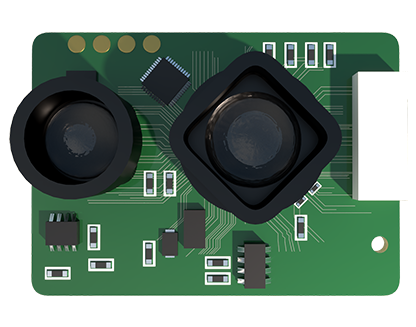
The future trajectory points toward hybrid systems and networked quantum sensors. By entangling multiple sensor nodes, a quantum network can achieve distributed sensing with performance unattainable by independent classical sensors, useful for creating ultra-precise global telescope arrays or secure communication-linked monitoring systems. As research in quantum materials and photonic integration advances, we anticipate a new generation of affordable, high-performance quantum laser sensors permeating industries from civil engineering and environmental monitoring to defense and consumer electronics, fundamentally reshaping our capacity to perceive and interact with the physical world.