In the rapidly evolving landscape of industrial automation and precision engineering, laser sensors have emerged as critical components for accurate detection, measurement, and control. However, the underlying principles of these sophisticated devices can be complex and challenging to convey through traditional technical documentation alone. This is where laser sensor animation plays a transformative role. By visualizing intricate processes in real-time, animation bridges the gap between theoretical concepts and practical application, offering an intuitive and engaging method for professionals and learners alike to grasp advanced detection technology.
Laser sensors operate on the fundamental principle of emitting a focused beam of light and analyzing the reflected signal to determine distance, presence, or specific characteristics of an object. The core mechanisms involve time-of-flight calculations, triangulation methods, or phase-shift analysis, depending on the sensor type. Through high-quality animation, these abstract processes are broken down into clear, sequential steps. For instance, an animated sequence can illustrate how a pulsed laser diode emits light, how the beam travels to a target, and how the receiver captures the reflection, precisely calculating the time delay to compute distance. Such visual narratives eliminate ambiguity, making it easier to understand how factors like surface reflectivity, environmental interference, or beam divergence impact sensor performance.
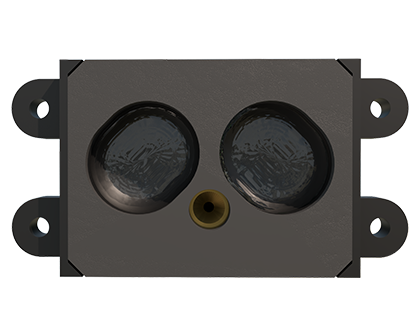
The benefits of utilizing animation extend beyond basic explanation. In engineering design and system integration phases, animated simulations allow engineers to virtually test sensor placement and functionality within a digital twin of a manufacturing line or robotic cell. This proactive visualization helps identify potential issues such as occlusion, alignment errors, or signal interference before physical implementation, saving significant time and resources. Furthermore, for training and educational purposes, interactive animations can demonstrate the dynamic response of laser sensors under varying conditions—like detecting objects on high-speed conveyor belts or performing precise contour measurements. This dynamic approach fosters a deeper comprehension of operational limits, calibration requirements, and troubleshooting procedures.
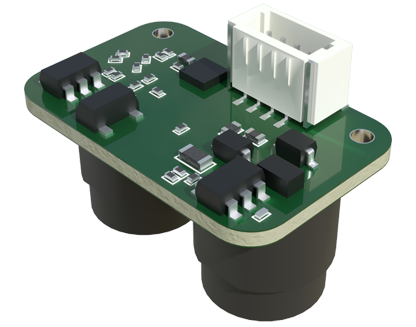
From a technical communication perspective, laser sensor animations enhance manuals, marketing materials, and academic courses by providing a universally understandable visual language. They can depict complex scenarios, such as the operation of safety laser scanners creating protective fields in hazardous areas or the use of confocal sensors for micron-level thickness measurements. By showing, rather than just telling, animations make it easier to convey the advantages of specific features, like background suppression, multiple echo evaluation, or high-speed sampling rates. This clarity is invaluable for stakeholders making procurement decisions or for technicians configuring systems on-site.
Moreover, as Industry 4.0 and the Internet of Things (IoT) drive demand for smarter, interconnected sensors, animation serves as a vital tool to illustrate data flow and network integration. Animated diagrams can show how a laser sensor communicates measurement data to a PLC or cloud platform, enabling real-time monitoring and predictive maintenance. This holistic view underscores the sensor's role within a larger ecosystem, highlighting its contribution to efficiency, quality control, and automation resilience.

In conclusion, laser sensor animation is not merely an illustrative aid but a powerful educational and engineering asset. It demystifies advanced technology, accelerates learning curves, and supports better design and deployment decisions. As laser sensing technology continues to advance, the role of precise, informative animation will only grow in importance, helping industry professionals harness the full potential of these precise detection tools. By transforming complex data into visual stories, animation ensures that the sophisticated capabilities of laser sensors are accessible, understandable, and effectively utilized across various applications, from automotive assembly and electronics manufacturing to logistics and beyond.