Proximity sensors are indispensable components in modern industrial automation, enabling non-contact detection of objects within a specified range. Their ability to function without physical contact ensures reliability, longevity, and high-speed operation in demanding environments. This guide provides a detailed overview of the primary types of proximity sensors, their operating principles, and typical applications, tailored for engineers and technical professionals in the electrical and automation sectors.
The fundamental categorization of proximity sensors is based on their underlying detection technology. The most prevalent types include Inductive, Capacitive, Ultrasonic, Photoelectric, and Magnetic (Reed Switch or Hall Effect) sensors. Each type possesses distinct characteristics that make it suitable for specific materials, environmental conditions, and operational requirements.
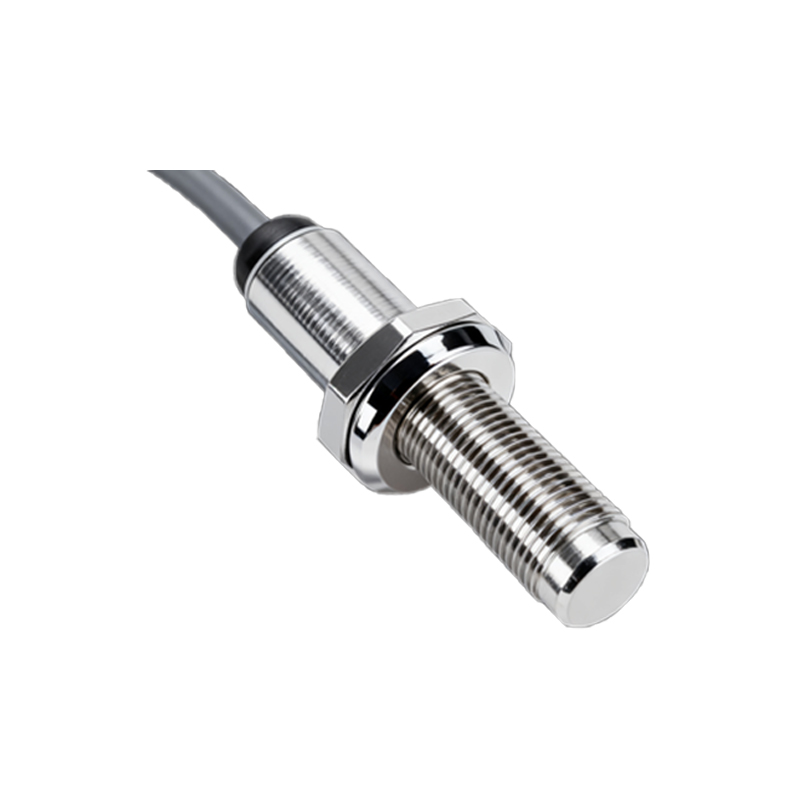
Inductive Proximity Sensors are the workhorses of metal detection. They generate an electromagnetic field from a coil fed by an oscillator. When a metallic object enters this field, it induces eddy currents, causing a change in the oscillation amplitude. This change is detected by the sensor's circuitry, triggering an output signal. Inductive sensors excel in detecting ferrous metals like steel and iron, with some models capable of sensing non-ferrous metals like aluminum, copper, or brass, albeit at a reduced sensing range. They are renowned for their robustness, high switching frequency, and immunity to environmental factors like dust, oil, and moisture. Common applications include position sensing of machine parts, end-of-travel detection in cylinders, and metal counting on conveyor lines.
Capacitive Proximity Sensors operate on the principle of capacitance change. The sensor's active face and the detected object form two plates of a capacitor. As an object approaches, the dielectric constant of the space between them changes, altering the capacitance. This change is measured, and when it exceeds a threshold, the sensor switches. Unlike inductive sensors, capacitive sensors can detect a wide variety of materials, including metals, plastics, glass, wood, liquids, and granular substances. This versatility makes them ideal for applications such as liquid level detection in tanks, presence detection of non-metallic objects (e.g., plastic bottles or wood panels), and material handling where the target material varies.
Ultrasonic Proximity Sensors utilize sound waves beyond the human hearing range (typically above 20 kHz). They emit ultrasonic pulses and measure the time it takes for the echo to return after bouncing off a target object. This time-of-flight measurement allows them to calculate the distance to the object. Ultrasonic sensors are true all-rounders, capable of detecting objects regardless of their material, color, or transparency. They are effective for long-range detection (up to several meters), level measurement of bulk solids or liquids, and presence detection in challenging environments with dust, smoke, or light interference. However, their response time is generally slower than inductive or photoelectric sensors, and they can be affected by temperature gradients and air turbulence.
Photoelectric Sensors function by emitting a beam of light (visible red, infrared, or laser) and detecting changes in the received light. They are subdivided into three main configurations: Through-beam, Retro-reflective, and Diffuse (proximity) mode. Through-beam sensors have separate emitter and receiver units; an object is detected when it interrupts the beam. They offer the longest sensing ranges and highest reliability. Retro-reflective sensors use a single unit and a reflector; detection occurs when the beam to the reflector is blocked. Diffuse sensors detect objects by measuring the light reflected directly from the target itself, making them a true "proximity" style. Photoelectric sensors are highly versatile, capable of detecting small objects, seeing different colors (with color sensors), and working over considerable distances. Applications are vast, including object counting on high-speed packaging lines, web break detection, and bottle filling control.
Magnetic Proximity Sensors are designed specifically to detect permanent magnets. The two primary technologies are Reed Switches and Hall Effect sensors. A Reed Switch contains two ferromagnetic reeds sealed in a glass tube; when a magnet approaches, the reeds attract and close the contact. Hall Effect sensors produce a voltage output proportional to the strength of an applied magnetic field. Both types are characterized by their simplicity, low power consumption, and ability to operate in completely sealed environments, as the magnetic field penetrates non-magnetic materials. They are predominantly used for detecting the position of pneumatic cylinder pistons (with embedded magnets), door/window position sensing, and rotational speed measurement via a magnet on a shaft.
Selecting the appropriate proximity sensor requires a careful analysis of several parameters: the target material, required sensing distance (rated and practical), environmental conditions (IP rating, temperature, presence of chemicals), output type (PNP/NPN, analog, IO-Link), switching frequency, and electrical requirements. Understanding the core differences between inductive, capacitive, ultrasonic, photoelectric, and magnetic