In modern industrial manufacturing, maintaining precise alignment of continuous materials—such as paper, film, textiles, or metal foils—is critical for product quality, material efficiency, and operational safety. This continuous material, often called a "web," can deviate from its intended path due to mechanical inconsistencies, tension variations, or uneven winding. Uncorrected misalignment leads to wrinkles, tears, improper printing registration, and costly material waste. Traditional guiding methods relying on mechanical followers or pneumatic sensors often lack the speed, precision, and non-contact advantages required for high-speed or delicate material processing. This is where laser sensor-based edge detection and correction systems have become an indispensable technological solution.
At the core of these systems is a laser displacement sensor, typically employing a triangulation measurement principle. A focused laser beam is projected onto the moving web's edge. The sensor's receiver, positioned at a known angle, detects the reflected laser spot. As the web's edge position shifts, the location of the reflected spot on the sensor's receiver changes. This change is converted into a highly accurate digital signal representing the real-time edge position, often with micron-level resolution. Unlike contact methods, the laser does not touch or stress the material, making it ideal for sensitive, coated, or high-speed webs.
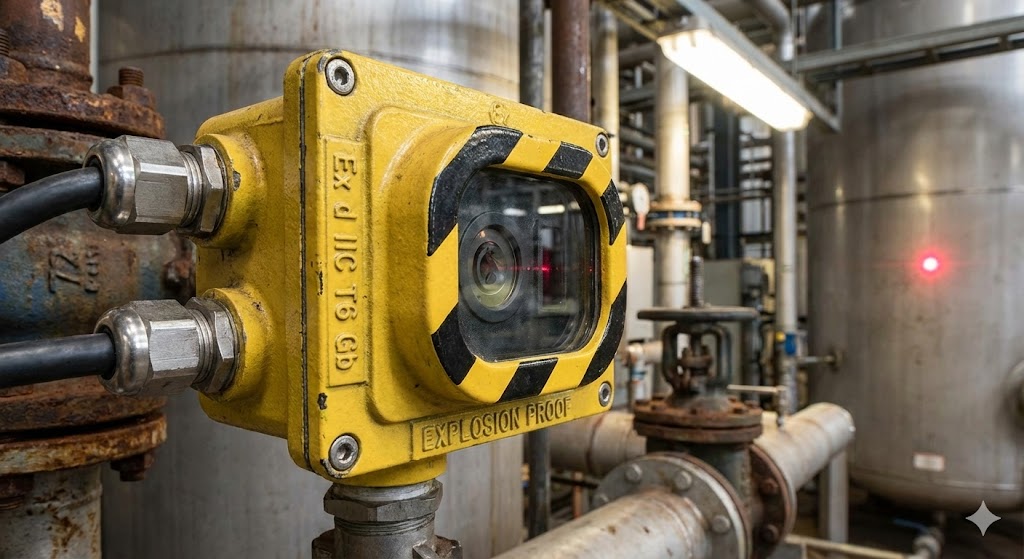
The system architecture integrates several key components. The laser sensor acts as the "eye," continuously capturing edge position data. This data is transmitted to a dedicated programmable logic controller (PLC) or a specialized motion controller, which functions as the "brain." The controller compares the measured edge position against a predefined setpoint. Any deviation, even a minute one, generates an error signal. This signal is processed through a control algorithm—commonly a Proportional-Integral-Derivative (PID) loop—which calculates the necessary corrective action. The output command is then sent to an actuation device, the "muscle" of the system. This is typically a hydraulic, pneumatic, or electric actuator connected to a guiding mechanism, such as a pivoting roller or a moving frame. The actuator adjusts the roller's position, thereby steering the web back to its correct path in real-time.
The advantages of laser-based guiding are substantial. First and foremost is precision. Systems can maintain alignment within fractions of a millimeter, even at line speeds exceeding 1000 meters per minute. This precision directly translates to reduced material waste and superior product consistency. Secondly, the non-contact nature eliminates wear on both the sensor and the web, reducing maintenance and preventing damage to delicate surfaces. Thirdly, laser sensors are highly versatile. They can detect a wide range of materials, including transparent films, dark plastics, and reflective metals, by adjusting laser intensity and receiver sensitivity. Modern systems also offer advanced features like automatic edge search upon thread-up, digital setpoint adjustment, and data logging for process analysis and OEE (Overall Equipment Effectiveness) tracking.
Implementation requires careful consideration. Sensor selection must match the material's characteristics; for instance, a through-beam laser might be preferred for clear films where diffuse reflection is weak. Proper mounting location, away from vibration and ambient light interference, is crucial for stable readings. The control parameters (PID gains) must be tuned to the specific mechanical dynamics of the web line to achieve fast response without oscillation. Regular maintenance involves keeping the sensor lens clean and verifying calibration.
In conclusion, laser sensor web guiding systems represent a mature yet continually evolving technology that addresses a fundamental challenge in continuous process industries. By providing fast, accurate, and reliable edge or centerline detection, they form the backbone of automated alignment control. Their implementation enhances productivity, ensures quality, and optimizes material usage, delivering a clear return on investment. As industries push for higher speeds, tighter tolerances, and greater automation, the role of these precise optical guidance systems will only become more central to efficient and intelligent manufacturing operations.