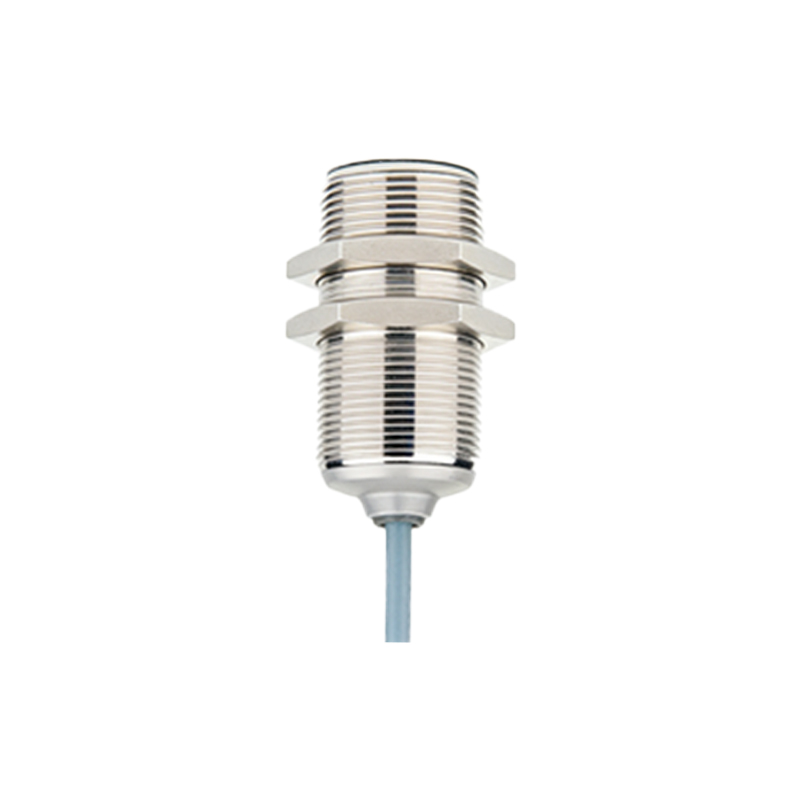
Circular proximity sensors are a fundamental component in modern automation and industrial systems. These devices detect the presence or absence of objects within a specific range without any physical contact. Their name derives from their typically cylindrical or disc-shaped housing, which is designed for easy installation in machinery and equipment. But how exactly do they function, and what makes them so reliable?
At their core, most circular proximity sensors operate on one of three primary principles: inductive, capacitive, or photoelectric sensing. Inductive sensors are the most common type for metallic object detection. They generate an electromagnetic field from a coil inside the sensor head. When a metal object enters this field, it causes eddy currents on the metal's surface, which in turn alters the oscillation amplitude within the sensor's circuit. The sensor's electronics detect this change and trigger a switching signal. These sensors are highly robust, immune to environmental factors like dust or oil, and are ideal for detecting metals such as steel, aluminum, or copper at short ranges, typically from a few millimeters up to about 60 millimeters.
Capacitive proximity sensors, also often circular in form, work by generating an electrostatic field. They can detect both metallic and non-metallic materials, including liquids, powders, plastics, and wood. The sensor forms one plate of a capacitor, and the target object forms the other. As the object approaches, it changes the capacitance of the system, which is detected and converted into a switch signal. This makes them versatile for applications like level detection in tanks or presence detection of non-metal parts.
Photoelectric sensors use light beams, either visible red or infrared. A circular housing might contain an emitter and a receiver. In a through-beam setup, the object breaks the beam between separate units. In a reflective model, the sensor emits light and detects what is reflected back from the target. They offer the longest sensing ranges among proximity types and are excellent for detecting objects of any material, provided they are not perfectly transparent.
The circular design offers significant practical advantages. It allows for easy mounting in drilled holes using standard locknuts, providing a secure and stable installation. The shape is inherently strong and protects the internal electronics. Many models feature LED indicators for status and adjustment potentiometers for fine-tuning sensitivity directly on the device.
The applications for circular proximity sensors are vast and critical. In automotive manufacturing, they count parts on assembly lines or verify the position of robotic arms. In packaging machinery, they ensure cartons are correctly positioned for filling or sealing. They are indispensable in material handling for detecting the position of pallets on conveyors. In the food and beverage industry, stainless steel, wash-down rated circular sensors monitor production processes. Even in everyday life, they are found in elevators for door safety, in public restrooms for touchless faucets, and in smartphones to disable the touchscreen during a call.
Selecting the right circular proximity sensor requires considering several factors. The sensing distance, or "rated operating distance," must be suitable for the application, with a safety margin. The target material dictates whether an inductive, capacitive, or photoelectric sensor is needed. Environmental conditions are crucial; sensors may need specific ingress protection (IP) ratings for dust and water resistance, temperature tolerance, and resistance to chemicals or welding spatter. The output type (e.g., NPN, PNP, analog) must be compatible with the control system, such as a PLC.
Installation is straightforward but requires attention to detail. Sensors should be mounted securely to avoid vibration damage. For inductive sensors, it's important to ensure that surrounding metal (like the mounting bracket) does not interfere with the sensing field—a concept known as "flush" or "non-flush" mounting specifications. Proper wiring according to the datasheet is essential to prevent damage.
In summary, the unassuming circular proximity sensor is a workhorse of industrial automation. Its reliable, non-contact operation ensures efficiency, safety, and precision in countless processes. From detecting a tiny screw on a high-speed conveyor to ensuring a robotic cell operates safely, these sensors provide the essential "eyes" for machines, enabling the seamless and intelligent operation that defines modern manufacturing and technology.