In the realm of industrial automation and electronic design, the ability to detect the presence or absence of an object without physical contact is a fundamental requirement. Among the diverse array of sensing solutions, the right angle proximity sensor stands out for its unique form factor and versatile application potential. This configuration, distinct from the standard inline or cylindrical sensors, is engineered to fit into tight spaces and facilitate installation in applications where direct, head-on object approach is not feasible.
A right angle proximity sensor, as the name implies, features a sensing face that is oriented at a 90-degree angle to the body or mounting bracket of the device. This design allows the sensor to be mounted flush against a surface, with the sensing field projecting parallel to that surface. The internal sensing element—whether inductive, capacitive, or photoelectric—is positioned to detect targets approaching from the side. Inductive variants are particularly common, using a coiled oscillator to generate an electromagnetic field. When a metallic object enters this field, it causes a change in oscillation amplitude, which is detected by the sensor's circuitry, triggering a solid-state output signal.
The primary advantage of this right-angle configuration is spatial efficiency. In machinery with compact designs, such as robotic arms, CNC tool changers, or conveyor system junctions, there is often insufficient clearance for a sensor that protrudes in the direction of detection. The right-angle sensor tucks neatly into corners or along edges, monitoring for parts, doors, or actuators that move laterally. This minimizes the sensor's footprint and protects it from accidental damage caused by direct frontal impacts. Furthermore, the wiring or connector typically exits from the rear or side of the housing, simplifying cable routing and management within control panels or moving machine parts.
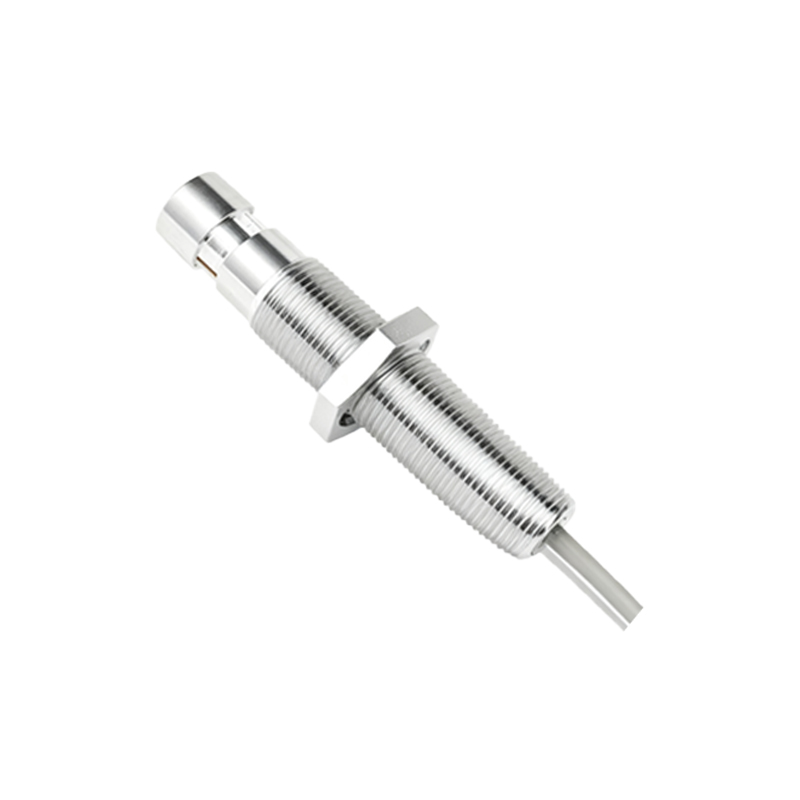
Applications for these sensors are widespread across manufacturing and beyond. In automated assembly lines, they are used for precise end-of-travel detection of linear slides or cylinders, verifying that a pneumatic actuator has fully retracted or extended. Within packaging machinery, they monitor the position of folding flaps or confirm the presence of a product on a side-transfer mechanism. The electronics industry employs them on printed circuit board (PCB) handlers to detect boards entering a test socket from the side. Even in non-industrial settings, such as automated doors or security gates, right-angle sensors can discreetly monitor the position of sliding panels.
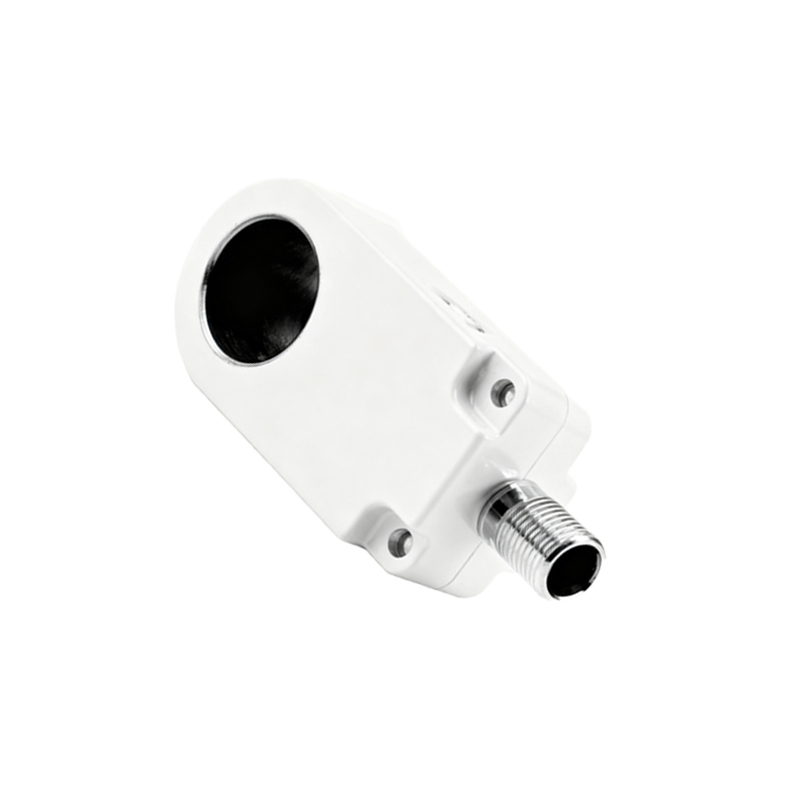
Selecting the appropriate right angle proximity sensor requires careful consideration of several parameters. Sensing range, typically a few millimeters for inductive types, must be matched to the application. The housing material, often made of rugged plastics like PBT or metals like nickel-plated brass, must withstand the environmental conditions, including exposure to coolants, oils, or washdowns. Output type (NPN sinking, PNP sourcing, or analog) must be compatible with the programmable logic controller (PLC) or input module. Engineers must also pay attention to the mounting style, whether it's threaded, bracket-based, or with built-in slots for easy adjustment.
Installation and alignment are critical for reliable operation. The sensor must be securely fastened to prevent vibration from altering its position. The target object must consistently pass within the specified sensing range and should be of an appropriate material and size. For inductive sensors, the target's metal composition (steel, aluminum, brass) affects the effective sensing distance, with steel providing the longest range. Regular maintenance involves checking for the accumulation of metallic dust or debris on the sensing face, which can diminish performance, and ensuring electrical connections remain tight and corrosion-free.
In conclusion, the right angle proximity sensor is an indispensable component in modern electromechanical design. Its specialized geometry solves spatial constraints that standard sensors cannot, enabling reliable non-contact detection in confined and complex layouts. By understanding its operating principles, advantages, and key selection criteria, designers and maintenance personnel can effectively integrate these sensors to enhance machine reliability, safety, and operational efficiency. As automation continues to evolve towards denser and more intricate systems, the role of the right-angle sensor will remain pivotal in bridging the gap between mechanical movement and electronic control.