Laser sensors have become indispensable tools in modern industrial automation, robotics, and quality control systems due to their exceptional precision, non-contact nature, and high-speed capabilities. Accurate modeling of these sensors is crucial for system design, performance prediction, and integration into complex control loops. This article delves into the fundamental principles and methodologies for creating effective mathematical and computational models of laser-based displacement, distance, and profile sensors.
At its core, a laser sensor model aims to represent the relationship between the physical target parameters (e.g., distance, surface reflectivity, angle) and the sensor's output signal. The foundation lies in understanding the underlying technology, primarily laser triangulation and time-of-flight (ToF) principles. For a triangulation-based sensor, the model geometrically relates the position of the reflected laser spot on a detector array to the target distance. Key parameters include the baseline distance between the laser emitter and the detector, the focal length of the receiving lens, and the angle of emission. Environmental factors such as ambient light, surface color, and texture must be incorporated as noise or correction factors in a robust model.
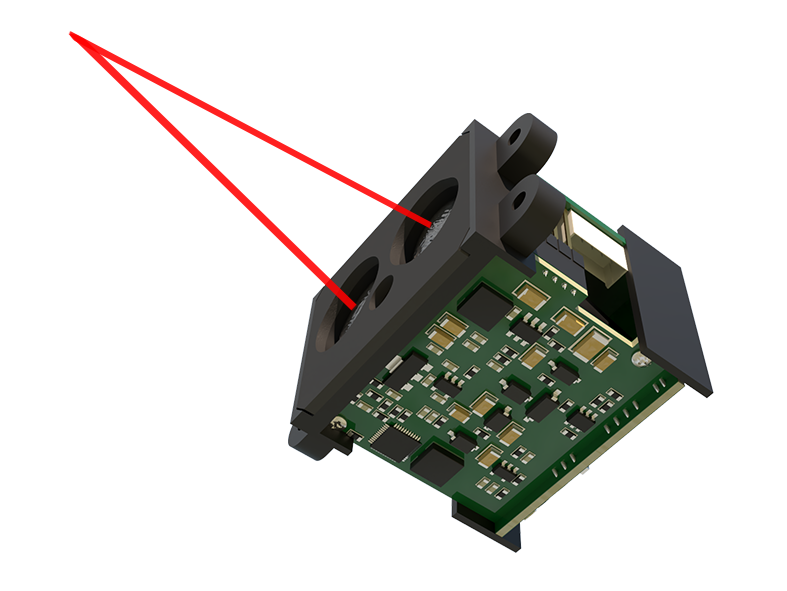
Time-of-flight sensors, common in long-range applications like LiDAR, require a different modeling approach. Here, the model focuses on the time delay between an emitted laser pulse and the detection of its reflection. This involves modeling the laser pulse shape, the photodetector's response time, and the timing electronics' resolution. Signal processing algorithms for discriminating the true return signal from noise are an integral part of the system model. For both types, the optical characteristics—laser wavelength, beam divergence, and detector sensitivity—are critical inputs.
Developing a practical model often involves a hybrid approach. A first-principles model based on physics and geometry establishes the deterministic relationship. This is then augmented with empirical data to account for non-linearities, temperature drift, and component tolerances. System identification techniques can be employed, where the sensor's response to a known, controlled input is recorded to derive a transfer function. For instance, moving a target through a precise range of distances while logging the sensor output allows for the creation of a calibration curve or a polynomial correction model.
In simulation environments like MATLAB/Simulink or specialized optical software, these models enable virtual prototyping. Engineers can test how the sensor will perform under various operational scenarios before physical implementation. This includes evaluating the impact of mechanical vibrations, varying surface materials, or extreme temperatures on measurement accuracy. Furthermore, integrating the sensor model with a model of the overall machine or robot allows for closed-loop control system analysis and optimization.
Advanced modeling also considers the digital interface and data processing pipeline. Modern laser sensors output digitized data, often pre-processed by internal microcontrollers. A complete model may include the analog-to-digital conversion characteristics, filtering algorithms, and the protocol for data transmission (e.g., Ethernet/IP, PROFINET, IO-Link). This is vital for assessing the total system latency, which is a key performance metric in high-speed automation.
Ultimately, a well-constructed laser sensor model serves as a powerful tool for reducing development time, mitigating integration risks, and achieving stringent performance requirements. It bridges the gap between theoretical sensor specifications and real-world behavior in complex, dynamic industrial environments. As applications push towards higher speeds and sub-micron accuracies, the role of sophisticated, multi-domain modeling becomes ever more critical for innovation and reliability in precision measurement.