Proximity sensors are indispensable components in modern industrial automation, and among the various types available, PNP proximity sensors hold a significant place. This article delves into the fundamentals, operation, and practical uses of these widely employed sensors.
At its core, a proximity sensor is a device that detects the presence or absence of an object within a certain range without physical contact. PNP refers to a specific type of transistor output configuration used in these sensors. The terminology originates from the internal semiconductor design, where a PNP transistor acts as the switching element. Understanding the output type is crucial for proper integration into control systems.
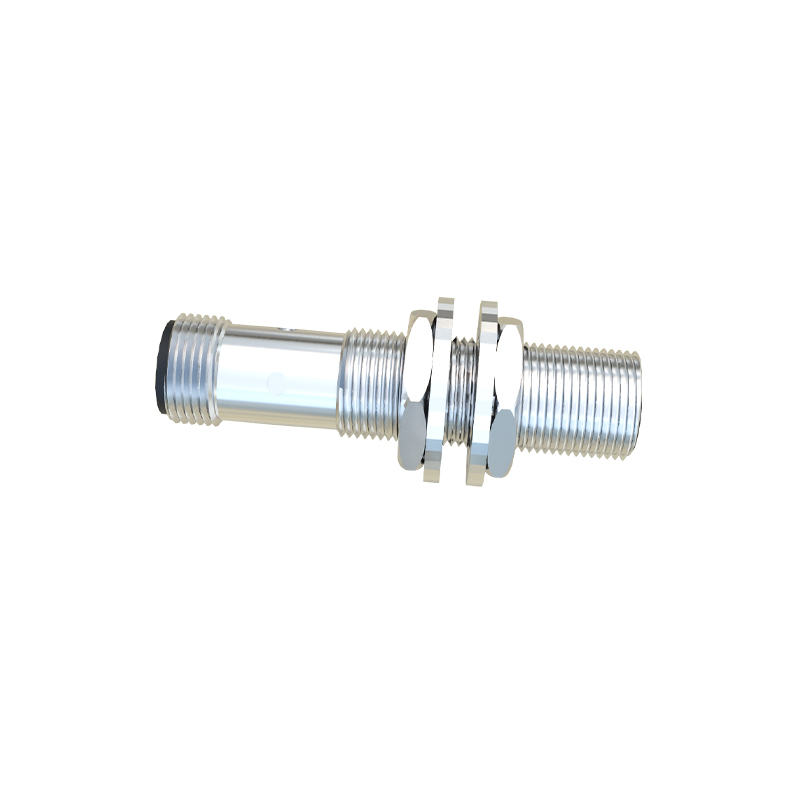
The working principle of a PNP proximity sensor is based on electromagnetic fields or capacitive coupling, depending on the technology. Inductive PNP sensors, the most common for metal detection, generate an oscillating electromagnetic field from a coil. When a metallic object enters this field, it induces eddy currents on the object's surface, which dampens the oscillation. The sensor's internal circuit detects this change and triggers the PNP transistor to switch. In a PNP configuration, the output wire (often brown or black) switches to a positive voltage (typically +24V DC) relative to the common wire (usually blue, connected to 0V) when an object is detected. This is often described as "sourcing" output because it provides positive voltage to the load.
This contrasts with NPN sensors, which switch the output to 0V (sinking). The choice between PNP and NPN is primarily determined by the input configuration of the connected controller, such as a Programmable Logic Controller (PLC). Many systems in Europe and various global standards are designed for PNP sourcing inputs.
Key characteristics define the performance of a PNP proximity sensor. Sensing range, usually a few millimeters to several tens of millimeters, specifies the maximum distance at which it can reliably detect a standard target. The housing material, often stainless steel or nickel-plated brass, provides durability in harsh environments. Factors like repeat accuracy, response frequency, and protection ratings (IP67, IP69K) are critical for selection. Manufacturers provide detailed datasheets specifying these parameters for different models.
The applications for PNP proximity sensors are vast and span numerous industries. In automotive manufacturing, they count parts on assembly lines, confirm the position of robotic arms, and detect the presence of components for quality control. Packaging machinery uses them to verify that bottles are in place for capping or labeling. Material handling systems rely on these sensors to monitor conveyor belt jams or track pallet positions. Their non-contact nature makes them ideal for dirty, wet, or high-vibration environments where mechanical limit switches would fail prematurely.
Installation and wiring require attention to detail. The sensor must be powered correctly, usually with a DC supply between 10-30V. The load (e.g., a PLC input, relay, or indicator lamp) is connected between the PNP output wire and the power supply's negative terminal. A false trigger can occur if a metal mounting bracket or nearby machinery interferes with the sensing field, so maintaining proper clearance around the active face is essential. Many models feature built-in LED indicators that show power status and detection state, aiding in setup and troubleshooting.
When selecting a PNP proximity sensor, engineers must consider the target material. Standard inductive sensors detect ferrous metals like steel at their rated range, while non-ferrous metals like aluminum or copper require a reduced sensing distance. For non-metallic objects, such as plastic, wood, or liquids, a capacitive PNP proximity sensor is necessary. These work by detecting changes in capacitance caused by the object's dielectric constant.
Maintenance is generally minimal due to the solid-state design with no moving parts. However, keeping the sensing face clean from heavy buildup of oil, dust, or metal chips is important to maintain performance. Regular functional checks should be part of preventative maintenance schedules.
In summary, PNP proximity sensors offer a robust, reliable, and fast solution for object detection in automated systems. Their sourcing output configuration makes them compatible with a wide array of industrial control equipment. By understanding their operating principle, key specifications, and correct application practices, technicians and engineers can effectively implement these sensors to enhance machine efficiency, safety, and reliability across countless automation challenges.