Material-sensing laser sensors represent a significant advancement in industrial automation, offering precise detection and analysis capabilities for a wide range of substances. Unlike standard photoelectric sensors, these devices utilize laser technology to not only detect the presence of an object but also to identify its material composition based on specific optical properties. This functionality is critical in applications such as sorting, quality control, and process monitoring, where distinguishing between different materials—like metals, plastics, glass, or organic compounds—is essential for operational efficiency and product integrity.
The core technology behind these sensors often involves laser-induced breakdown spectroscopy (LIBS) or laser absorption spectroscopy principles. A focused laser pulse interacts with the target material's surface, causing a minute amount of material to vaporize and emit a characteristic light spectrum. The sensor's integrated spectrometer analyzes this emitted light, identifying unique spectral signatures that correspond to specific elements or molecular structures. This allows for real-time, non-contact material identification without the need for sample preparation, making the process highly efficient and suitable for high-speed production lines.
Key advantages of material-sensing laser sensors include their high accuracy, speed, and versatility. They can operate effectively in challenging environments with dust, vibration, or variable lighting conditions, where traditional vision systems or manual inspection might fail. For instance, in recycling facilities, these sensors can rapidly differentiate between various polymer types on a conveyor belt, enabling automated sorting that increases purity rates and reduces labor costs. In manufacturing, they can verify material grades in incoming raw materials or detect contaminants in food processing, ensuring compliance with stringent quality standards.
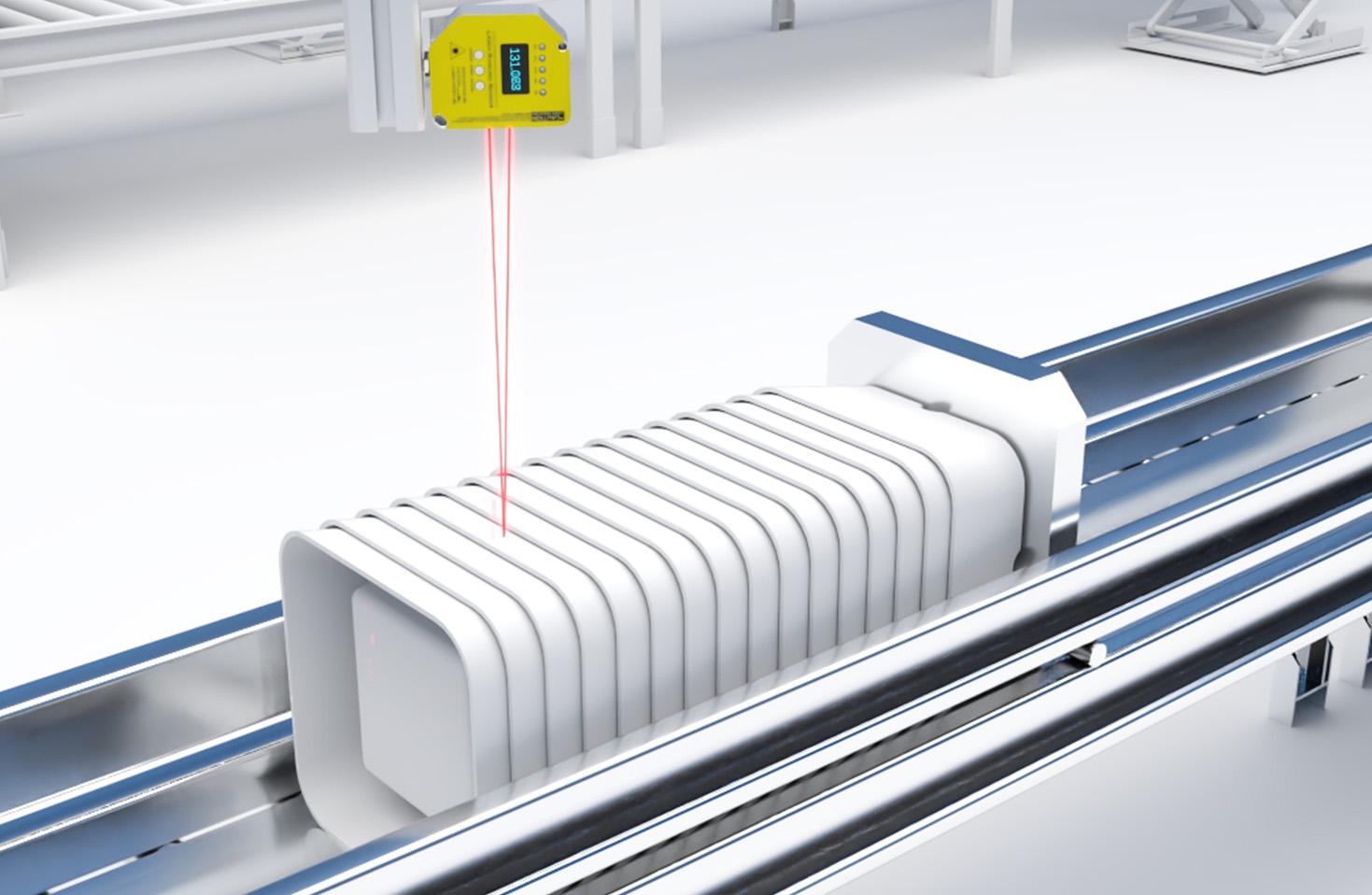
Integration into existing industrial systems is typically straightforward, with many models supporting standard communication protocols like IO-Link, PROFINET, or EtherNet/IP. This facilitates seamless data exchange with PLCs and SCADA systems, allowing for immediate process adjustments based on sensor readings. When selecting a material-sensing laser sensor, engineers must consider factors such as the required detection range, the specific materials to be identified, environmental conditions, and the necessary response time. Proper installation and calibration are crucial to maximize performance, involving alignment of the laser beam and configuration of spectral libraries for target materials.
Despite their robustness, these sensors have limitations. They may struggle with highly reflective or transparent materials, and their effectiveness can be influenced by surface conditions like oxidation or coatings. Ongoing advancements in laser diode technology, machine learning algorithms for spectral analysis, and miniaturization are addressing these challenges, leading to more affordable and capable sensors. As Industry 4.0 drives demand for smarter, data-rich automation solutions, material-sensing laser sensors are poised to become even more integral to predictive maintenance, traceability, and adaptive manufacturing processes, offering a competitive edge through enhanced precision and operational insight.
In summary, material-sensing laser sensors provide a powerful tool for industrial automation, enabling accurate material identification that supports efficiency, quality, and safety. Their ability to deliver real-time data empowers industries to optimize processes, reduce waste, and maintain high standards in an increasingly automated world.