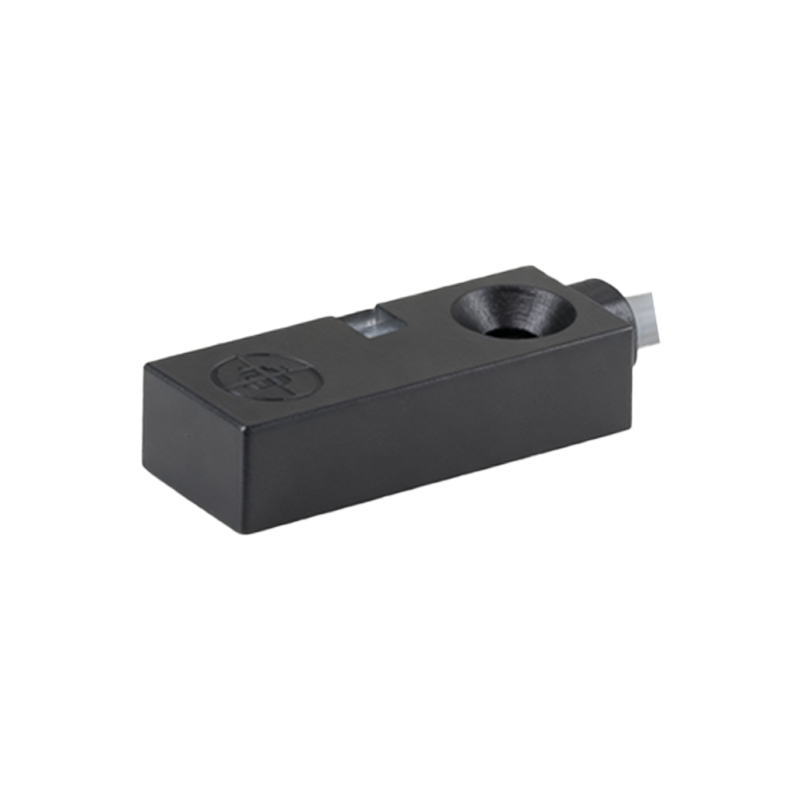
In the realm of industrial automation and safety systems, proximity sensors are indispensable components. Among their various technical specifications, the detection angle is a critical parameter that significantly influences sensor selection, system design, and overall performance. This article delves into the concept of detection angles, their importance, and practical considerations for engineers and system integrators.
The detection angle, often referred to as the sensing angle or beam angle, defines the conical or fan-shaped region within which a proximity sensor can reliably detect an object. It is not a single, sharp line but rather a three-dimensional zone where the sensor's emitted energy (be it infrared light, ultrasonic waves, or electromagnetic fields) is sufficiently concentrated to interact with a target and trigger a response. A wider detection angle means the sensor can cover a broader area, which is advantageous for applications like presence detection over a conveyor belt or entry/exit monitoring. Conversely, a narrower detection angle provides more precise, localized detection, ideal for tasks such as object counting or precise positioning where false triggers from adjacent objects must be avoided.
Several factors intrinsic to the sensor's design dictate its nominal detection angle. The type of sensing technology is paramount. For instance, diffuse photoelectric sensors typically have wider angles, as they rely on light reflecting off the target back to the receiver. In contrast, through-beam sensors have a very narrow effective angle, defined by the precise alignment between the separate emitter and receiver. Ultrasonic sensors often feature a moderately wide beam, while inductive proximity sensors (for metal detection) have a characteristic detection range but a less formally defined "angle," as their electromagnetic field is omni-directional but decays rapidly with distance. The physical construction of the lens or antenna also plays a crucial role. A lens designed to collimate light will produce a narrower beam, while a diffusing lens or a specially shaped ultrasonic transducer horn will create a wider coverage pattern.
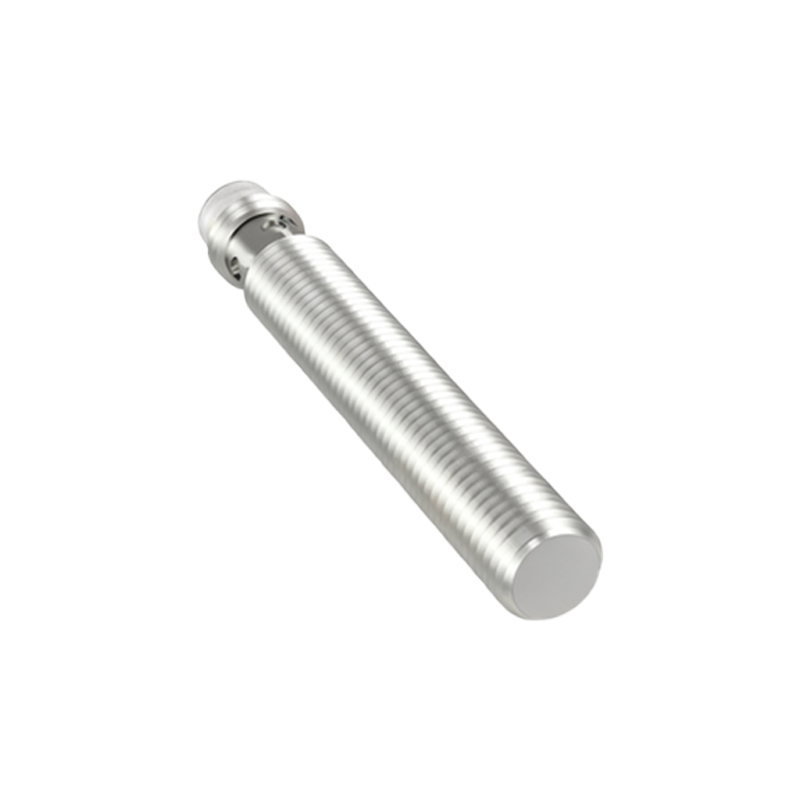
Understanding and applying the detection angle specification is vital for effective system integration. A common mistake is to assume the detection zone is a perfect cylinder extending from the sensor face. In reality, it is a cone that expands with distance. Engineers must consult the sensor's datasheet, which usually includes a detection zone diagram. This diagram illustrates how the detectable area grows at increasing distances from the sensor. For example, a sensor with a 15-degree detection angle might have a detection spot diameter of 50mm at 500mm range, but 200mm at 2000mm range. This characteristic directly impacts mounting height and orientation. To detect small objects, the sensor must be mounted closer or have a sufficiently narrow angle so that the object fills a significant portion of the beam at the intended range.
Environmental factors and application requirements heavily influence the optimal detection angle choice. In cluttered environments with many non-target objects, a narrow-angle sensor is preferred to minimize false positives. For safety light curtains or area guarding, a carefully calculated array of sensors with specific beam angles is used to create an invisible protective wall. Ambient light, dust, and acoustic noise can also interfere with certain sensor types, effectively reducing the reliable detection zone. In such cases, selecting a sensor with a slightly wider nominal angle than theoretically required provides a necessary safety margin to ensure consistent operation under variable conditions.
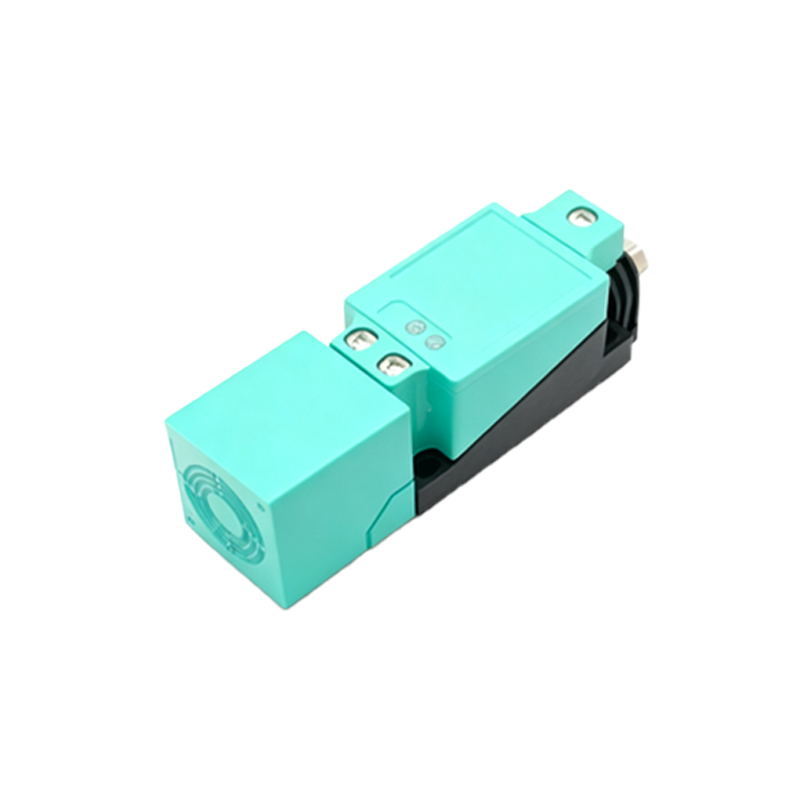
Calibration and testing under real-world conditions are non-negotiable final steps. The theoretical detection angle is a guideline. The actual performance can be affected by target material (color, reflectivity, texture), surface angle, and environmental contaminants. It is standard practice to perform a site acceptance test, verifying that the sensor triggers reliably for the intended target at the extremes of its required range and does not trigger for background objects or passing personnel. Adjusting the sensor's sensitivity setting can sometimes effectively narrow or widen the usable detection zone, offering a degree of field tuning.
In conclusion, the detection angle is a fundamental yet nuanced specification of proximity sensors. A deep understanding of this parameter, combined with careful analysis of the application environment and rigorous testing, enables engineers to design robust, reliable, and efficient automated systems. Selecting the correct sensor with the appropriate detection angle is not merely a technical checkbox but a decisive factor in achieving operational safety, precision, and long-term system reliability.