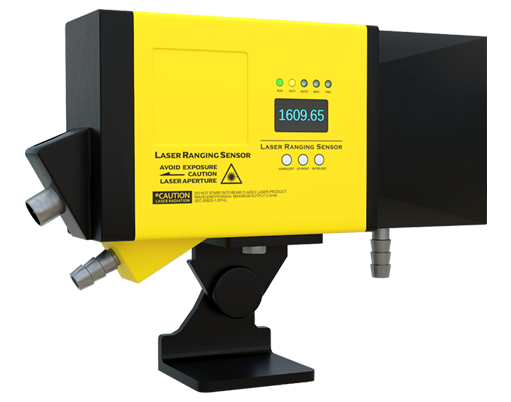
In the realm of precision industrial measurement and control, the laser joule sensor represents a significant technological advancement. This sophisticated device integrates principles from optics, thermodynamics, and electronics to deliver non-contact, high-accuracy measurements of energy, specifically in joules, within various industrial processes. Unlike traditional contact-based thermal sensors, laser joule sensors utilize a focused laser beam to interrogate a target surface or medium. The core operational principle hinges on the photothermal effect. A modulated laser beam is directed at the target. The absorption of this laser energy causes a minute but measurable temperature rise in the target material. This temperature change is intrinsically linked to the energy (joules) deposited by the laser pulse or continuous wave. The sensor then detects the resultant thermal radiation or changes in the target's optical properties—such as reflectivity or refractive index—using a highly sensitive photodetector. Through precise calibration and advanced signal processing algorithms, the system correlates these detected changes back to the absolute energy delivered, providing a real-time joule measurement.
The advantages of employing laser joule sensors in industrial settings are manifold. Foremost is their non-invasive nature. By eliminating physical contact, these sensors prevent contamination, mechanical wear, and interference with the process being measured, which is critical in sensitive environments like semiconductor fabrication, pharmaceutical production, and high-purity material processing. They offer exceptional spatial resolution, allowing engineers to map energy distribution across a surface with micron-level precision. This capability is invaluable in applications such as laser welding, additive manufacturing (3D printing), and precision annealing, where controlling the exact energy input per unit area is paramount for product quality. Furthermore, their response time is exceptionally fast, enabling dynamic process control and monitoring of rapid thermal events that would be impossible to track with slower, contact-based thermocouples or resistive temperature detectors (RTDs).
Typical industrial applications are diverse. In laser material processing, these sensors are deployed to monitor and stabilize the output energy of industrial lasers in real-time, ensuring consistent cut depth, weld penetration, or engraving quality. Within the energy sector, they can be used to measure minute thermal fluxes in experimental fusion or advanced combustion research. Another growing application is in battery manufacturing and testing, where precise calorimetric measurements during charge-discharge cycles help in assessing efficiency, heat generation, and overall cell health. The sensor's ability to perform in harsh environments—subject to electromagnetic interference, high ambient temperatures, or corrosive atmospheres—further broadens its utility in heavy industries like metal casting and glass manufacturing.
However, the implementation of laser joule sensors is not without challenges. Accurate measurement requires a priori knowledge or characterization of the target material's absorption coefficient and thermal properties. Variations in surface finish, color, or coating can affect absorption and thus require dynamic calibration or compensation techniques. The initial system cost, involving high-quality lasers, detectors, and processing units, can be higher than traditional sensors, though this is often offset by reduced downtime, improved yield, and lower maintenance costs over the equipment's lifecycle. Integration into existing industrial control networks (e.g., PLCs, SCADA systems) also demands careful consideration of communication protocols and data interfaces.
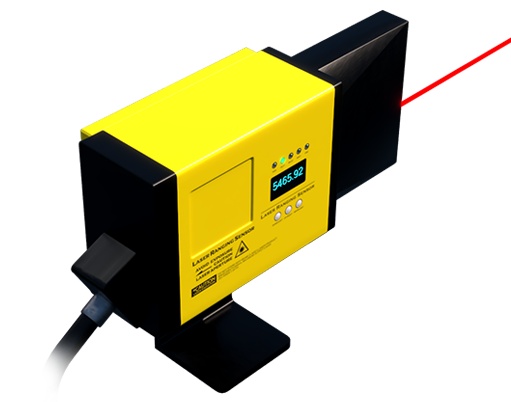
Looking forward, the evolution of laser joule sensors is closely tied to advancements in photonics and artificial intelligence. The development of cheaper, more robust diode lasers and uncooled infrared detector arrays will drive down costs and facilitate wider adoption. Machine learning algorithms are being integrated to automatically compensate for material variances and environmental noise, enhancing accuracy and reliability. Furthermore, the miniaturization of components is paving the way for embedded sensor systems in portable diagnostic tools and IoT-enabled industrial equipment. As Industry 4.0 and smart manufacturing initiatives demand more granular, real-time data from production lines, the role of precise, non-contact energy sensors like the laser joule sensor will only become more central. In conclusion, the laser joule sensor stands as a pivotal tool for engineers seeking to master thermal processes, offering a blend of precision, non-contact operation, and versatility that is reshaping standards in industrial measurement and quality assurance.