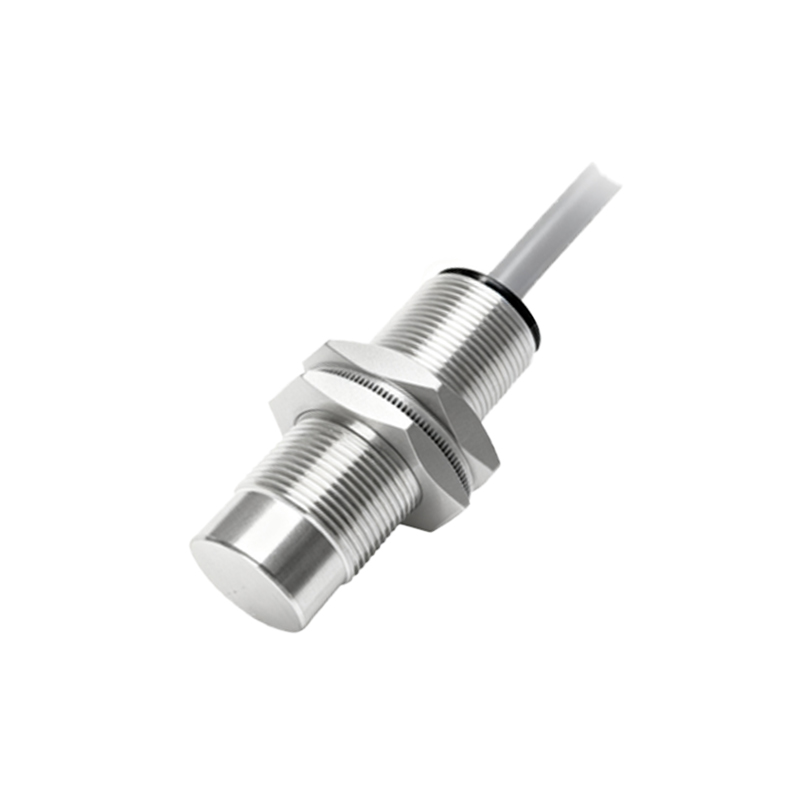
Proximity sensors are fundamental components in modern industrial automation, serving as the "eyes" of machinery by detecting the presence or absence of objects without physical contact. Among the most prevalent types are inductive and capacitive proximity switches, each engineered for specific operational environments and materials. This guide delves into their working principles, selection criteria, and application best practices, providing essential knowledge for electrical engineers and automation professionals.
Inductive proximity sensors operate on the principle of electromagnetic induction. They generate an oscillating electromagnetic field from a coil and ferrite core assembly within the sensing face. When a metallic object enters this field, eddy currents are induced on the object's surface, causing a load on the oscillator. The sensor's detection circuit monitors this oscillation amplitude change, triggering a solid-state output switch. These sensors are exclusively for detecting ferrous and non-ferrous metals, with sensing ranges typically from 1 to 60 millimeters, depending on the target material and sensor size. Key advantages include high switching frequency, exceptional resistance to environmental contaminants like oil, dust, and coolant, and robust construction often rated IP67 or higher. Common applications include position verification of metal parts on conveyor lines, end-of-travel detection on cylinders, and rotary speed monitoring via gear teeth counting.
Capacitive proximity sensors, in contrast, detect both metallic and non-metallic materials, including liquids, plastics, glass, and wood. They function by generating an electrostatic field. The sensor acts as one plate of a capacitor, with the target object acting as the other. As an object approaches, it alters the dielectric constant of the surrounding space, changing the capacitance of the oscillator circuit. This change is evaluated, and when it exceeds a threshold, the output state switches. Capacitive sensors often feature a sensitivity adjustment potentiometer to compensate for different materials or to ignore interfering backgrounds. They are ideal for applications like liquid level detection in non-metallic tanks, monitoring fill levels of granular materials in hoppers, or detecting presence of plastic caps on bottles. However, they are generally more susceptible to environmental factors like humidity and require careful installation to avoid false triggers.
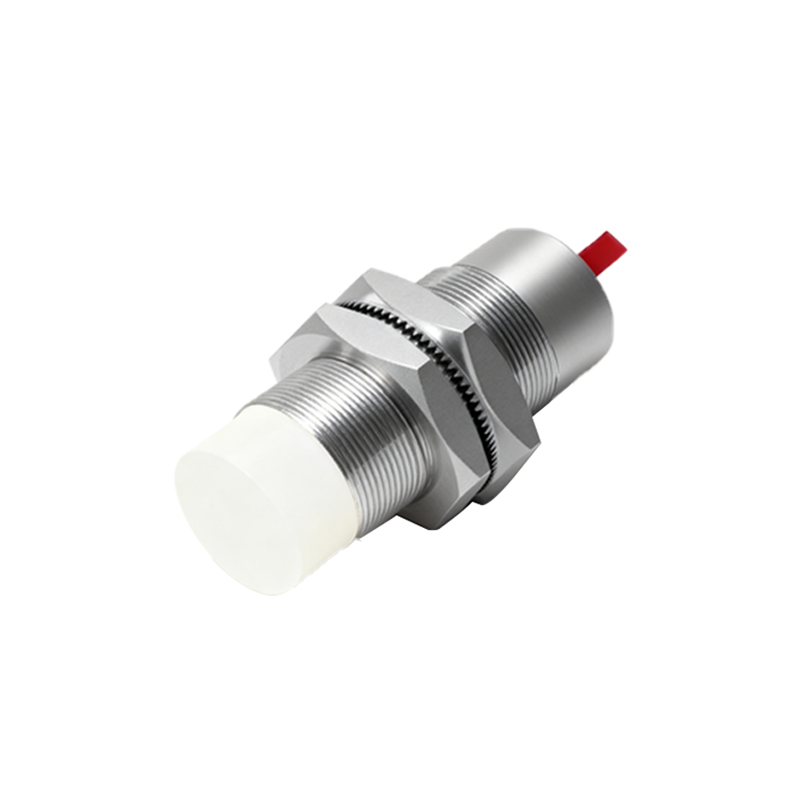
Selecting the correct proximity sensor requires a systematic analysis of several parameters. First, identify the target material: inductive for metals, capacitive for nearly any material. Next, determine the required sensing distance, noting that rated operating distance (Sn) is defined for a standard mild steel target for inductive sensors. The installation environment is critical; consider temperature ranges, potential for washdowns (requiring high IP ratings), and exposure to strong electromagnetic fields. Electrical characteristics are equally important: choose between DC (2-wire, 3-wire) or AC models, select the appropriate output type (PNP/NPN, NO/NC), and ensure voltage compatibility. For demanding applications, specialized variants like analog output sensors for distance measurement, high-temperature models, or weld-field immune sensors are available.
Proper installation and wiring are paramount for reliable operation. Maintain the specified mounting clearance around the sensing face to prevent side-interference from adjacent metal. For flush-mounted inductive sensors, the sensing range is reduced, but they can be installed without a metal-free zone. Always follow the manufacturer's wiring diagram, ensuring correct polarity for DC sensors. Implement protective measures such as surge suppressors for inductive loads (relays, solenoids) and use shielded cables in electrically noisy environments. Regular maintenance involves checking for physical damage, buildup of material on the sensing face, and verifying the output signal with a multimeter or PLC input indicator.
The evolution of Industry 4.0 and IIoT has further integrated proximity sensors into smart systems. Modern sensors with IO-Link communication provide not only switching signals but also diagnostic data like operating hours, temperature warnings, and signal strength, enabling predictive maintenance. This connectivity transforms simple presence detection into a source of valuable machine health intelligence. In conclusion, a deep understanding of inductive and capacitive proximity switch technologies—their principles, limitations, and implementation nuances—is essential for designing robust, efficient, and intelligent automated systems. Their reliability and versatility ensure they remain indispensable in the electrical engineer's toolkit, from simple machine guarding to complex robotic workcells.