In the realm of industrial automation and control systems, proximity sensors play a pivotal role in detecting the presence or absence of objects without physical contact. Their performance, however, is intrinsically linked to the quality and reliability of their electrical connections. This is where aviation connectors, often referred to as circular connectors, become indispensable. Specifically designed for proximity sensors, these connectors ensure secure, stable, and environmentally sealed interfaces, critical for maintaining signal integrity in demanding operational conditions.
Aviation connectors for proximity sensors are characterized by their robust circular design, typically featuring a threaded coupling mechanism. This design provides superior resistance to vibration and mechanical shock—common challenges in industrial settings such as manufacturing lines, robotics, and heavy machinery. The threaded coupling ensures a positive lock, preventing accidental disconnection that could lead to system downtime, safety hazards, or data loss. Materials commonly used include ruggedized thermoplastics and metal alloys like nickel-plated brass or stainless steel, offering excellent durability and corrosion resistance.
A key attribute of these connectors is their ingress protection (IP) rating. Proximity sensors are frequently deployed in harsh environments exposed to dust, moisture, oils, and coolants. Aviation connectors are engineered to meet high IP standards (e.g., IP67, IP68, or IP69K), featuring multiple sealing elements such as O-rings, grommets, and potting options. This hermetic sealing safeguards the electrical contacts from contaminants, thereby preventing short circuits, signal degradation, and premature sensor failure. This reliability is non-negotiable in critical applications like aerospace, automotive assembly, or food and beverage processing, where hygiene and operational continuity are paramount.
From an electrical performance perspective, these connectors are designed to handle the specific signal types and power requirements of inductive, capacitive, or magnetic proximity sensors. They provide stable connections for low-voltage DC signals, often incorporating gold-plated contacts to ensure low contact resistance and high conductivity. Shielding capabilities are also integral, protecting sensitive sensor signals from electromagnetic interference (EMI) and radio frequency interference (RFI), which are prevalent in facilities with numerous motors and wireless devices. Consistent signal transmission is vital for accurate object detection, positioning, and counting functions.
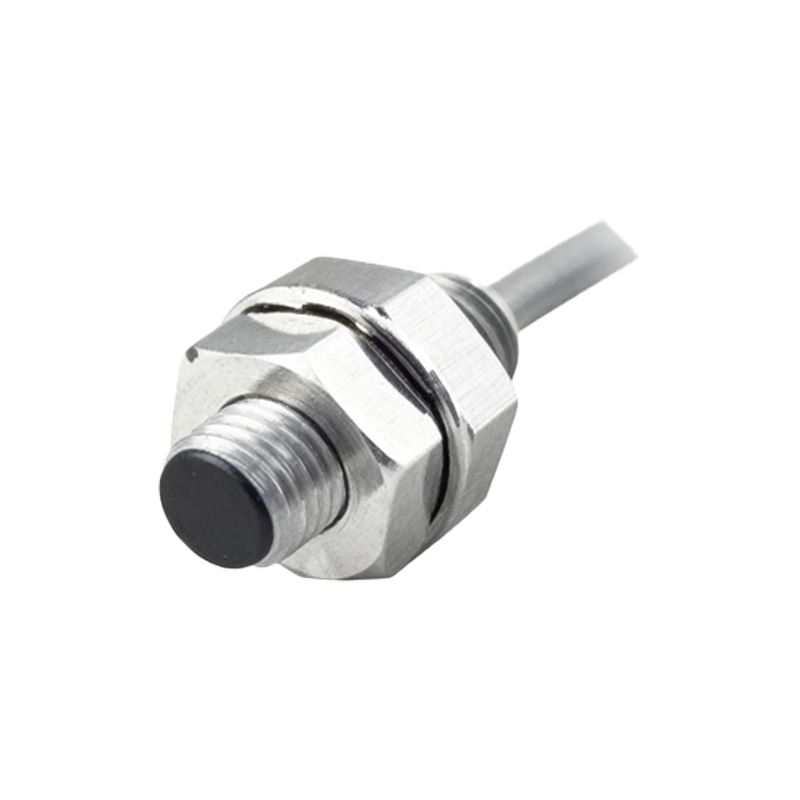
The modularity and standardization of aviation connectors offer significant advantages for system design and maintenance. Many comply with international standards such as DIN EN 61076-2, ensuring interoperability and ease of sourcing. Their modular design often allows for field assembly and customization of pin configurations (e.g., 3-pin, 4-pin, or 5-pin layouts) to match specific sensor wiring schemes—be it normally open (NO), normally closed (NC), or analog output. This flexibility simplifies installation, reduces inventory complexity, and facilitates quicker troubleshooting and replacement, minimizing machine downtime.
In practice, selecting the appropriate aviation connector for a proximity sensor involves careful consideration of several factors. The environmental conditions dictate the required IP rating and material composition. The electrical specifications must align with the sensor's voltage, current, and signal type. Mechanical factors include the mating cycle durability, cable strain relief features, and the connector size relative to the sensor housing. Furthermore, industry-specific certifications—such as UL, CSA, or ATEX for explosive atmospheres—may be necessary to comply with safety regulations.
Looking forward, the evolution of Industry 4.0 and the Industrial Internet of Things (IIoT) places even greater emphasis on connectivity. Smart proximity sensors with integrated diagnostics and communication protocols (e.g., IO-Link) demand connectors that can reliably transmit both power and data. Modern aviation connectors are evolving to support these advanced functions, often incorporating additional pins for data lines while maintaining backward compatibility. This ensures that legacy systems can be upgraded seamlessly, supporting predictive maintenance and real-time monitoring capabilities.
In conclusion, aviation connectors are far more than simple plug-and-play components for proximity sensors. They are engineered solutions that bridge the sensor to the control system, ensuring operational resilience in challenging industrial landscapes. Their design—encompassing mechanical robustness, environmental sealing, electrical fidelity, and standardization—directly contributes to the overall system reliability, safety, and efficiency. For engineers and system integrators, specifying high-quality aviation connectors is a critical step in building automation systems that are not only functional but also durable and future-ready. Investing in the right connector mitigates risk, reduces total cost of ownership, and supports the uninterrupted flow of industrial processes.