In the intricate world of industrial automation and machine control, proximity sensors stand as silent sentinels, enabling precise, non-contact detection of objects. These devices are fundamental to countless processes, from assembly line sequencing and robotic guidance to safety interlocks and material handling. Their ability to operate without physical contact translates to minimal wear, high reliability, and long service life. This article delves into the ten most prominent types of proximity sensors, exploring their operating principles, key characteristics, and ideal application scenarios to guide engineers and technicians in selecting the optimal solution.
1. Inductive Proximity Sensors: The workhorse of metal detection. These sensors generate an electromagnetic field. When a metallic target enters this field, it induces eddy currents, causing a change in the sensor's oscillation amplitude, which triggers a switch. They are exceptionally robust, resistant to environmental factors like dust and oil, and are ideal for detecting ferrous and non-ferrous metals in harsh industrial settings, such as counting metal parts or monitoring valve positions.
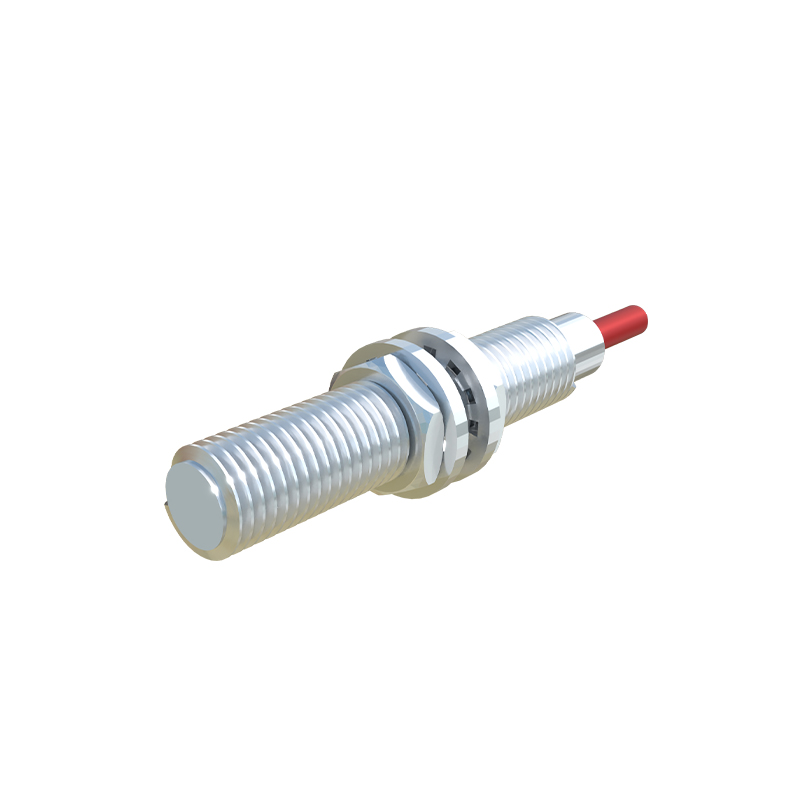
2. Capacitive Proximity Sensors: These versatile sensors can detect both metallic and non-metallic materials (plastics, wood, liquids, granules) by measuring changes in capacitance. They generate an electrostatic field. Any object with a dielectric constant different from air alters this field, triggering detection. Common applications include level detection in tanks (for liquids or powders), material presence verification on non-metallic conveyor belts, and detecting filled containers.
3. Ultrasonic Proximity Sensors: Operating on the principle of echolocation, these sensors emit high-frequency sound waves and measure the time for the echo to return. They excel at measuring distance and detecting objects regardless of material, color, or transparency. They are perfect for challenging environments with dust, smoke, or light interference. Typical uses include bulk material level sensing, loop control in web handling, and robot palletizing.
4. Photoelectric Sensors: Utilizing a light emitter (usually LED or laser) and a receiver, these sensors detect objects by interpreting changes in the light signal. They come in three main types: Through-beam (separate emitter and receiver for long-range, high-precision detection), Retro-reflective (uses a reflector, good for medium range), and Diffuse (single unit detecting reflected light from the target, for shorter ranges). They are excellent for detecting small objects, transparent materials, and color differentiation.
5. Magnetic Proximity Sensors (Reed Switches): These simple, cost-effective sensors are actuated by the presence of a magnetic field, typically from a permanent magnet attached to a moving part. The reed switch consists of two ferromagnetic reeds sealed in a glass tube. A magnetic field causes the reeds to attract and make contact. They are widely used in safety door interlocks, cylinder position sensing, and low-speed limit switching.
6. Hall Effect Sensors: These solid-state sensors detect magnetic fields by outputting a voltage proportional to the field strength (analog) or providing a digital on/off signal. They are highly reliable, can operate at high frequencies, and are immune to dust, dirt, and moisture. Common applications include speed sensing (measuring RPM via a gear tooth and magnet), position sensing in brushless DC motors, and current sensing.
7. Eddy-Current Sensors: A specialized type of non-contact sensor used primarily for high-precision displacement and position measurement of conductive metals. They operate on the same eddy-current principle as inductive sensors but are designed for analog measurement with micron-level resolution. They are critical in applications like monitoring shaft runout, vibration analysis, and precision gap control in machinery.
8. Laser Distance Sensors: A subtype of photoelectric sensors using a focused laser beam for extremely precise distance measurement and positioning. They offer very high accuracy and resolution over long ranges. Applications include precise dimension checking, wafer handling in semiconductor manufacturing, and contour profiling.
9. Radar (Microwave) Sensors: These sensors emit microwave signals and analyze the reflected wave. They are particularly effective for level measurement of liquids and bulk solids in large tanks or silos, as microwaves penetrate dust, vapor, and temperature variations that challenge other technologies. They are also used in traffic control and certain security systems.
10. RFID (Radio-Frequency Identification) Systems: While not a traditional "proximity sensor" in the simple on/off sense, RFID enables identification and data transfer via radio waves when a tag comes within range of a reader. This is pivotal for tracking items, managing inventory, and process control in logistics and manufacturing.
Selecting the right proximity sensor requires a careful analysis of the target material, required sensing distance (range), environmental conditions (temperature, contaminants), output type needed (PNP/NPN, analog, IO-Link), and response speed. Understanding the strengths and limitations