In the realm of industrial automation, proximity sensors are indispensable components for detecting the presence or absence of objects without physical contact. Among various types, long-range proximity sensors stand out for their ability to detect objects at significantly greater distances, enhancing efficiency and flexibility in complex applications. This article delves into the principles, technologies, and practical considerations for maximizing detection distance in proximity sensing.
Proximity sensors operate based on different physical principles, including inductive, capacitive, ultrasonic, and photoelectric methods. For long-range detection, photoelectric and ultrasonic sensors are predominantly used due to their extended operational ranges. Photoelectric sensors utilize light beams—often infrared, laser, or LED—to detect objects. They can achieve ranges from a few centimeters to over 100 meters, depending on the technology and environmental conditions. Laser-based sensors, in particular, offer precise long-range detection by emitting a focused beam that reflects off targets, making them ideal for applications like material handling, packaging, and automotive assembly lines. Ultrasonic sensors, on the other hand, use sound waves to measure distance and can detect objects up to several meters away, even in challenging environments with dust, smoke, or varying light conditions. Their ability to ignore color and transparency makes them versatile for liquid level sensing, obstacle detection, and robotic navigation.
The detection distance of a proximity sensor is influenced by multiple factors. Key among these is the sensor's power output and sensitivity. Higher power output, such as in amplified laser sensors, enables longer ranges by maintaining signal integrity over distance. Sensitivity adjustments allow fine-tuning to avoid false triggers from background interference. Additionally, the target's properties—size, shape, reflectivity, and material—play a critical role. For photoelectric sensors, light-colored or reflective surfaces enhance detection range, while dark or absorbent materials may reduce it. Ultrasonic sensors are less affected by surface characteristics but can be impacted by soft or porous materials that dampen sound waves. Environmental conditions like temperature, humidity, and ambient light also affect performance. For instance, extreme temperatures can alter sensor calibration, and bright light may interfere with photoelectric beams. To mitigate these issues, sensors with robust housings, temperature compensation, and modulated light signals are recommended for long-range applications.
Selecting the right long-range proximity sensor requires a thorough analysis of the application. In warehouse automation, for example, sensors with ranges of 10-50 meters are used to monitor inventory on high racks or guide autonomous vehicles. In the automotive industry, laser sensors detect vehicle positions on assembly lines from a distance, ensuring precise alignment. For outdoor applications like traffic management or security systems, weather-resistant ultrasonic or infrared sensors with ranges exceeding 30 meters provide reliable detection in rain, fog, or darkness. It's essential to consider not only the maximum range but also the response time, accuracy, and environmental durability. Sensors with fast response times (e.g., microseconds for photoelectric types) are crucial for high-speed processes, while those with high accuracy (e.g., millimeter-level precision in laser sensors) suit quality control tasks.
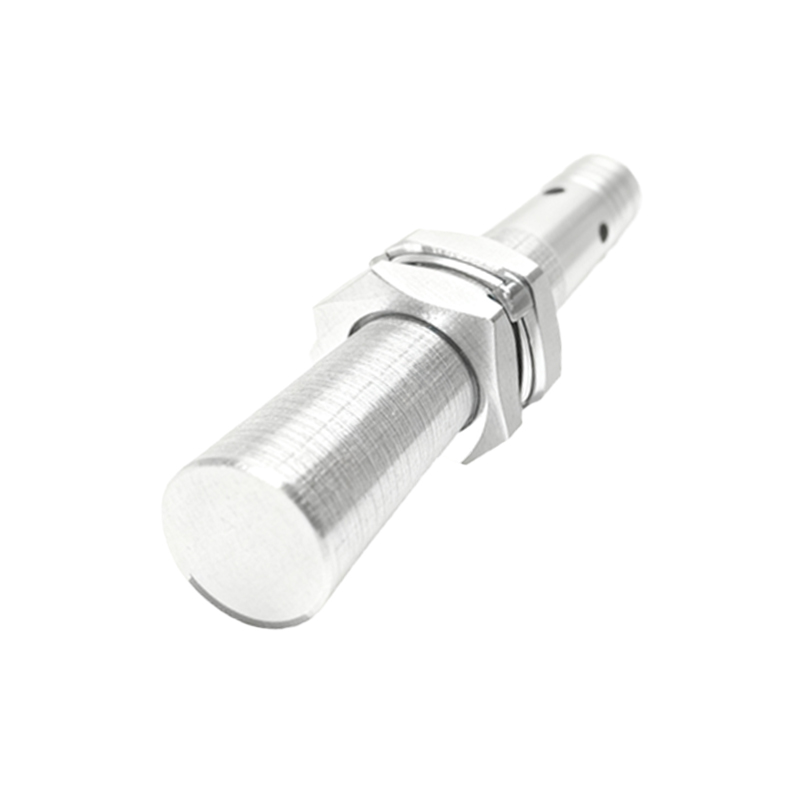
Installation and maintenance are vital for optimizing detection distance. Proper alignment is critical; misaligned sensors can lead to reduced range or missed detections. Using mounting brackets and alignment tools ensures the sensor beam is directed accurately at the target area. Regular cleaning of lenses or transducers prevents dirt buildup that could attenuate signals. Additionally, periodic calibration checks help maintain performance over time, especially in environments with vibration or thermal fluctuations. Many modern sensors feature self-diagnostic capabilities and adjustable settings via digital interfaces, simplifying upkeep and adaptation to changing conditions.
Advancements in sensor technology continue to push the boundaries of long-range detection. Innovations like time-of-flight (ToF) photoelectric sensors and multi-echo ultrasonic systems offer improved range and reliability. ToF sensors measure the time for light to travel to and from a target, enabling precise distance calculations up to hundreds of meters. These are gaining traction in applications such as drone navigation and large-scale logistics. Similarly, smart sensors with IoT connectivity allow remote monitoring and data analytics, enhancing predictive maintenance and system integration. As industries embrace Industry 4.0, the demand for long-range proximity sensors with higher intelligence and adaptability is expected to grow, driving further research into energy-efficient and cost-effective solutions.
In summary, long-range proximity sensors are powerful tools for extending detection capabilities in industrial settings. By understanding the underlying technologies, environmental factors, and application needs, engineers can select and deploy sensors that maximize distance without compromising reliability. With ongoing technological progress, these sensors will continue to evolve, offering even greater ranges and smarter features for the automated world.