In the rapidly evolving field of optoelectronics, laser receiver sensor chips stand as critical components that enable precise detection and measurement of laser signals. These chips are integral to a wide array of applications, from industrial automation and medical diagnostics to telecommunications and autonomous vehicles. At their core, laser receiver sensor chips function by converting incoming laser light into electrical signals, which are then processed to extract valuable data such as distance, speed, or material properties.
The architecture of a typical laser receiver sensor chip involves several key elements. The photodetector, often based on materials like silicon, indium gallium arsenide, or germanium, is responsible for capturing photons from the laser beam. This component must exhibit high sensitivity and fast response times to accurately detect modulated or pulsed laser signals. Following the photodetector, an integrated amplifier boosts the weak electrical signal, while noise reduction circuits minimize interference from ambient light or electronic noise. Advanced chips may also include analog-to-digital converters (ADCs) and digital signal processors (DSPs) for real-time data analysis, enhancing accuracy in challenging environments.
One of the primary advantages of modern laser receiver sensor chips is their miniaturization and integration. Through semiconductor fabrication techniques, manufacturers can pack multiple functionalities into a compact package, reducing power consumption and cost while improving reliability. This has led to widespread adoption in consumer electronics, such as smartphones with LiDAR sensors for augmented reality, and in safety systems like collision avoidance in automotive applications. Additionally, these chips play a pivotal role in scientific research, enabling high-precision measurements in spectroscopy and environmental monitoring.
However, designing laser receiver sensor chips presents significant challenges. Engineers must balance factors like spectral response, bandwidth, and dynamic range to suit specific use cases. For instance, chips used in fiber-optic communications require ultra-high speeds to handle data transmission rates, while those in industrial sensing might prioritize robustness against temperature fluctuations or mechanical stress. Thermal management is another critical consideration, as excessive heat can degrade performance or cause failure. Innovations in materials science, such as the development of quantum dot-based detectors, are pushing the boundaries to address these issues, offering enhanced efficiency and broader wavelength coverage.
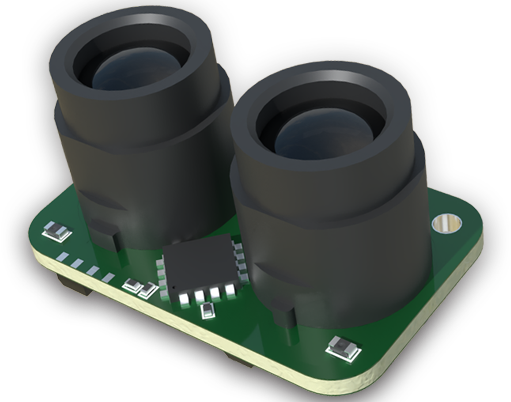
Looking ahead, the future of laser receiver sensor chips is closely tied to emerging technologies. The rise of the Internet of Things (IoT) and 5G networks demands more sophisticated sensors for smart infrastructure and connectivity. In healthcare, non-invasive diagnostic tools leveraging these chips could revolutionize early disease detection. Furthermore, advancements in artificial intelligence (AI) are enabling smarter sensor systems that can adapt to complex scenarios autonomously. As research continues, we can expect even greater integration with machine learning algorithms, allowing for predictive maintenance and enhanced decision-making in real-time applications.
In summary, laser receiver sensor chips are indispensable in today's technological landscape, driving innovation across multiple industries. Their ability to convert light into actionable data with high precision makes them a cornerstone of modern optoelectronic systems. For engineers and developers, understanding the principles and trends behind these chips is essential for harnessing their full potential in next-generation solutions.

