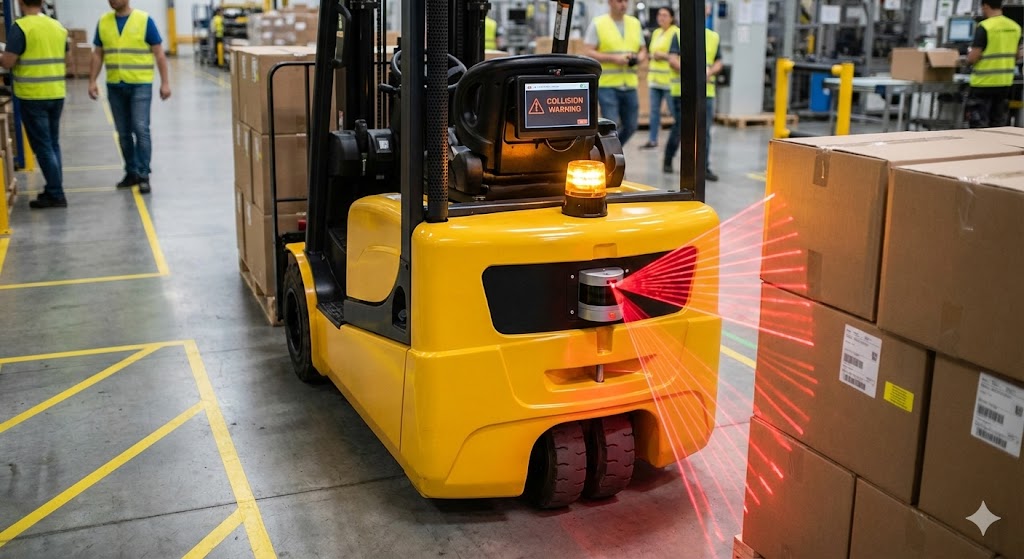
Selecting the optimal laser sensor for an industrial or scientific application is a critical decision that directly impacts system performance, reliability, and cost-effectiveness. With a vast array of technologies, specifications, and manufacturers available, navigating the selection process requires a methodical approach grounded in application requirements. This guide outlines the key parameters and considerations for engineers and procurement specialists.
The first and most fundamental step is to define the primary measurement task. Laser sensors are primarily used for distance measurement, displacement, profile scanning, or presence detection. For precise distance measurement to a single point, time-of-flight (ToF) or triangulation-based sensors are common. If the requirement is to measure the height or thickness of an object, a confocal chromatic or triangulation sensor might be ideal. For capturing a complete 2D or 3D profile of an object, such as in quality inspection, a laser line profiler or scanner is necessary. Clearly articulating the "what" and "why" of the measurement narrows the technology field significantly.
Once the measurement principle is identified, performance specifications become paramount. Range and Standoff Distance: The sensor's measuring range (the distances over which it can operate) and its required standoff (the distance from the sensor head to the target) must suit the mechanical constraints of the installation. Resolution and Accuracy: These are not interchangeable. Resolution is the smallest detectable change in measurement, while accuracy is the deviation from the true value. High-precision tasks like semiconductor inspection demand sub-micron resolution and accuracy, while warehouse logistics may only need millimeter-level precision. Repeatability: Often more critical than absolute accuracy, this defines the sensor's consistency in returning the same value for an unchanged target. Spot Size: The diameter of the laser dot on the target affects spatial resolution. Measuring small features or sharp edges requires a very small spot size, which can be achieved with focused optics. Sampling Rate/Speed: The number of measurements per second. Dynamic processes on fast-moving production lines require high-speed sensors (kHz range) to avoid motion blur and ensure sufficient data density.
The target material and surface characteristics heavily influence sensor choice. Color and Reflectivity: Standard diffuse surfaces are easiest to measure. Shiny, mirror-like, or transparent materials (glass, polished metal) pose challenges as they can reflect the beam unpredictably or allow it to pass through. For these, specialized sensors with coaxial design (confocal) or diffused laser light are necessary. Surface Texture: Rough, absorbent, or uneven surfaces can scatter the laser light, reducing signal strength. Sensors with higher laser power or adaptive receivers may be required. Ambient Conditions: Industrial environments can be harsh. Consider the sensor's Ingress Protection (IP) rating for dust and water resistance, its operating temperature range, and its resistance to vibrations. Exposure to intense ambient light (sunlight, welding arcs) may necessitate sensors with modulated laser light and narrow optical filters to reject interference.

Output and integration capabilities are practical necessities. Common electrical interfaces include analog voltage/current (4-20 mA), digital (RS-232, RS-485), and high-speed industrial Ethernet (EtherCAT, PROFINET, Ethernet/IP). The output format should be compatible with the host system, such as a PLC, PC, or robot controller. Ease of setup and configuration via software is also a key productivity factor. Consider mounting options, cable lengths, and the availability of alignment aids like visible pilot lasers.
Finally, a holistic view of Total Cost of Ownership (TCO) is essential. This includes not only the initial purchase price but also costs for installation, calibration, maintenance, potential downtime, and future scalability. A slightly more expensive, robust sensor from a reputable supplier with strong technical support often proves more economical in the long run than a cheaper, less reliable alternative that causes production stoppages.
In conclusion, there is no universal "best" laser sensor. The correct choice is the one that most precisely and reliably meets the specific technical demands of the application within the given environmental and budgetary constraints. A disciplined evaluation focusing on measurement task, performance specs, target properties, environmental factors, and integration needs will lead to a successful and durable implementation, ensuring optimal data acquisition for automation, quality control, and research.