In the realm of industrial automation and control systems, proximity sensors stand as indispensable components, enabling non-contact detection of objects with high precision and reliability. These devices, which sense the presence or absence of a target without physical contact, are fundamental to modern manufacturing, robotics, and safety systems. Their ability to operate in harsh environments, resist contamination, and provide fast response times makes them superior to traditional mechanical limit switches. This article delves into the common types of proximity sensors, their operational principles, key applications, and essential factors for selection, providing a comprehensive guide for engineers and technicians.
The most prevalent types of proximity sensors include inductive, capacitive, ultrasonic, and photoelectric sensors. Each type operates on a distinct physical principle, making them suitable for specific materials and environmental conditions.
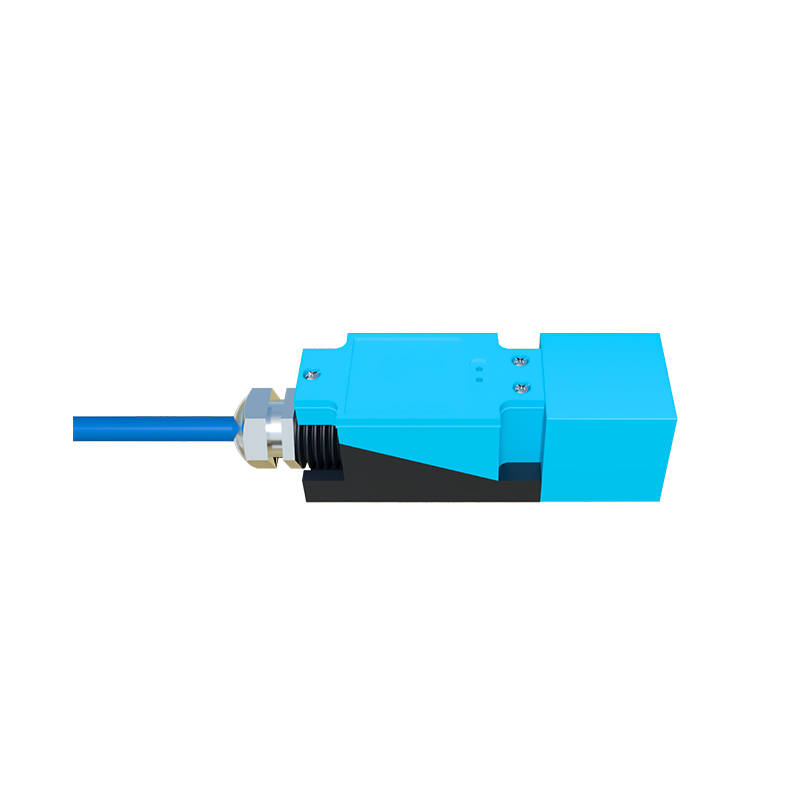
Inductive proximity sensors are widely used for detecting metallic objects, primarily ferrous metals like steel and iron. They generate an electromagnetic field from a coil in the sensor head. When a metal target enters this field, it induces eddy currents, causing a change in the oscillation amplitude. This change is detected by the sensor's circuitry, triggering an output signal. Key advantages include high switching frequency, robustness against dirt, oil, and water, and excellent repeatability. Typical applications involve position sensing of machine parts, counting metallic objects on conveyors, and end-of-travel detection in actuators.
Capacitive proximity sensors, in contrast, can detect both metallic and non-metallic materials, including liquids, plastics, glass, and wood. They function by generating an electrostatic field. The presence of any material with a dielectric constant different from air alters the capacitance of the sensor's circuit, leading to a state change. These sensors are ideal for level detection in tanks (e.g., liquid or granular materials), presence detection of non-metallic products, and applications where the target material varies. However, they can be more susceptible to environmental factors like humidity.
Ultrasonic sensors utilize sound waves beyond the human hearing range. They emit high-frequency ultrasonic pulses and measure the time taken for the echo to return after bouncing off a target. This time-of-flight principle allows for precise distance measurement and presence detection, regardless of the target's color, transparency, or material (with some acoustic absorption considerations). They excel in applications requiring distance monitoring, such as object positioning, loop control, and fill level measurement in challenging conditions involving dust, smoke, or vapors.
Photoelectric sensors operate based on light transmission. They consist of an emitter (light source, often LED) and a receiver. Common modes include through-beam, retro-reflective, and diffuse reflective. In through-beam mode, the emitter and receiver are separate units; an object is detected when it interrupts the light beam. This mode offers the longest sensing range and high reliability. Retro-reflective sensors use a reflector to bounce light back to a receiver housed with the emitter, detecting objects that break the beam. Diffuse sensors detect objects by receiving light reflected directly from the target itself, making them suitable for shorter ranges and varied surface properties. Photoelectric sensors are versatile for detecting a vast array of objects, from small components to large packages, and are crucial in packaging, material handling, and assembly lines.
Selecting the appropriate proximity sensor requires careful consideration of several parameters. First, identify the target material (metal, plastic, liquid) and its properties (color, surface finish). Second, determine the required sensing distance (nominal range) and ensure an appropriate safety margin. The operating environment is critical; factors like temperature extremes, presence of chemicals, washdown requirements, and electrical noise must be evaluated to choose a sensor with suitable housing material (e.g., stainless steel, PBT plastic) and ingress protection (IP) rating. Output type (PNP/NPN, analog, IO-Link) must be compatible with the controller (PLC). Other factors include response time, switching frequency, and mounting constraints.
In conclusion, proximity sensors are vital for enabling efficient, safe, and automated industrial processes. Understanding the core technologies—inductive, capacitive, ultrasonic, and photoelectric—allows engineers to match sensor capabilities to application demands precisely. A methodical selection process focusing on target material, sensing distance, environmental conditions, and electrical interface ensures optimal performance, longevity, and system reliability. As Industry 4.0 advances, the integration of smart sensors with diagnostic capabilities and network communication will further enhance their role in predictive maintenance and data-driven optimization.