In the rapidly evolving landscape of industrial automation, the demand for high-precision, reliable sensing technology has never been greater. RICOH, a name synonymous with imaging and electronics innovation, extends its expertise into the realm of industrial components with its advanced line of laser sensors. These devices are engineered to meet the rigorous demands of modern manufacturing, quality control, and robotic systems, offering unparalleled accuracy and stability.
At the core of RICOH laser sensors is the utilization of laser triangulation or time-of-flight (ToF) principles, depending on the model and application. Laser triangulation sensors project a focused laser beam onto a target surface. The reflected light is captured by a high-resolution CMOS or CCD array at a specific angle. By calculating the displacement of the light spot on the receiver, the sensor can determine the exact distance or profile of the object with micron-level precision. This makes them ideal for applications such as thickness measurement, edge detection, and 3D contour scanning. ToF sensors, on the other hand, measure the time it takes for a laser pulse to travel to the target and back, excelling in longer-range distance measurement and presence detection.
RICOH's engineering prowess is evident in the robust design of these sensors. They are typically housed in rugged, compact metal casings rated for IP67 or higher, ensuring reliable operation in harsh industrial environments characterized by dust, moisture, and vibration. Key performance specifications often include a high sampling rate, allowing for real-time monitoring in high-speed production lines, and a wide measurement range with minimal linearity error. Advanced models incorporate features like automatic background suppression, which filters out ambient light interference, and multi-point teaching functions for easy setup and calibration.
The integration of smart functionalities sets RICOH sensors apart. Many units come equipped with digital interfaces such as Ethernet/IP, PROFINET, or IO-Link, facilitating seamless communication with PLCs (Programmable Logic Controllers) and higher-level control systems. This enables not only data transmission but also remote configuration and diagnostics, which are critical for predictive maintenance and Industry 4.0 initiatives. The sensors' embedded processors can perform complex calculations on-board, reducing the computational load on the central controller and speeding up system response times.
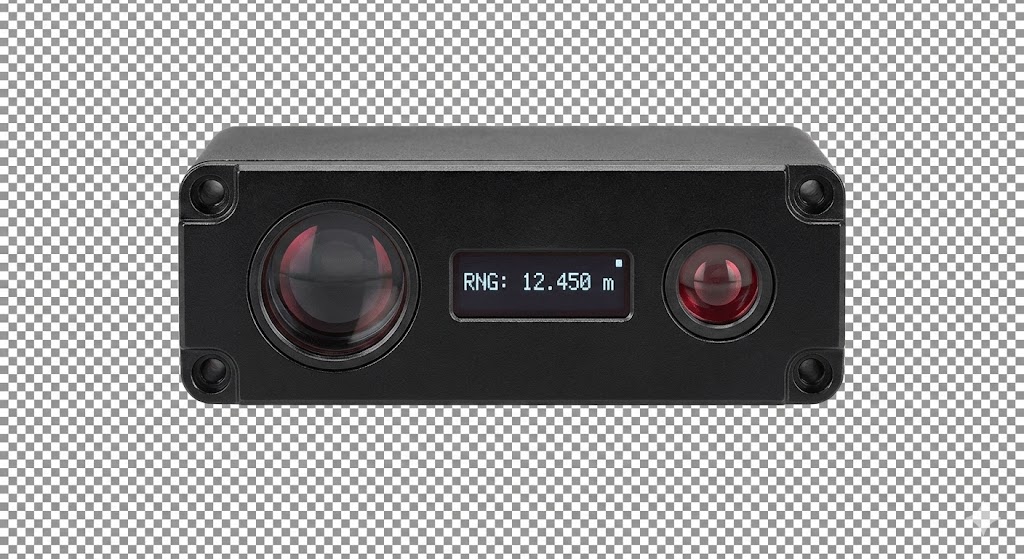
Application scenarios for RICOH laser sensors are vast and varied. In the automotive industry, they are deployed for precise gap and flush measurement between body panels. In electronics manufacturing, they verify component placement on PCBs and measure solder paste height. Packaging lines utilize them to ensure correct fill levels and label positioning. Furthermore, in logistics automation, these sensors guide autonomous mobile robots (AMRs) by accurately detecting pallets and navigating warehouse aisles.

Selecting the appropriate RICOH laser sensor requires careful consideration of several factors. Engineers must evaluate the required measurement range, resolution, spot size, and response speed against the specific task. Environmental conditions, such as the material and color of the target object (highly reflective or absorbent surfaces can pose challenges), ambient temperature, and potential optical obstructions, must also be accounted for. RICOH provides detailed datasheets and application support to assist in this selection process, ensuring optimal sensor performance.

Looking ahead, the trajectory for RICOH laser sensors points toward even greater miniaturization, enhanced connectivity with IoT frameworks, and the integration of AI-driven analytics for anomaly detection and adaptive control. As factories become smarter and more interconnected, the role of precise, intelligent sensing will only expand. RICOH's commitment to R&D in photonics and digital signal processing positions its laser sensors as critical enablers for the next generation of automated systems, driving efficiency, quality, and flexibility in production worldwide.
In conclusion, RICOH laser sensors represent a fusion of optical precision, mechanical durability, and digital intelligence. They are not merely components but foundational elements that empower machines to perceive their environment with exceptional clarity. For engineers and system integrators aiming to push the boundaries of automation, understanding and leveraging the capabilities of these sensors is a step toward building more resilient, accurate, and future-ready industrial operations.