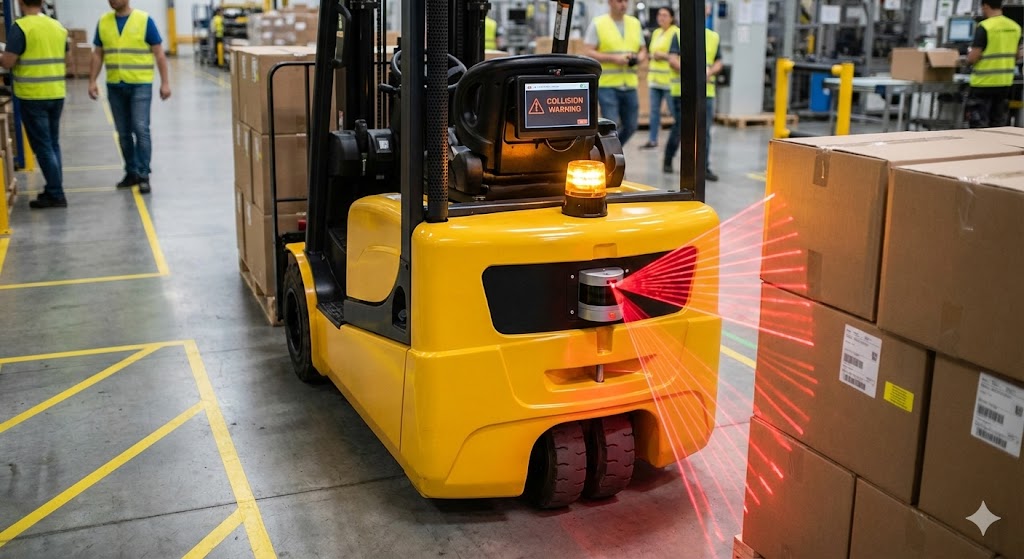
In the rapidly evolving automotive industry, in-car laser sensors, commonly referred to as LiDAR (Light Detection and Ranging), have emerged as a cornerstone technology for advanced driver-assistance systems (ADAS) and autonomous vehicles. These sensors operate by emitting pulsed laser light and measuring the time it takes for the reflections to return, creating precise, high-resolution three-dimensional maps of the vehicle's surroundings in real-time. Unlike traditional cameras or radar, LiDAR provides exceptional accuracy in object detection, distance measurement, and speed calculation, even in challenging conditions such as low light, fog, or direct sunlight. This capability is critical for functions like adaptive cruise control, automatic emergency braking, lane-keeping assistance, and pedestrian detection, significantly reducing the risk of collisions and enhancing overall road safety.
The integration of in-car laser sensors is a complex engineering feat. Modern automotive LiDAR systems are designed to be compact, robust, and cost-effective for mass production. They are typically mounted on the roof, front grille, or integrated into the vehicle's body panels. Solid-state LiDAR, which has no moving parts, is gaining traction due to its higher durability, smaller form factor, and potential for lower costs compared to mechanical rotating systems. These sensors generate vast amounts of point cloud data, which is processed by powerful onboard computers using sophisticated algorithms and artificial intelligence to distinguish between vehicles, cyclists, pedestrians, road signs, and other obstacles. This real-time environmental perception is the foundational layer for vehicle decision-making in autonomous driving scenarios, from Level 2 partial automation to the aspirational Level 5 full automation.

Looking ahead, the future of in-car laser sensors is intertwined with the progression towards fully autonomous vehicles. Key development areas include increasing sensor range and resolution, reducing size and power consumption, and further driving down manufacturing costs. Sensor fusion, which combines data from LiDAR, cameras, radar, and ultrasonic sensors, is becoming standard practice to create a redundant and more reliable perception system. This multi-modal approach compensates for the individual weaknesses of each sensor type. Furthermore, the standardization of communication protocols between sensors and vehicle control units is crucial for system integration and cybersecurity. As the technology matures, we can expect in-car laser sensors to become as ubiquitous as airbags, playing an indispensable role in creating a safer, more efficient, and ultimately self-driving transportation ecosystem. The ongoing research and investment in this field promise not only to revolutionize personal mobility but also to transform logistics and public transportation networks.