In the rapidly evolving landscape of industrial automation, robotics, and consumer electronics, the relentless drive towards miniaturization has become a central theme. Among the critical components enabling this trend, proximity sensors stand out for their ability to detect the presence or absence of objects without physical contact. The quest for the world's smallest proximity sensors represents not just a technical challenge but a fundamental shift in design possibilities, opening doors to applications previously deemed impossible due to size constraints.
The definition of "smallest" is continually being redefined. Currently, state-of-the-art miniature proximity sensors can have package sizes as tiny as 1.0 x 0.55 x 0.3 mm (L x W x H). These are typically surface-mount device (SMD) components, often utilizing photoelectric or inductive sensing principles adapted for microscopic scales. Achieving such dimensions requires groundbreaking advancements in several key areas. Semiconductor fabrication techniques, similar to those used in microchip production, are now employed to create the sensing elements. Advanced packaging technologies, such as chip-scale packaging (CSP) and wafer-level packaging (WLP), eliminate traditional bulky casings, allowing the silicon die itself to be the primary package. Furthermore, the integration of the sensing element, signal conditioning circuitry, and digital interface (like I²C) onto a single monolithic chip is crucial. This high level of integration reduces external component count, saves board space, and simplifies design-in for engineers.
The primary technologies enabling these micro-sensors are photoelectric and inductive. Miniature photoelectric sensors, often employing a modulated infrared LED and a phototransistor or photodiode in a single package, can detect objects just a few millimeters away. Their extremely low power consumption is vital for battery-operated devices. Inductive proximity sensors, designed to detect metallic objects, have also seen dramatic shrinkage. Micro-fabricated coils and advanced ferrite materials allow for sensing distances suitable for their size, often in the sub-millimeter to few-millimeter range, perfect for precision positioning and end-effector detection in micro-assembly robots.
The applications for these minuscule sensors are vast and growing. In consumer electronics, they are indispensable for smartphone features like automatic display dimming during calls and lid-open detection in ultra-thin laptops. The medical device industry leverages them in minimally invasive surgical tools, implantable devices for condition monitoring, and portable diagnostic equipment where every cubic millimeter counts. In advanced manufacturing, they enable precision alignment in semiconductor wafer processing, component presence verification in micro-electromechanical systems (MEMS) assembly, and tactile feedback in micro-grippers for robotic arms. The burgeoning field of the Internet of Things (IoT) and wearable technology also relies heavily on these sensors to add contextual awareness to tiny, power-constrained devices.
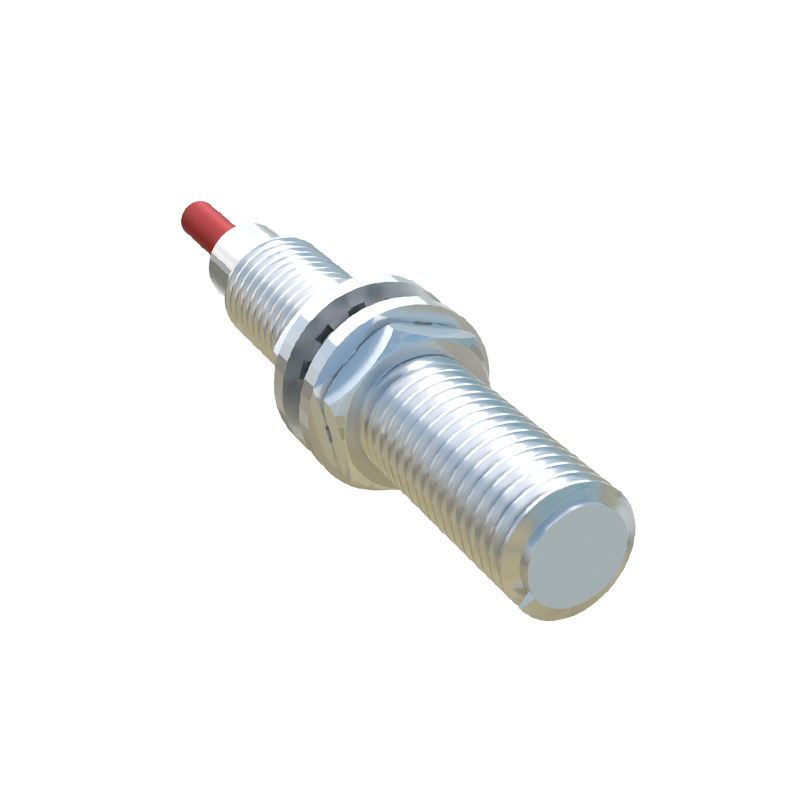
However, designing with the world's smallest proximity sensors presents unique challenges. The extremely small sensing face can make them more susceptible to environmental optical or electrical noise. Precise optical alignment is critical for photoelectric types, requiring high-accuracy pick-and-place machines during PCB assembly. Thermal management can be a concern as the tiny package must dissipate heat from the integrated LED or circuitry. Furthermore, the achievable sensing distance is inherently limited by the laws of physics relative to their size; a sensor measuring 0.3mm in height cannot reliably detect an object 10mm away. Engineers must carefully balance the size reduction against the required performance parameters like sensing range, noise immunity, and power budget.
Looking ahead, the frontier of miniaturization continues to advance. Research is focused on nano-sensors based on novel materials like graphene, which promise even smaller form factors and new sensing modalities. The integration of multiple sensing functions (e.g., proximity, ambient light, and gesture sensing) into a single ultra-compact package is another clear trend. Furthermore, the development of energy-harvesting techniques could lead to completely passive or self-powered micro-sensors, eliminating the need for a battery connection altogether.
In conclusion, the development of the smallest proximity sensors is a testament to the incredible innovation within the electrical and sensor engineering fields. These microscopic components are powerful enablers, allowing product designers to embed non-contact sensing into spaces once considered unreachable. As technology pushes forward, these sensors will continue to shrink in size while growing in capability, silently and reliably powering the next generation of intelligent, compact, and interconnected devices across every industry. The race for miniaturization is far from over; it is accelerating, driven by the endless demand for smarter and smaller solutions.