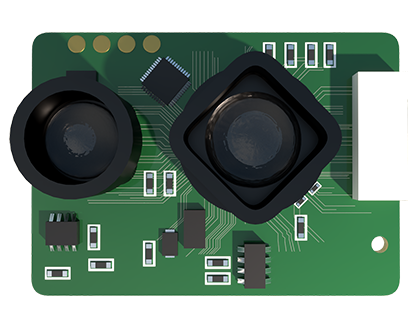
In the realm of industrial automation and precision measurement, laser sensor motherboards serve as the critical computational and control hub, orchestrating the complex interplay between optical components, signal processing units, and output interfaces. These specialized printed circuit boards (PCBs) are engineered to meet the rigorous demands of modern manufacturing, quality control, and robotic guidance systems. Unlike generic control boards, a laser sensor motherboard is meticulously designed to handle high-frequency signals, manage precise timing for laser pulse emission and reception, and process vast amounts of data with minimal latency.
The core architecture of a typical laser sensor motherboard integrates several key subsystems. The central processing unit, often a high-performance microcontroller (MCU) or digital signal processor (DSP), executes the firmware that governs all operations. This firmware manages laser diode drivers, which control the intensity, frequency, and pulse width of the emitted laser beam. Simultaneously, the board interfaces with a photodetector or a complementary metal-oxide-semiconductor (CMOS) array that captures the reflected light. The analog signals from these detectors are immediately conditioned by onboard amplifiers and filters before being converted into digital data by high-speed analog-to-digital converters (ADCs).
Signal processing is where the motherboard truly demonstrates its sophistication. Algorithms embedded within the processor perform real-time calculations for time-of-flight (ToF), triangulation, or phase-shift analysis, depending on the sensor's measurement principle. For instance, in a ToF laser sensor, the board precisely measures the nanosecond-level interval between an emitted pulse and its return echo to calculate distance. This requires exceptional clock accuracy and noise suppression capabilities designed into the PCB layout and component selection. Thermal management is also paramount, as heat from active components can induce signal drift; thus, designs often incorporate thermal pads, heat sinks, or careful placement of heat-generating elements.
Connectivity and communication protocols are another vital aspect. Modern laser sensor motherboards feature a range of industrial-grade interfaces such as Ethernet/IP, PROFINET, EtherCAT, or simple digital I/Os for seamless integration into larger automation networks. They may also support serial communication like RS-485 or USB for configuration and diagnostics. The board's firmware typically allows users to set parameters such as measurement range, response time, and output formatting via dedicated software tools.
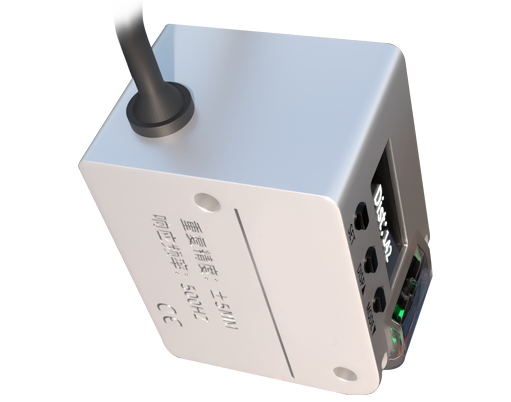
Reliability and durability are non-negotiable in industrial environments. These motherboards are constructed using materials with high glass transition temperatures (Tg) and conformally coated to resist moisture, dust, and chemical exposure. Components are selected for extended temperature ranges and high mean time between failures (MTBF). Rigorous testing, including vibration, shock, and electromagnetic compatibility (EMC) tests, ensures stable operation alongside heavy machinery and other electrical equipment.
The evolution of laser sensor motherboards continues to be driven by trends like Industry 4.0 and the Industrial Internet of Things (IIoT). Future iterations are likely to incorporate more edge computing capabilities, allowing for preliminary data analysis and filtering directly on the board to reduce network load. Enhanced security features for networked sensors and even greater integration of artificial intelligence for adaptive measurement and predictive maintenance are on the horizon. In summary, the laser sensor motherboard is a masterpiece of embedded engineering, transforming raw optical phenomena into reliable, actionable data that fuels automation and innovation across countless industries.