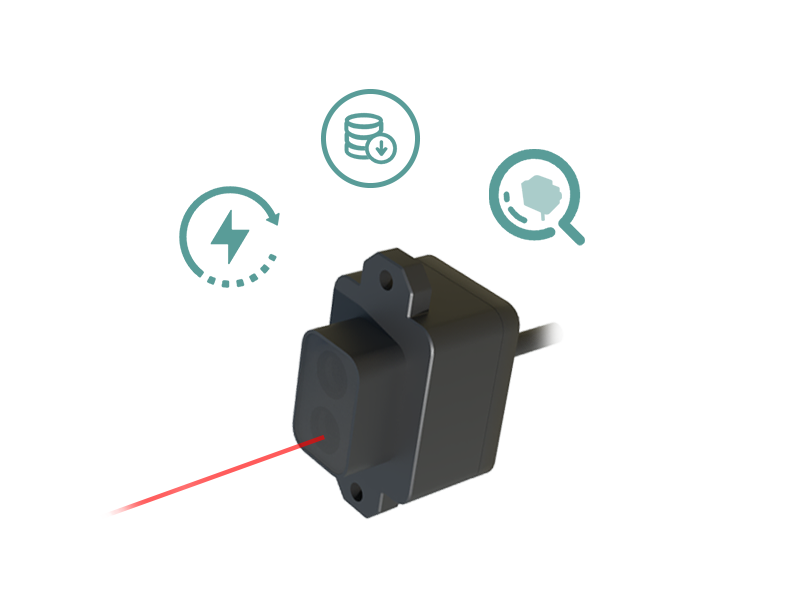
In the realm of industrial automation, machine vision, and precision measurement, the viewfinder laser sensor stands as a critical component for non-contact detection and positioning. Unlike simple photoelectric sensors, a viewfinder laser sensor integrates a highly collimated laser source with a precise optical receiving system, often featuring a built-in visual aiming mechanism or digital display—the "viewfinder"—that allows operators to accurately target the measurement point. This fusion of visible guidance and laser precision enables unparalleled accuracy in applications demanding micron-level resolution.
The core operating principle hinges on laser triangulation or time-of-flight (ToF) methods. In triangulation-based sensors, the laser diode projects a focused spot onto the target. The reflected light is captured by a position-sensitive detector (PSD) or a CMOS/CCD array at a specific angle. Any change in the target's distance causes a shift in the position of the reflected spot on the detector, which is then calculated to determine precise distance or displacement. The integrated viewfinder, typically a coaxial red LED or a miniature camera feed, shows exactly where this laser spot is incident, ensuring correct alignment. ToF sensors, used for longer ranges, measure the phase shift or direct flight time of a modulated laser pulse.
Key performance parameters for engineering specification include measurement range, resolution (often down to micrometers), linearity error, spot size, response time, and environmental robustness. The choice of laser class (typically Class 2 or Class 1 for safety) and wavelength (common red visible lasers at 650nm or infrared) is crucial based on the target material and ambient light conditions. Visible lasers with viewfinders simplify setup dramatically, as the operator can visually confirm the sensing point on complex surfaces or small components.
The applications are vast and industry-defining. In electronics manufacturing, these sensors measure PCB warp, component coplanarity, and solder paste height. In automotive assembly, they gauge gap and flush between body panels with extreme precision. Robotics rely on them for accurate bin-picking guidance and tool center point calibration. They are indispensable in roll diameter measurement in web processing, thickness monitoring of glass or film, and vibration analysis in predictive maintenance. The viewfinder feature is particularly invaluable in field installations and maintenance, reducing commissioning time and error.
Selecting the right viewfinder laser sensor requires a systematic approach. First, define the primary measurand: distance, thickness, presence, or profile. Second, assess the target properties: color, material, surface texture (matte, glossy, transparent), and possible tilting, as these dramatically affect reflectivity and measurement stability. Third, consider the mechanical and environmental constraints: required stand-off distance, space for sensor head, exposure to dust, coolant, temperature swings, and electrical noise. Fourth, evaluate the necessary output interface: analog voltage/current, digital protocols like IO-Link, Ethernet/IP, or PROFINET for Industry 4.0 integration. Finally, the usability of the viewfinder—its clarity, brightness under various lighting, and interface for setting thresholds—directly impacts operational efficiency.
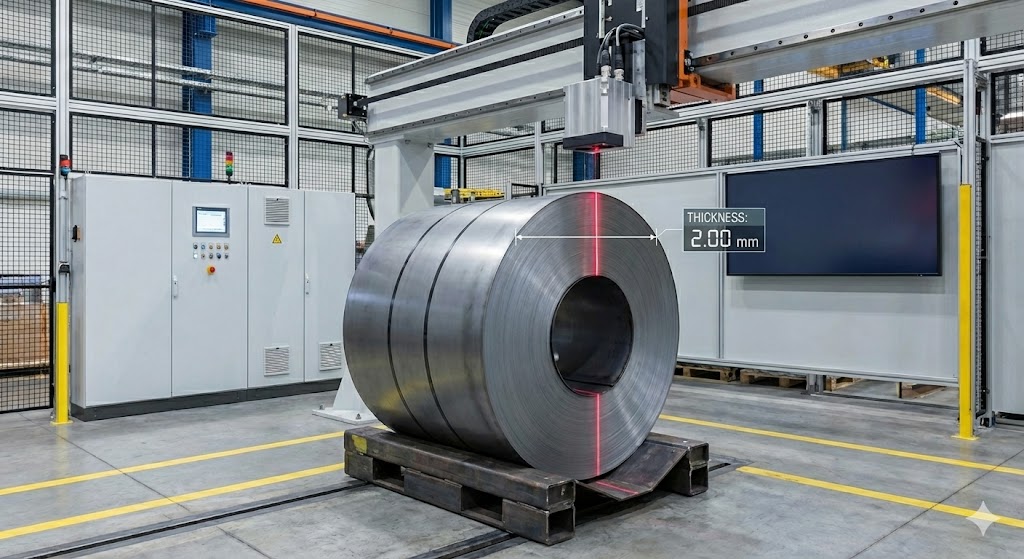
Modern advancements are pushing the boundaries further. Sensors now incorporate "teach-in" functions via the viewfinder interface, allowing quick parameter setting by simply targeting reference points. High-speed versions capture data at kHz rates for dynamic processes. Robust housings with IP67/IP69K ratings ensure reliability in harsh washdown environments. Furthermore, the integration of intelligent evaluation electronics directly in the sensor head enables edge computing, such as performing complex calculations and sending only processed results, reducing controller load.
In conclusion, the viewfinder laser sensor is more than just a sensing device; it is a synergy of optical precision, intuitive human-machine interaction, and robust engineering. For the design engineer or systems integrator, understanding its operational nuances and selection criteria is paramount to implementing successful, reliable, and high-precision automation solutions. Its role is foundational in the march towards smarter, more adaptive, and more precise manufacturing ecosystems.