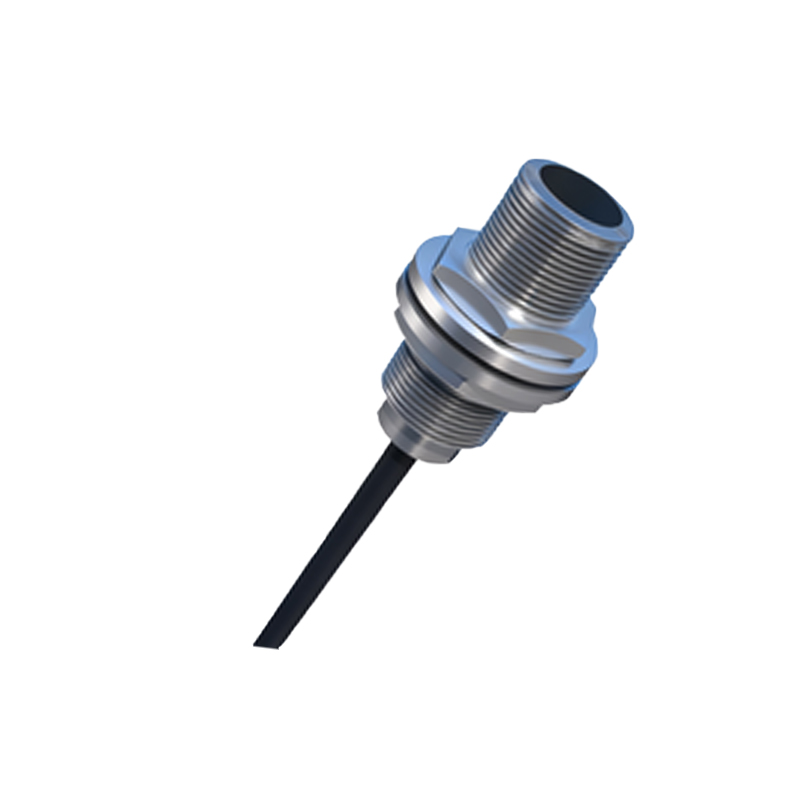
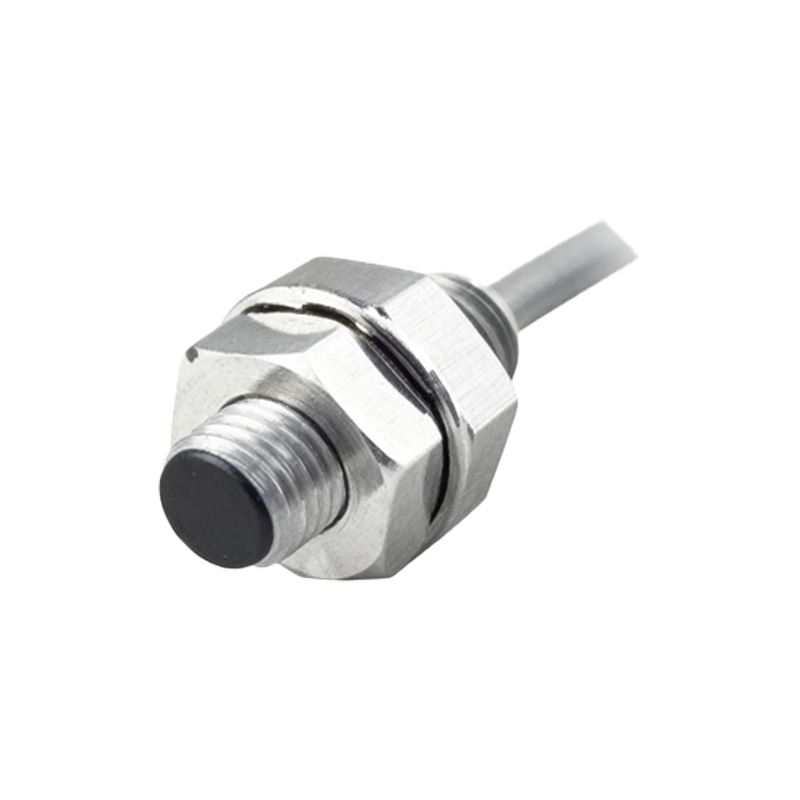
Normally open (NO) proximity sensors are fundamental components in modern industrial automation, designed to detect the presence or absence of objects without physical contact. These sensors operate on the principle of electromagnetic fields, inductive or capacitive coupling, or photoelectric beams, depending on the specific type. In a normally open configuration, the sensor's output circuit remains open (non-conducting) when no target is within its sensing range. Upon detecting a valid target, the circuit closes, allowing current to flow and signaling the control system—typically a programmable logic controller (PLC)—to trigger a predefined action, such as activating a machine, counting items, or initiating a safety sequence.
The operational reliability of NO proximity sensors stems from their solid-state construction, which lacks moving mechanical parts. This design minimizes wear, reduces maintenance needs, and enhances longevity in harsh environments where dust, moisture, or vibration are prevalent. Common applications include position verification on assembly lines, object detection in material handling systems, and safety interlocks on robotic cells. For instance, in automotive manufacturing, an inductive NO sensor might confirm a metal component is correctly seated before welding, while a capacitive NO sensor could detect liquid levels in non-metallic tanks within food processing plants.
Selecting the appropriate NO proximity sensor requires careful consideration of several technical parameters. Sensing distance, often specified as the nominal range, must align with the application's spatial constraints; factors like target material, size, and approach angle can affect this distance. Response time, typically in milliseconds, determines how quickly the sensor reacts to target presence, which is critical for high-speed production lines. Environmental ratings, such as IP67 for dust and water resistance, ensure durability. Additionally, output types—whether NPN or PNP transistor-based—must match the control system's input requirements to avoid compatibility issues.
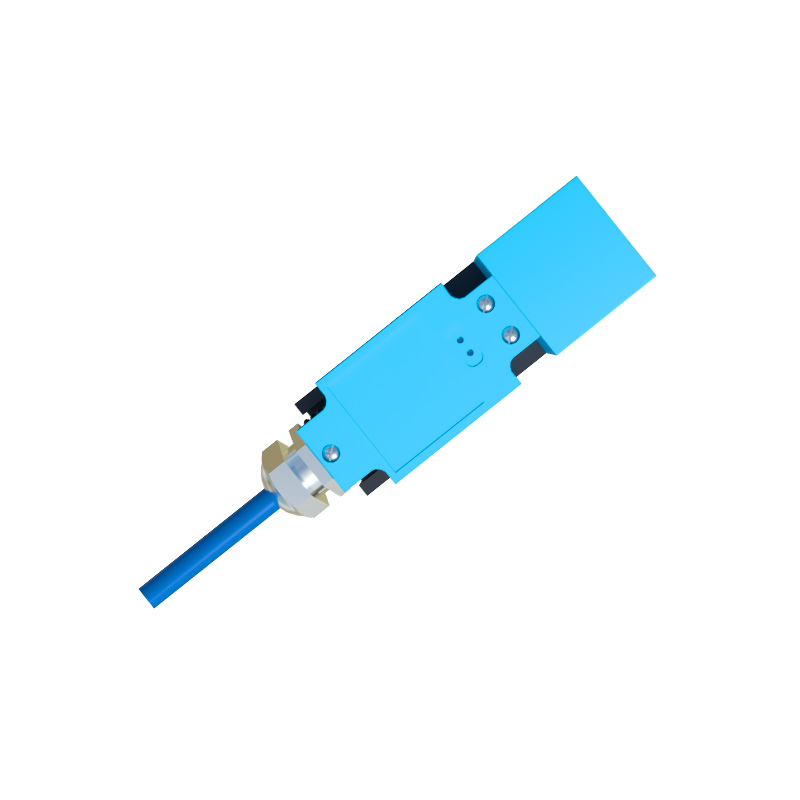
Installation and wiring practices significantly influence sensor performance. Proper mounting, avoiding metal-to-metal contact for inductive types, and maintaining clearance from other electromagnetic sources prevent false triggering. Regular calibration and testing, using manufacturer-recommended targets, help sustain accuracy. Troubleshooting common issues, like erratic signals, often involves checking power supply stability, wiring integrity, or environmental interference.
Advancements in NO proximity sensor technology continue to drive efficiency. Smart sensors with integrated IO-Link communication provide real-time diagnostics, enabling predictive maintenance and reducing downtime. Miniaturized designs allow integration into compact machinery, while enhanced sensing capabilities extend to detecting diverse materials, from metals to plastics. As Industry 4.0 evolves, these sensors form a vital link in interconnected automation networks, supporting data-driven optimization.
In summary, normally open proximity sensors offer a robust, non-contact solution for object detection in industrial settings. Their simplicity, reliability, and adaptability make them indispensable for ensuring precision, safety, and productivity across various sectors, from manufacturing to logistics. By understanding their principles and applications, engineers can effectively leverage these devices to streamline automated processes.