In the rapidly evolving landscape of industrial automation and precision measurement, laser sensors have emerged as a cornerstone technology. Their ability to deliver non-contact, high-speed, and exceptionally accurate data makes them indispensable across a multitude of sectors. This article delves into the fundamental principles, diverse applications, and key considerations for integrating laser sensors into modern systems.
At its core, a laser sensor operates by emitting a focused beam of coherent light—typically from a laser diode—towards a target object. The sensor then detects the interaction of this beam with the target. The specific measurement principle varies based on the parameter of interest. For distance and displacement measurement, two primary methods dominate: triangulation and time-of-flight (ToF). Triangulation sensors project a laser spot onto the target; a receiving lens at a known angle captures the reflected light's position on a CCD or CMOS array. Any change in the target's distance shifts the spot position on the array, allowing for precise calculation. This method excels at short to medium ranges with micron-level resolution. Conversely, ToF sensors measure the time delay between the emission of a laser pulse and the detection of its reflection. Given the constant speed of light, this time interval directly correlates to distance. ToF is ideal for longer ranges, though typically with slightly lower resolution than triangulation.
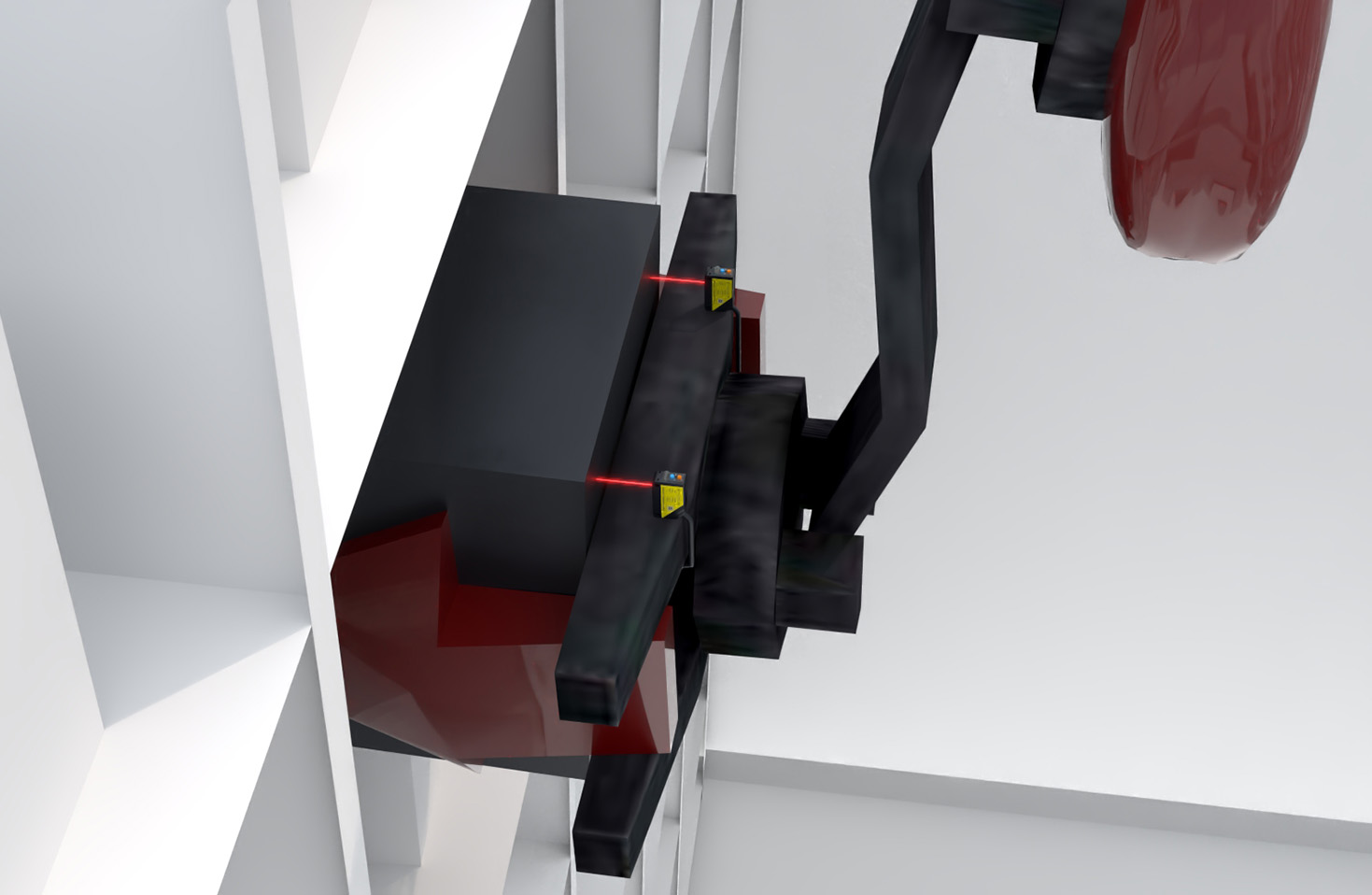
Beyond distance, laser sensors are engineered for various other measurements. Confocal chromatic sensors use white light, dispersed by a lens, to measure displacement or thickness with nanometer precision by analyzing the wavelength of the reflected light. Laser micrometers and profile sensors scan a beam across an object to gauge dimensions, contours, and even surface defects. Furthermore, laser sensors are pivotal in velocity measurement (using the Doppler effect) and presence detection.
The applications of laser sensors are vast and critical. In automotive manufacturing, they ensure precise gap and flush measurements between body panels. In electronics, they verify component placement on PCBs and measure solder paste thickness. The semiconductor industry relies on them for wafer alignment and inspection. In logistics, they facilitate dimensioning systems for parcels and guide autonomous mobile robots (AMRs) through warehouse aisles. Quality control processes across all industries leverage laser sensors for 100% inline inspection, detecting imperfections invisible to the human eye.
Selecting the right laser sensor requires careful analysis of several parameters. The required measurement range, resolution, and accuracy are paramount. The target's surface properties—color, reflectivity, material, and texture—significantly impact performance; dark or matte surfaces absorb more light, while shiny surfaces can cause specular reflection issues. Environmental conditions such as ambient light, dust, vibration, and temperature must be accounted for, often necessitating sensors with robust housings and protective ratings (e.g., IP67). Output interfaces (analog, digital, Ethernet-based protocols like EtherCAT or PROFINET) must be compatible with the existing control system. Finally, form factor and mounting constraints play a crucial role in integration.
Looking ahead, the future of laser sensor technology is geared towards greater intelligence, miniaturization, and integration. The convergence of laser sensing with artificial intelligence and machine vision is creating "smart sensors" capable of complex classification and decision-making at the edge. Miniaturization efforts are producing ever-smaller sensor heads for use in confined spaces. Furthermore, the development of multi-functional sensors that combine distance, profile, and spectral analysis in a single unit is on the rise, offering more comprehensive data streams.
In conclusion, laser sensors are a transformative technology driving precision and efficiency in modern industry. Their non-contact nature, high speed, and versatility solve complex measurement and detection challenges that other technologies cannot. By understanding their operating principles, application spectrum, and selection criteria, engineers and system integrators can harness their full potential to optimize processes, enhance product quality, and pave the way for more advanced automated systems. As Industry 4.0 and the Industrial Internet of Things (IIoT) continue to mature, the role of the laser sensor as a critical data acquisition node will only become more pronounced.