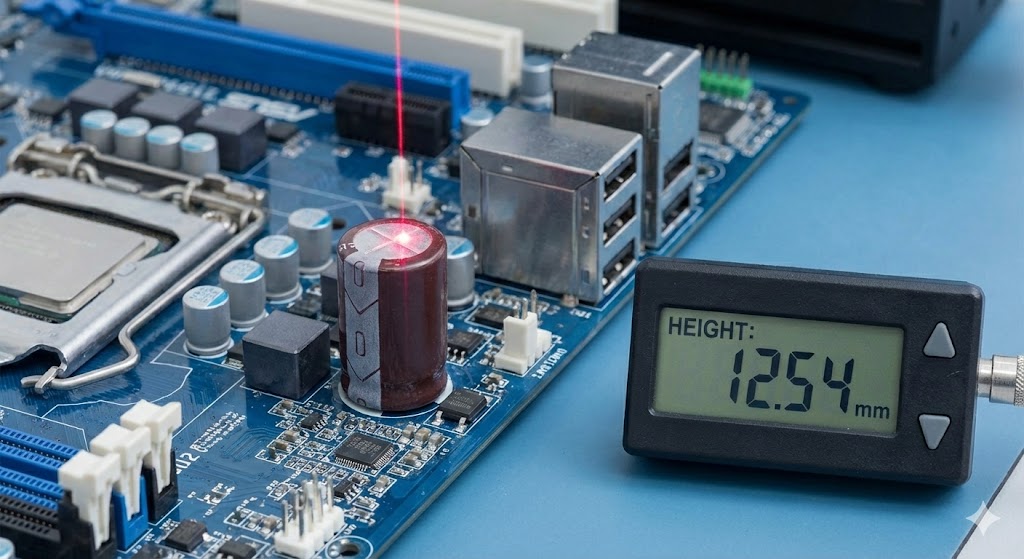
Laser distance sensors, also known as laser rangefinders or LiDAR sensors in specific configurations, have become indispensable tools across a vast spectrum of industrial and technological applications. Their core operating principle is based on the time-of-flight (ToF) or phase-shift measurement of a laser beam. A laser diode emits a focused, coherent light pulse towards a target. The sensor then precisely measures the time it takes for the reflected pulse to return to a photodetector. Given the constant speed of light, this time interval is directly proportional to the distance to the target. This fundamental method enables non-contact, high-precision measurement with remarkable speed and reliability.
One of the most critical features of modern laser distance sensors is their exceptional accuracy and resolution. High-end models can achieve sub-millimeter accuracy even at ranges of several tens of meters. This precision is paramount in applications like robotic guidance, where a manipulator arm must position itself with exactitude, or in quality control, verifying the dimensions of machined parts against tight tolerances. The resolution, or the smallest detectable change in distance, is equally impressive, allowing for the detection of minute vibrations or deformations.
The measurement speed and update rate of these sensors are another defining characteristic. Capable of taking thousands of measurements per second, they are ideal for dynamic processes. On a high-speed production line, for instance, a laser sensor can continuously monitor the fill level of bottles moving rapidly on a conveyor belt or check the presence and position of components without causing a bottleneck. This high-speed capability is also crucial in autonomous vehicle navigation systems, where real-time environmental mapping is essential for safe operation.
Robustness and environmental immunity are engineered into industrial-grade laser sensors. They are typically housed in rugged, IP67-rated enclosures that protect against dust, water jets, and mechanical shock. Unlike ultrasonic sensors, laser beams are unaffected by air temperature, pressure, or humidity variations under normal conditions, providing stable readings. Furthermore, they are largely immune to acoustic noise and electrical interference common in factory settings. However, it is important to note that their performance can be challenged by certain target properties, such as extremely shiny or transparent surfaces, which may require special filters or calibration.
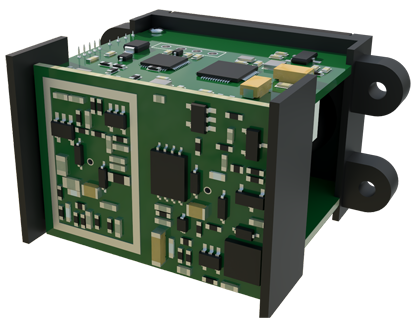
The versatility in output and programmability adds to their utility. Standard models offer analog outputs (4-20 mA, 0-10V), digital interfaces (RS-232, RS-485, USB), and industrial fieldbus protocols (PROFIBUS, EtherCAT, IO-Link). This allows for seamless integration into existing control systems, PLCs, and data acquisition networks. Many sensors feature programmable switching points, allowing them to function as highly precise limit switches, or offer in-sensor averaging and filtering algorithms to handle noisy signals.
Applications for laser distance sensors are diverse and growing. In industrial automation, they are used for precise positioning, thickness measurement, wafer mapping in semiconductor fabrication, and roll diameter monitoring. In logistics, they measure pallet dimensions for warehouse management systems. In construction and civil engineering, they facilitate land surveying, volume calculation, and alignment tasks. The technology also forms the backbone of 3D scanning and profiling systems, creating detailed digital models of objects or environments.
When selecting a laser distance sensor, key parameters to consider include the required measuring range, accuracy, spot size (a smaller spot allows for more precise targeting of small features), response time, and the material and surface characteristics of the target. The choice of visible red laser or Class 1 infrared laser also depends on the application and safety requirements.
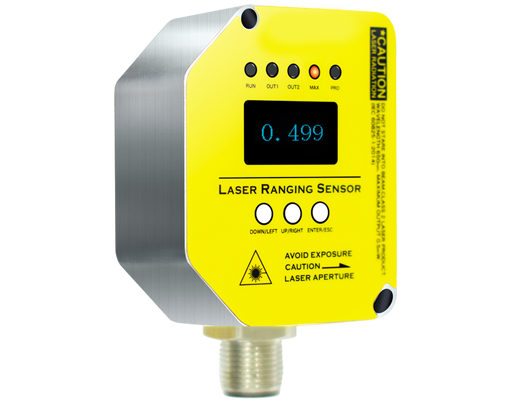
In conclusion, laser distance sensors offer a powerful combination of precision, speed, and reliability. Their non-contact nature minimizes wear and allows for measurement of delicate or moving objects. As the technology continues to advance, with improvements in miniaturization, cost, and data processing capabilities, their role in enabling smarter automation, advanced robotics, and the Internet of Things (IoT) will only expand further, solidifying their status as a cornerstone of modern industrial measurement.