Proximity sensors are indispensable components in modern industrial automation, offering non-contact detection of objects within a defined range without physical touch. These devices enhance operational efficiency, reduce mechanical wear, and improve safety across various sectors. This article explores the fundamental working principles, types, and key applications of proximity sensors in industrial settings.
At their core, proximity sensors detect the presence or absence of an object using electromagnetic fields, light, or sound. The most common types include inductive, capacitive, ultrasonic, and photoelectric sensors. Each type operates on distinct principles tailored to specific environmental conditions and target materials.
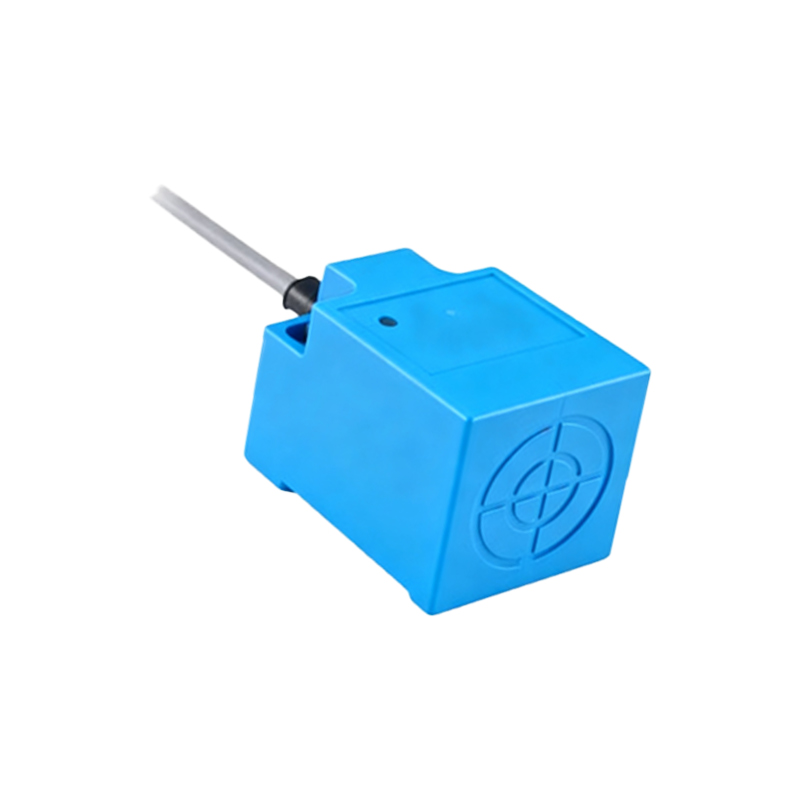
Inductive proximity sensors are widely used for detecting metallic objects. They generate an oscillating electromagnetic field from a coil and oscillator circuit. When a metal object enters this field, eddy currents are induced, causing a change in the oscillation amplitude. This change triggers a signal output, indicating the object's presence. These sensors are ideal for harsh environments due to their robustness and resistance to dust, moisture, and vibrations. Common applications include position sensing in conveyor systems, metal detection in machining, and part counting in assembly lines.
Capacitive proximity sensors can detect both metallic and non-metallic materials, such as plastics, liquids, or wood. They function by generating an electrostatic field. When an object enters this field, it alters the sensor's capacitance, leading to a change in the oscillator output. This variation is processed to activate the sensor's switch. Capacitive sensors are valuable in level detection for tanks containing liquids or granular materials, packaging industries for material presence verification, and touch-sensitive controls.
Ultrasonic proximity sensors emit high-frequency sound waves and measure the time taken for echoes to return after hitting an object. By calculating the time-of-flight, they determine distance and presence. These sensors excel in detecting objects regardless of color, transparency, or material composition, making them suitable for complex environments. Typical uses include liquid level monitoring, obstacle detection in automated guided vehicles (AGVs), and stack height measurement in warehousing.
Photoelectric sensors utilize light beams, often infrared, to detect objects. They consist of an emitter and a receiver. When an object interrupts or reflects the light beam, the receiver detects the change, triggering an output signal. Photoelectric sensors are categorized into through-beam, retro-reflective, and diffuse-reflective types, each offering different sensing ranges and accuracies. They are extensively applied in packaging, material handling, and automated inspection systems for precise object detection and counting.
The selection of a proximity sensor depends on factors like target material, sensing distance, environmental conditions (e.g., temperature, humidity), and required response time. For instance, inductive sensors are preferred for short-range metal detection in dirty areas, while ultrasonic sensors are chosen for longer ranges and diverse materials.
In industrial applications, proximity sensors contribute significantly to process optimization. In automotive manufacturing, they ensure precise positioning of components during assembly. In food and beverage industries, capacitive sensors monitor fill levels without contact, maintaining hygiene. In robotics, these sensors enable safe interaction with humans and accurate object manipulation.
Maintenance and calibration are crucial for sustained performance. Regular checks for contamination, alignment, and electrical connections help prevent failures. Advances in technology have led to smarter sensors with integrated diagnostics, IO-Link communication, and enhanced durability, supporting Industry 4.0 initiatives for interconnected and intelligent systems.
Overall, proximity sensors are vital for automation, offering reliability and versatility. Understanding their principles and applications allows engineers to implement effective solutions, driving productivity and innovation in industrial operations. As technology evolves, these sensors will continue to play a key role in shaping efficient and adaptive manufacturing environments.