In the rapidly evolving landscape of industrial automation and precision measurement, laser sensors have emerged as pivotal components, offering unparalleled accuracy, speed, and reliability. Among the leading innovators in this domain, Juyuan Jingdian stands out with its sophisticated laser sensor technology, which is fundamentally driven by advanced circuit design. This article delves into the intricate circuit architectures that empower Juyuan Jingdian laser sensors, highlighting key design principles, components, and their implications for performance in demanding industrial environments.
At the core of any high-performance laser sensor lies its electronic circuitry, which orchestrates the emission, detection, and processing of laser signals. Juyuan Jingdian employs a modular circuit design approach, typically segmented into three primary sections: the laser driver circuit, the photodetector and signal conditioning circuit, and the microcontroller or digital signal processing (DSP) unit. The laser driver circuit is responsible for generating stable, pulsed, or continuous-wave laser beams. It incorporates precision current sources and temperature compensation mechanisms to ensure consistent optical output, mitigating drift caused by environmental fluctuations. Utilizing high-speed transistors and specialized integrated circuits (ICs), this circuit minimizes noise and maximizes efficiency, which is crucial for applications like distance measurement, object detection, and surface profiling.
The photodetector circuit, often based on avalanche photodiodes (APDs) or phototransistors, captures the reflected or scattered laser light. This stage is critical for sensitivity and signal-to-noise ratio (SNR). Juyuan Jingdian designs incorporate transimpedance amplifiers (TIAs) to convert the weak photocurrent into a measurable voltage, followed by filtering stages to eliminate ambient light interference and electrical noise. Advanced designs may include automatic gain control (AGC) circuits to adapt to varying reflection conditions, ensuring robust performance across diverse materials and distances. The signal conditioning circuit further processes the analog signal, preparing it for digitization with minimal distortion.
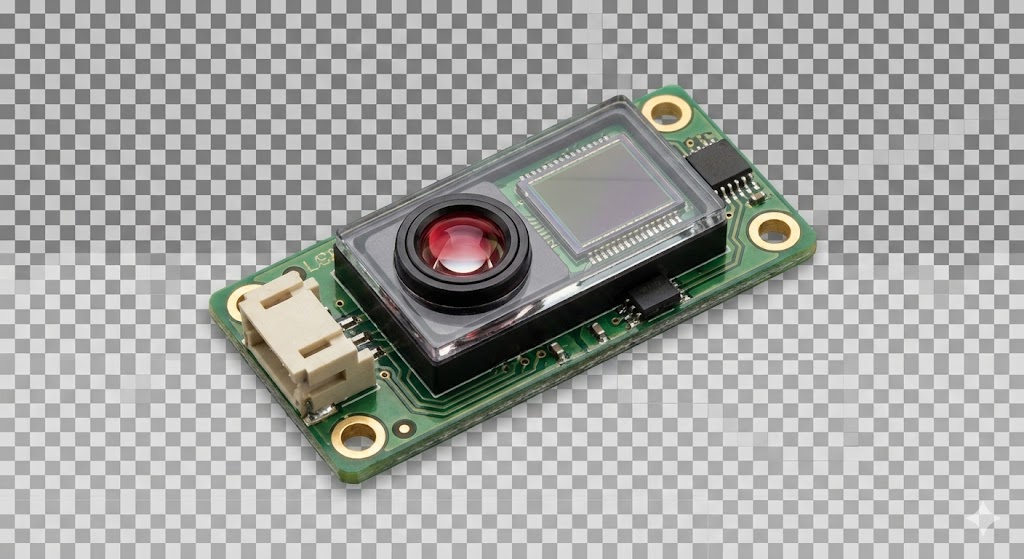
Integration with microcontrollers or DSPs enables sophisticated data analysis and communication. Juyuan Jingdian sensors often feature embedded processors that execute algorithms for real-time calculations, such as time-of-flight (ToF) for distance sensing or triangulation for displacement measurement. The circuit design here emphasizes low-latency data paths, robust communication interfaces (e.g., RS-485, Ethernet, or IO-Link), and power management systems to support operation in harsh industrial settings. Electromagnetic compatibility (EMC) considerations are paramount, with shielding, grounding, and filtering techniques employed to prevent interference from nearby machinery, ensuring reliable sensor output.
One of the standout features of Juyuan Jingdian laser sensor circuits is their adaptability. Through programmable logic and firmware updates, these circuits can be tailored for specific applications, from automotive assembly lines to pharmaceutical packaging. The use of surface-mount technology (SMT) and multilayer printed circuit boards (PCBs) enhances compactness and durability, while thermal management strategies, such as heat sinks or thermal vias, prevent overheating during continuous operation. This design philosophy not only boosts accuracy—often achieving micron-level precision—but also extends product lifespan, reducing maintenance needs in industrial plants.
In practice, these circuit designs translate to tangible benefits. For instance, in quality control systems, Juyuan Jingdian laser sensors with optimized circuits provide fast, non-contact measurements, detecting minute defects on production lines. In robotics, they enable precise positioning and obstacle avoidance, enhancing automation efficiency. The circuits' low power consumption and robust construction also make them suitable for battery-operated or remote installations, expanding their utility across sectors like logistics, aerospace, and energy.
Looking ahead, trends in circuit design for laser sensors point toward greater integration of artificial intelligence (AI) and Internet of Things (IoT) capabilities. Juyuan Jingdian is likely to incorporate more system-on-chip (SoC) solutions, blending analog and digital domains for smarter, self-calibrating sensors. However, challenges remain, such as balancing cost with performance and addressing increasingly stringent safety standards for laser products. By continuing to refine circuit architectures—focusing on miniaturization, energy efficiency, and noise reduction—Juyuan Jingdian can maintain its competitive edge, driving innovation in the sensor market.
In summary, the excellence of Juyuan Jingdian laser sensors is deeply rooted in their meticulous circuit design. From laser drivers to signal processors, each component is engineered to deliver precision, reliability, and versatility. As industries demand higher levels of automation and accuracy, understanding these circuit principles becomes essential for engineers and technicians aiming to leverage laser sensor technology effectively. Juyuan Jingdian's commitment to advanced electronics not only enhances sensor performance but also paves the way for future advancements in industrial sensing solutions.