In the rapidly evolving landscape of industrial automation, precision measurement and reliable detection are paramount. Among the myriad of sensing technologies available, JSJ laser sensors have emerged as a critical component for engineers seeking high-accuracy, non-contact solutions. This article delves into the operational principles, key applications, and essential selection criteria for JSJ laser sensors, providing a comprehensive overview for professionals in the electrical and automation engineering fields.
At its core, a JSJ laser sensor operates on the principle of optical triangulation or time-of-flight measurement, depending on the specific model and intended use case. In the widely used triangulation method, a laser diode emits a focused beam of coherent light onto the target object. The reflected light is then captured by a receiving lens and projected onto a position-sensitive detector, typically a CCD or CMOS array. Any displacement of the target object causes a proportional shift in the position of the light spot on the detector. This shift is processed by sophisticated internal electronics to calculate the exact distance or presence of the object with micron-level precision. This non-contact methodology eliminates mechanical wear, ensures high-speed response, and allows for measurement of delicate, hot, or moving surfaces that would be impossible with tactile probes.
The applications for JSJ laser sensors are vast and span across numerous industries. In manufacturing and assembly lines, they are indispensable for precise dimensional gauging, such as measuring the thickness of materials, checking component heights, or verifying part presence. Their high resolution makes them ideal for contour profiling and vibration analysis in quality control processes. Within the packaging industry, these sensors reliably detect transparent films, glass, and liquid levels where traditional photoelectric sensors might fail. Robotics integration is another significant area; JSJ laser sensors provide accurate positioning feedback for robotic arms, enabling precise pick-and-place operations and seam tracking in welding applications. Furthermore, in logistics and warehousing, they facilitate object counting, palletizing control, and conveyor belt monitoring, ensuring smooth material flow.
When selecting a JSJ laser sensor for a specific application, several technical parameters must be carefully evaluated. The first is the measuring range, which defines the minimum and maximum distances over which the sensor can operate accurately. Engineers must ensure the target will remain within this window under all operating conditions. Resolution, or the smallest detectable change in distance, is crucial for applications requiring fine detail. The response time or switching frequency determines how quickly the sensor can output a signal, a critical factor in high-speed production environments. The type of output (e.g., analog voltage/current, digital switch (PNP/NPN), or serial communication like IO-Link) must be compatible with the existing control system, such as a PLC. Environmental robustness is non-negotiable in industrial settings; therefore, the sensor's Ingress Protection (IP) rating, resistance to ambient light interference, and operating temperature range should align with the installation environment, which may involve dust, moisture, or significant thermal variation.
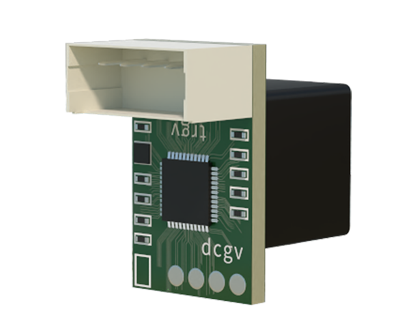
Installation and alignment also play a pivotal role in achieving optimal performance. Proper mounting ensures a stable measurement reference. It is vital to consider the optical characteristics of the target surface—highly reflective or dark, absorptive materials can affect the intensity of the returned signal. Many advanced JSJ laser sensors come equipped with teaching functions or software-configurable parameters to compensate for different surface colors and textures, enhancing application flexibility. Regular maintenance, primarily keeping the lens clean from dust and oil buildup, is a simple yet essential practice to maintain long-term accuracy and reliability.
Looking forward, the integration of smart features is shaping the next generation of JSJ laser sensors. Capabilities such as integrated data logging, advanced diagnostics, and seamless connectivity to Industrial Internet of Things (IIoT) platforms are becoming standard. These features enable predictive maintenance, remote monitoring, and deeper process analytics, moving beyond simple measurement to become intelligent nodes within a connected factory ecosystem.
In conclusion, JSJ laser sensors represent a sophisticated and versatile tool in the electrical engineer's arsenal. Their ability to deliver precise, non-contact measurements under challenging industrial conditions makes them a cornerstone of modern automation. By thoroughly understanding their operating principles, meticulously matching sensor specifications to application demands, and following best practices for installation, engineers can leverage this technology to enhance productivity, improve product quality, and drive innovation in automated systems.