In the rapidly evolving landscape of industrial automation and precision measurement, laser sensors have emerged as a critical technology. Their adoption spans diverse sectors, from manufacturing and robotics to aerospace and consumer electronics. But the fundamental question persists: Are laser sensors good? The answer is not a simple yes or no; it hinges on application-specific requirements, environmental conditions, and economic considerations. This analysis delves into the core attributes of laser sensors to provide a comprehensive perspective for engineers and decision-makers.
At their essence, laser sensors operate by emitting a focused beam of coherent light toward a target. They then detect the reflected light to measure parameters such as distance, displacement, height, thickness, or presence. The primary technologies include time-of-flight (ToF), triangulation, and confocal measurement principles. This inherent design grants them exceptional advantages. Foremost is precision. Laser sensors offer micron-level or even sub-micron resolution, making them indispensable for high-tolerance tasks like semiconductor wafer inspection, precision assembly, and surface profiling. Their measurement speed is another standout feature, capable of performing thousands of readings per second, which is vital for high-speed production lines and dynamic robotic guidance.
Furthermore, laser sensors exhibit remarkable versatility. They can measure a vast range of materials, including metals, plastics, glass, and liquids, regardless of color or surface texture in many configurations. Non-contact operation is a pivotal benefit, eliminating mechanical wear and preventing damage to delicate or moving objects. This characteristic also allows for measurements in sterile or hazardous environments where physical contact is prohibited.
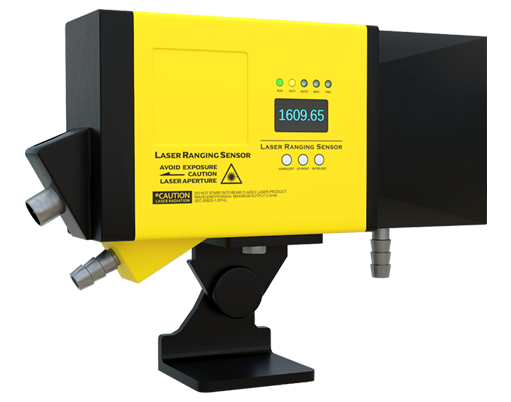
However, the "goodness" of a laser sensor is contextualized by its limitations. Performance can be significantly influenced by environmental factors. Ambient light, particularly strong sunlight or other competing light sources, can saturate the receiver and cause measurement errors. The target's surface properties also pose challenges. Highly reflective, transparent, or absorptive surfaces can scatter or poorly reflect the laser beam, leading to signal loss or inaccuracies. While techniques like diffuse reflection models or specialized coatings can mitigate these issues, they add complexity and cost. Operational range, while substantial for many models, is finite, and extreme temperatures or heavy airborne contamination (like dust, smoke, or steam) can degrade performance or require protective enclosures.

From a practical implementation standpoint, cost is a decisive factor. Laser sensors, especially high-precision models, represent a higher initial investment compared to inductive, capacitive, or ultrasonic sensors. The total cost of ownership must also account for integration, calibration, and potential maintenance. Therefore, for applications where extreme precision or speed is non-essential, a simpler sensor technology might be more cost-effective and equally "good."
In specific industrial scenarios, the advantages overwhelmingly affirm their value. In automotive manufacturing, they ensure precise weld seam tracking and panel gap measurement. In logistics, they enable rapid parcel dimensioning and robotic bin-picking. In electronics, they verify component placement on PCBs. For these use cases, the laser sensor's capability directly translates to improved quality control, reduced waste, and enhanced production efficiency.
In conclusion, laser sensors are an exceptionally powerful and precise tool in the modern engineer's toolkit. They are unequivocally "good" and often the optimal choice for applications demanding high accuracy, high speed, and non-contact measurement. Their suitability, however, must be evaluated against the specific challenges of the operating environment, target characteristics, and project budget. A thorough technical assessment, often involving sensor testing with actual samples, is recommended before deployment. When applied judiciously within their operational envelope, laser sensors deliver unparalleled performance that drives innovation and operational excellence across industries.