Laser sensor technology has undergone significant evolution over the past few decades, becoming a cornerstone in various industries such as manufacturing, automotive, aerospace, and healthcare. The core principle of laser sensors revolves around emitting laser beams and analyzing the reflected signals to measure distance, detect objects, or monitor environmental parameters with high precision. Recent advancements have pushed the boundaries of what these sensors can achieve, driven by the demand for greater accuracy, miniaturization, and integration with smart systems.
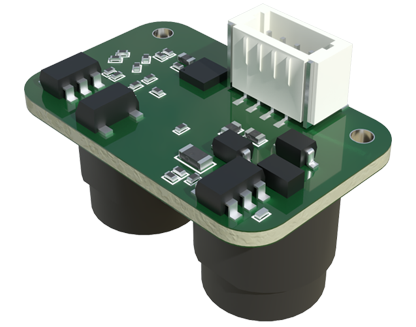
One of the most prominent trends is the shift towards miniaturization and enhanced portability. Modern laser sensors are being designed to be smaller and more energy-efficient, enabling their deployment in compact devices like smartphones, wearable gadgets, and autonomous robots. This trend is fueled by innovations in semiconductor laser diodes and photodetectors, which reduce size while maintaining or even improving performance. For instance, time-of-flight (ToF) laser sensors, commonly used in 3D imaging and LiDAR systems, have seen substantial reductions in form factor, making them ideal for applications in augmented reality (AR) and autonomous vehicles.
Another key development is the integration of artificial intelligence (AI) and machine learning (ML) algorithms with laser sensor systems. By combining AI with sensor data, devices can perform real-time analysis, pattern recognition, and predictive maintenance. In industrial settings, AI-enhanced laser sensors can detect minute defects in production lines, optimize quality control, and reduce downtime. Similarly, in environmental monitoring, these sensors can analyze air quality or water contamination levels with unprecedented accuracy, providing actionable insights for sustainability efforts.
The rise of Industry 4.0 and the Internet of Things (IoT) has further accelerated the adoption of laser sensors. In smart factories, laser sensors are integral to automation, enabling precise positioning, object tracking, and collision avoidance. They communicate seamlessly with other IoT devices through wireless networks, creating interconnected ecosystems that enhance efficiency and safety. For example, in logistics, laser sensors facilitate automated guided vehicles (AGVs) to navigate warehouses autonomously, streamlining supply chain operations.
Advancements in materials science have also contributed to the evolution of laser sensors. The use of novel materials like graphene and quantum dots has led to sensors with higher sensitivity, faster response times, and improved durability under harsh conditions. These materials enable laser sensors to operate in extreme temperatures, corrosive environments, or high-vibration settings, expanding their applicability in sectors like oil and gas exploration or space missions.
Furthermore, there is a growing emphasis on sustainability and energy efficiency in laser sensor design. Researchers are developing low-power laser sensors that minimize energy consumption without compromising performance. This aligns with global efforts to reduce carbon footprints and promote green technologies. Solar-powered laser sensors, for instance, are being explored for remote monitoring applications in agriculture or wildlife conservation, where continuous power sources may be limited.
Looking ahead, the future of laser sensor technology appears promising, with ongoing research focusing on quantum sensing, hyperspectral imaging, and biocompatible sensors for medical use. Quantum laser sensors, leveraging quantum entanglement principles, could revolutionize fields like navigation and cryptography by offering ultra-precise measurements beyond classical limits. Hyperspectral laser sensors, capable of capturing detailed spectral data, may enhance food safety inspections or mineral detection. In healthcare, biocompatible laser sensors could enable non-invasive diagnostics and real-time monitoring of physiological parameters.
In conclusion, the trajectory of laser sensor development is marked by innovation across multiple fronts—miniaturization, AI integration, IoT connectivity, material advancements, and sustainability. As these trends converge, laser sensors will continue to transform industries, driving progress toward smarter, more efficient, and environmentally conscious solutions. Stakeholders, from engineers to policymakers, must stay abreast of these developments to harness the full potential of this transformative technology.