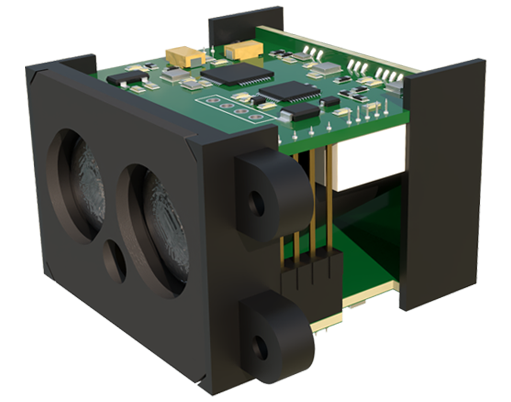
Low temperature laser sensors represent a cutting-edge advancement in precision measurement technology, specifically engineered to operate reliably in extreme cold environments. These sensors utilize laser-based principles, such as interferometry or time-of-flight calculations, to achieve high-accuracy detection of parameters like distance, displacement, and temperature with minimal thermal drift. In industries ranging from aerospace and cryogenics to semiconductor manufacturing and scientific research, maintaining measurement integrity at sub-zero temperatures is critical. Traditional sensors often suffer from performance degradation, material contraction, or signal noise when exposed to低温 conditions, but low temperature laser sensors are designed with specialized components, including thermally stable optics, cryo-resistant housing, and advanced signal processing algorithms, to overcome these challenges.
The core mechanism involves emitting a laser beam toward a target and analyzing the reflected light. In低温 applications, the sensor's internal electronics and optical elements are calibrated to account for thermal effects, ensuring consistent wavelength and beam quality. For instance, in space exploration, these sensors monitor structural integrity of spacecraft components in the vacuum of space, where temperatures can plummet below -150°C. Similarly, in superconducting systems or liquid nitrogen environments, they provide real-time data on material behavior without interference. Key advantages include non-contact measurement, which avoids physical wear, and high resolution, often down to nanometer levels, enabling detection of minute changes even in frigid settings.
Manufacturers integrate materials like invar or ceramics to minimize thermal expansion, while using low-temperature-compatible lasers, such as diode-pumped solid-state variants, to maintain output stability. Calibration protocols often involve testing in controlled cryogenic chambers to validate performance across a specified temperature range, typically from -200°C to room temperature. Applications extend to quality control in cold storage logistics, where sensors track inventory dimensions, and to environmental monitoring in polar regions, assessing ice thickness or structural health of research stations. Despite their robustness, challenges persist, such as power consumption management in isolated低温 sites or cost factors due to specialized materials. Future trends focus on miniaturization and integration with IoT networks, allowing for wireless data transmission and predictive analytics in smart industrial systems.
In summary, low temperature laser sensors are indispensable tools for modern engineering, offering unparalleled precision where conventional methods fail. By leveraging laser technology tailored for harsh cold, they support innovation in fields demanding rigorous measurement standards, ultimately enhancing safety, efficiency, and research capabilities in some of the world's most demanding environments.