In the realm of industrial automation and precision measurement, laser sensors stand as pillars of accuracy and reliability. Their ability to detect, measure, and position objects with high precision is fundamental to modern manufacturing, robotics, and safety systems. However, the consistent and optimal performance of these sensors often hinges on a seemingly simple component: retroreflective tape. This specialized material is not merely an accessory but a critical enabler that defines the effectiveness and range of many laser sensor applications.
At its core, a retroreflective tape is engineered to return incident light, such as a laser beam, directly back to its source with minimal scattering. This is achieved through the integration of microscopic glass beads or prismatic structures on its surface. When a laser sensor, typically configured in a retroreflective mode, emits a beam, this tape acts as a cooperative target. It reflects the beam back to the sensor's receiver along a path parallel to the incoming beam, regardless of the angle of incidence within a specified range. This principle creates a strong, unambiguous signal for the sensor to detect.
The primary function of retroreflective tape in conjunction with laser sensors is to dramatically extend the effective sensing range while ensuring signal stability. Compared to detecting a diffuse reflection from a standard object, the retroreflective return provides a signal that is orders of magnitude stronger. This allows sensors to operate over longer distances—often tens or even hundreds of meters—without requiring increased laser power, which is crucial for both efficiency and safety. In large-scale applications like warehouse automation, crane positioning, or long-conveyor monitoring, this extended range is indispensable.
Beyond range extension, the tape ensures high signal-to-noise ratio. By directing most of the light back to the receiver, it minimizes the impact of ambient light and other optical interferences. This results in highly reliable detection, reducing false triggers and missed signals. In safety-critical applications, such as light curtains or area guarding systems at machine perimeters, this reliability is non-negotiable. A laser safety system monitoring an access point must consistently detect the break of its beam reflected from a tape strip; any failure could lead to hazardous situations. The tape's predictable performance is key to maintaining system integrity.
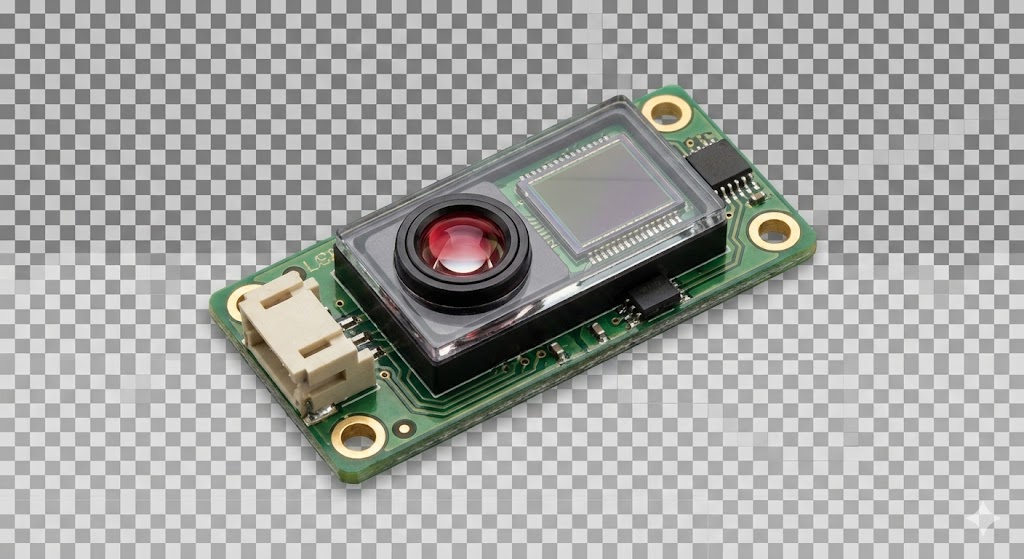
Material and environmental resistance are also vital aspects. High-quality retroreflective tapes are designed to withstand harsh industrial environments. They are often resistant to abrasion, chemicals, UV degradation, and temperature fluctuations. This durability ensures that the reflective performance does not degrade over time, maintaining calibration and reducing maintenance needs. For outdoor applications in logistics yards or on autonomous guided vehicles (AGVs), tapes with sealed surfaces prevent dirt, moisture, and oil from occluding the reflective elements, guaranteeing year-round operation.
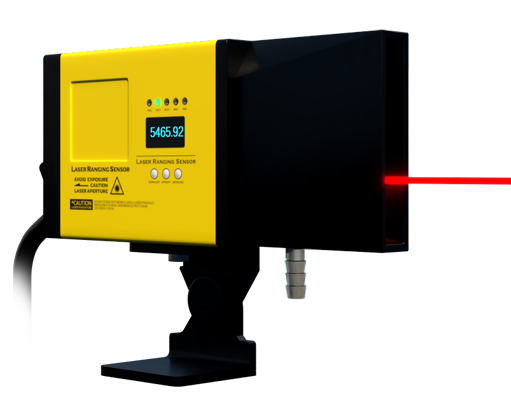
The application methodology is precise. The tape must be correctly aligned and applied to a clean, stable surface. Wrinkles, bubbles, or improper angle can diminish performance. For moving targets, such as on AGVs or shuttle systems, the tape is applied in specific patterns or strips to create clear, detectable landmarks for navigation and positioning lasers. In static setups, it defines reference points for measurement or demarcates zones for presence detection.
In contrast to diffuse or direct reflection modes, the retroreflective mode enabled by this tape offers a simpler, more robust solution for through-beam-like sensing with a single-unit sensor. It eliminates the need for precise alignment of separate emitter and receiver units, simplifying installation and reducing costs.
In conclusion, retroreflective tape is far from a passive component. It is a fundamental, active partner to laser sensors, amplifying their capabilities and ensuring robustness. It enables long-range, noise-immune, and reliable detection that forms the backbone of countless automated and safety systems. Specifying the correct grade and type of retroreflective tape—considering factors like reflectivity (coefficient of retroreflection), angularity, and environmental rating—is as crucial as selecting the laser sensor itself. For engineers designing systems reliant on optical detection, understanding and leveraging the properties of retroreflective tape is essential for achieving optimal, dependable performance in the field.