In today's rapidly evolving technological landscape, off-the-shelf proximity sensors often fall short of meeting the unique and demanding requirements of specialized applications. From intricate industrial automation lines to sensitive medical devices and rugged outdoor equipment, the need for precision, reliability, and environmental adaptability is paramount. This is where the power of custom proximity sensor design comes into play, offering engineered solutions that bridge the gap between standard product limitations and specific operational challenges.
The journey toward a custom proximity sensor begins with a deep dive into the application's core parameters. Unlike selecting a standard model from a catalog, customization involves a collaborative partnership between the client and the sensor engineering team. The first critical step is defining the exact sensing requirements. What is the target material—metal, plastic, glass, or a liquid? What is the required detection range, from a few millimeters to several meters? The operating environment poses another set of crucial questions. Will the sensor face extreme temperatures, high-pressure washdowns, corrosive chemicals, or intense electromagnetic interference? Physical constraints, such as available mounting space and desired housing shape, also dictate the design pathway. Furthermore, the output signal must integrate seamlessly with the existing control system, whether it calls for a standard NPN/PNP, analog current/voltage, or a specific digital protocol like IO-Link.
With these parameters defined, engineers can select and tailor the most suitable sensing technology. Inductive sensors, ideal for metal detection, can be customized with specialized coil geometries and ferrite cores to achieve unique sensing fields or extended ranges for specific alloys. Capacitive sensors, used for detecting non-metallic materials, can have their sensitivity and field shape adjusted to ignore certain environmental interferences, such as a container wall, to focus solely on the material level inside. Ultrasonic sensors offer solutions for longer ranges and harsh environments; their customizations often involve specialized transducer designs and signal processing algorithms to filter out acoustic noise. Even photoelectric sensors can be bespoke, with selected light wavelengths (infrared, red, laser) and lens configurations to solve challenges with transparent objects or to operate reliably in dusty conditions.
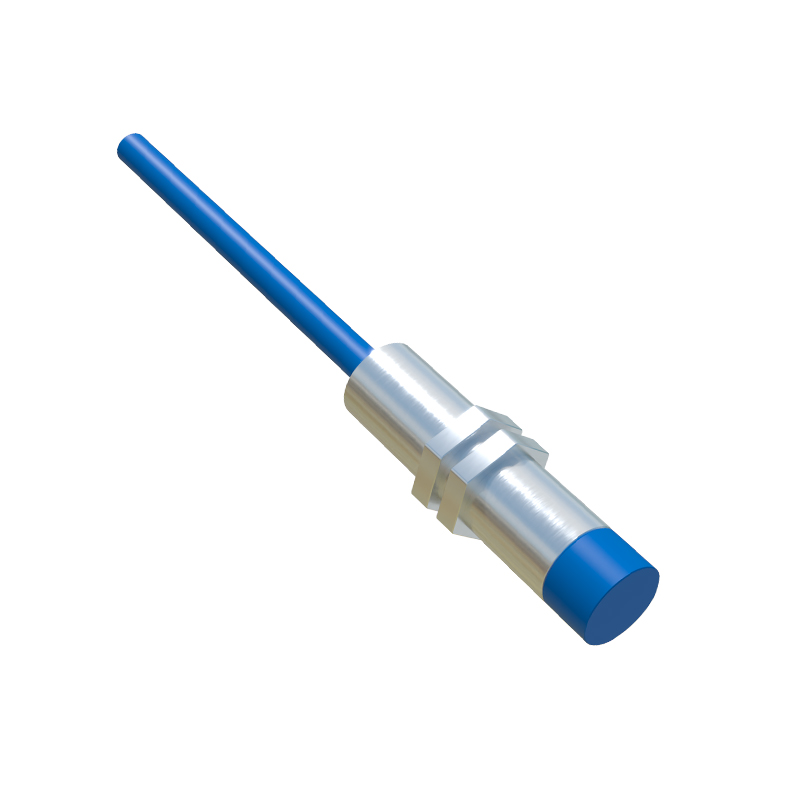
The housing and connector design form the physical embodiment of the custom solution. This goes beyond mere aesthetics. A sensor destined for a food and beverage plant requires a stainless-steel housing with a polished finish and a high IP69K rating to withstand frequent sterilization. An application in mobile heavy machinery might demand a housing with exceptional vibration resistance and a connector with a positive locking mechanism to prevent disconnection. Engineers utilize advanced materials like PEEK plastic for high-temperature and chemical resistance, or mold specific shapes to fit into extremely confined spaces. The goal is to create a robust, reliable interface between the sensitive internal electronics and the often unforgiving external world.
The benefits of investing in a custom proximity sensor are substantial and directly impact the bottom line and operational efficiency. A tailor-made sensor eliminates compromise. It provides optimal performance exactly where it is needed, leading to fewer false triggers, reduced downtime, and higher quality control. It can simplify machine design by allowing for more flexible installation, potentially reducing the number of sensors required or eliminating complex mechanical brackets. In many cases, a well-designed custom sensor proves to be more cost-effective over its lifecycle than adapting a process to accommodate the limitations of multiple standard units. It enhances system reliability and longevity, providing a competitive edge in markets where precision and uptime are critical.
From automotive assembly robots requiring precise tool positioning to semiconductor manufacturing equipment needing contamination-free sensing, and from agricultural machinery detecting crop height to smart buildings managing occupancy, custom proximity sensors are the unsung enablers of innovation. They are not merely components but integrated solutions born from a clear understanding of a challenge. The process demands expertise, careful planning, and close collaboration, but the result is a sensing device that performs not just adequately, but exceptionally—a perfect fit for the task it was born to fulfill. In an era of increasing automation and specialization, the ability to customize this fundamental interface between machine and environment is more valuable than ever.