In the rapidly evolving landscape of industrial automation, the demand for high-precision, reliable, and robust sensing technology has never been greater. Among the forefront of these innovations stands Thor Laser Sensor technology, a paradigm shift in non-contact measurement and detection. This article delves into the core principles, advanced applications, and future trajectory of this groundbreaking technology, underscoring its pivotal role in modern manufacturing, quality control, and smart systems.
At its essence, a Thor Laser Sensor operates on the principle of laser triangulation or time-of-flight measurement, depending on the specific model and intended application. For ultra-high precision in displacement and profile measurement, the triangulation method is predominantly employed. A focused laser beam is projected onto the target surface. The reflected light is then captured by a high-resolution CMOS or CCD receiver at a known angle. Any minute change in the distance to the target alters the position of the reflected light spot on the receiver. Sophisticated onboard processors analyze this positional shift with micron-level accuracy, calculating the exact displacement or profiling the surface contour in real-time. This method offers exceptional resolution and speed, making it indispensable for applications like wafer alignment in semiconductor fabrication, thickness gauging in rolling mills, and vibration analysis of precision machinery.
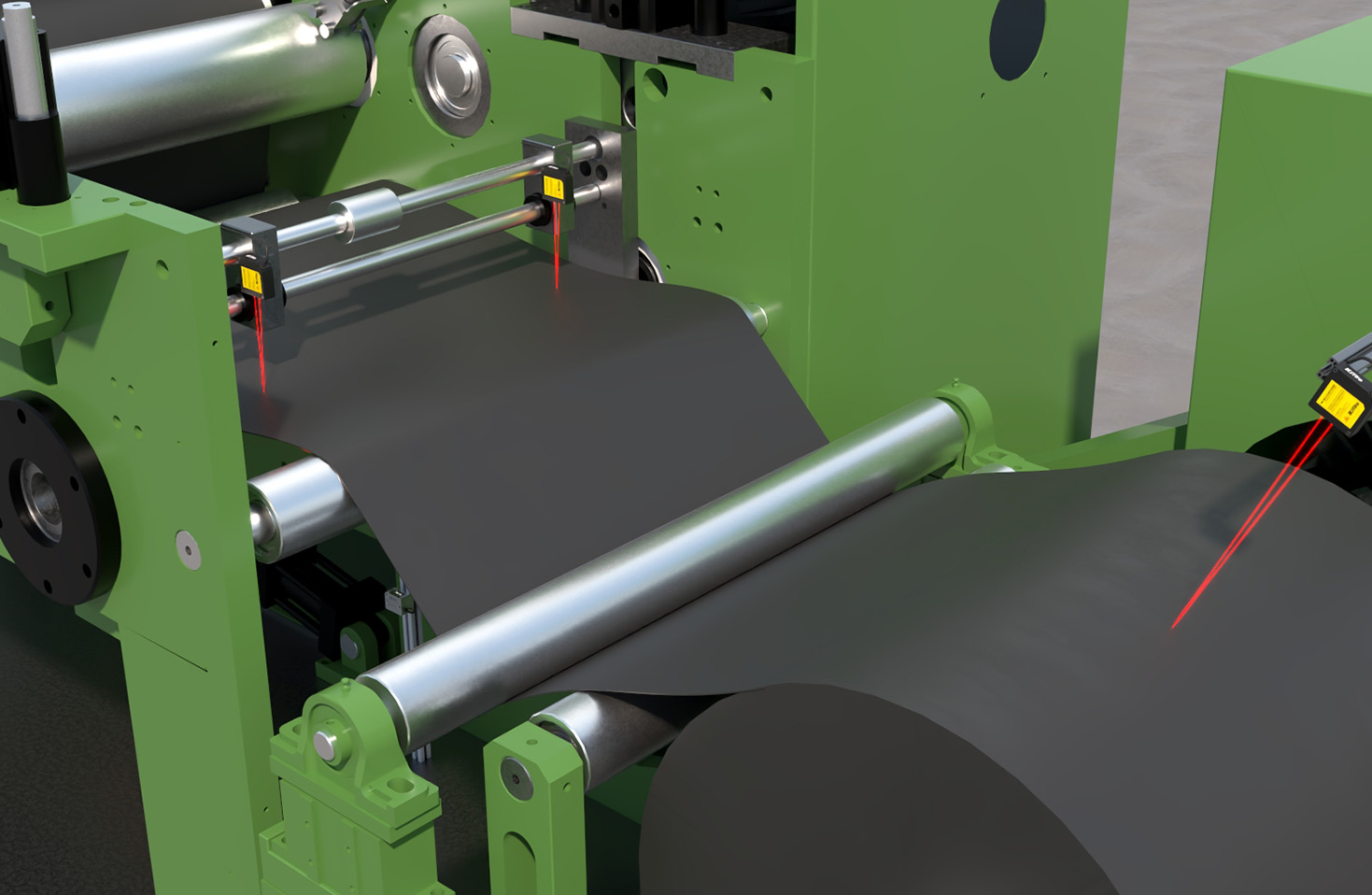
For longer-range applications such as bulk material level monitoring, vehicle detection, or large-scale positioning, Thor Laser Sensors utilizing time-of-flight (ToF) technology excel. These sensors measure the time it takes for a laser pulse to travel to the target and back. Given the constant speed of light, the distance is calculated with remarkable consistency over ranges extending to several hundred meters. This capability is critical in logistics automation, mining, and construction, where reliable long-distance measurement under variable environmental conditions is paramount.
The defining advantages of Thor Laser Sensors are their non-contact nature, high speed, and exceptional accuracy. Unlike mechanical probes or capacitive sensors, they eliminate wear and tear, do not exert force on the target, and can measure delicate, hot, or fast-moving objects without interference. Modern Thor sensors are engineered with robust housings, often rated IP67 or higher, ensuring reliable operation in harsh industrial environments characterized by dust, moisture, and significant temperature fluctuations. Advanced models incorporate intelligent features like automatic background suppression, programmable measurement windows, and integrated IO-Link or Ethernet communication for seamless integration into Industry 4.0 frameworks and IoT networks.
The application spectrum is vast and continuously expanding. In automotive manufacturing, Thor Laser Sensors perform critical 100% inline inspection of weld seams, body panel gaps, and component presence with unmatched repeatability. In the pharmaceutical industry, they ensure precise fill levels in vials and blister packs, upholding stringent quality and safety standards. Robotics systems leverage these sensors for accurate bin-picking, precise guidance of robotic arms, and collision avoidance, enhancing both efficiency and safety on the production floor. Furthermore, in renewable energy sectors, they are used for monitoring wind turbine blade deflection and optimizing solar panel alignment.
Looking ahead, the convergence of Thor Laser Sensor technology with artificial intelligence and edge computing is set to unlock even greater potential. Future iterations will likely feature enhanced multi-spectral sensing, deeper data analytics at the sensor level for predictive maintenance, and even higher sampling rates for capturing transient phenomena. As industries push the boundaries of miniaturization and precision, the role of advanced laser sensing as exemplified by Thor technology will only become more central, driving efficiency, quality, and innovation across the global industrial ecosystem.