In the intricate world of industrial automation and machinery, the ability to detect the presence, absence, or position of an object without physical contact is paramount. This is the domain of proximity sensors, and within this specialized field, Zhenhai proximity sensors have established a reputation for reliability and performance. This article delves into the technology, types, applications, and selection criteria for these critical components, providing a thorough guide for engineers and procurement specialists.
Proximity sensors operate on the principle of generating an electromagnetic field or a beam of radiation and detecting changes in that field or the return signal. Zhenhai sensors primarily utilize two fundamental technologies: inductive and capacitive sensing. Inductive proximity sensors are the workhorses for detecting metallic objects. They contain a coil that generates a high-frequency oscillating electromagnetic field. When a metallic target enters this field, eddy currents are induced in the target, which dampens the oscillation of the sensor's coil. This change is detected by the sensor's circuitry, triggering a solid-state output switch. These sensors are ideal for applications involving ferrous and non-ferrous metals, such as in CNC machine tool positioning, robotic arm end-effector detection, and conveyor line part counting.
Capacitive proximity sensors, on the other hand, can detect both metallic and non-metallic materials, including liquids, plastics, glass, and wood. They function by generating an electrostatic field. When any material with a dielectric constant different from air enters this field, it changes the capacitance of the circuit, which is then detected. This makes Zhenhai capacitive sensors invaluable in industries like food and beverage for liquid level detection, packaging for monitoring plastic or cardboard, and woodworking for material presence verification.
Beyond the core technology, the design and construction of Zhenhai sensors are tailored for harsh industrial environments. Key features often include robust housing materials like nickel-plated brass or stainless steel (e.g., IP67 or IP68 ratings), ensuring resistance to dust, moisture, oils, and coolants. Their solid-state design means no moving parts, leading to exceptionally long service life and high switching frequencies, which are crucial for high-speed production lines. Output configurations are typically NPN (sinking) or PNP (sourcing) transistor outputs, compatible with standard Programmable Logic Controllers (PLCs) and industrial control systems.
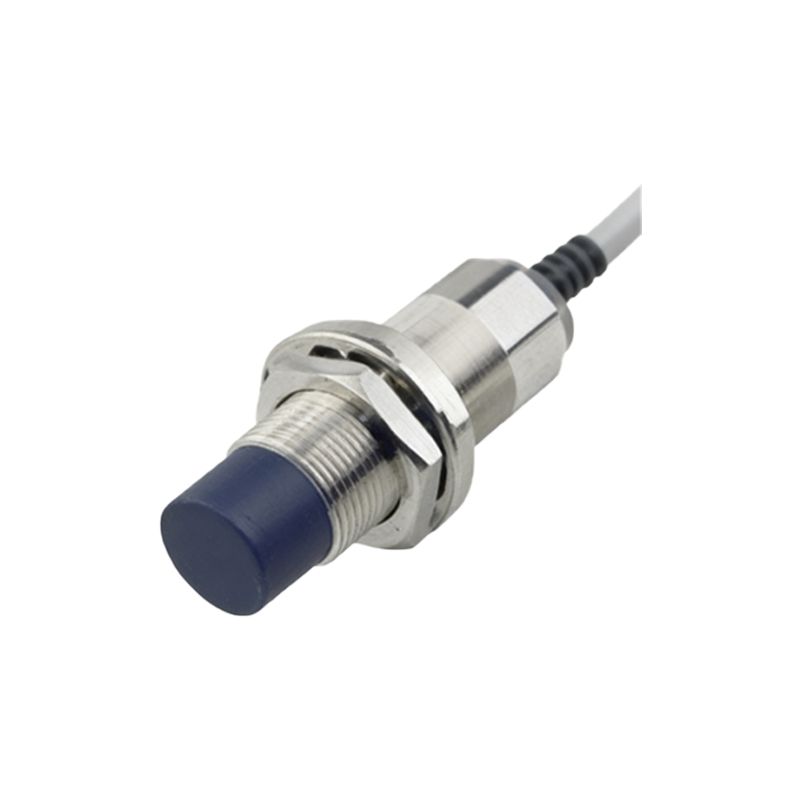
Selecting the right Zhenhai proximity sensor requires careful consideration of several parameters. The sensing distance, or nominal range, is critical and must be chosen with a safety margin, typically 70-80% of the rated value, to account for environmental factors and target material variations. The target material itself dictates the choice between inductive and capacitive types. For inductive sensors, the reduction factor for different metals must be considered; for instance, aluminum may require a sensor with a longer nominal range than one used for steel. Environmental conditions such as temperature extremes, presence of welding spatter, or strong electromagnetic interference also influence the selection, necessitating sensors with appropriate housing materials and shielding.
Installation and wiring are straightforward but demand attention to detail. Sensors should be mounted securely to avoid vibration-induced errors. It is essential to maintain the recommended clearance from adjacent metal surfaces (lateral and flush-mounting distances) to prevent false triggering. Proper wiring according to the datasheet—connecting the brown wire (typically +V), blue wire (0V or common), and black wire (output signal)—is fundamental for reliable operation.
In conclusion, Zhenhai proximity sensors represent a mature and vital technology for modern industrial automation. Their non-contact operation, durability, and versatility make them indispensable for tasks ranging from simple presence detection to complex positional control in manufacturing, packaging, automotive, and material handling systems. By understanding their operating principles, types, and key selection criteria, engineers can effectively integrate these sensors to enhance machine efficiency, safety, and reliability, ensuring seamless and optimized production processes.