In the realm of industrial automation, infrared (IR) proximity sensors are indispensable components for non-contact detection, object positioning, and process control. These sensors operate by emitting infrared light and measuring the reflection or interruption of that light to determine the presence, absence, or distance of an object. Their immunity to ambient visible light, reliability in harsh environments, and fast response times make them a preferred choice across manufacturing, robotics, packaging, and safety systems. This article delves into the primary types of infrared proximity sensors, explaining their working principles, key characteristics, and typical applications to guide engineers in selecting the optimal sensor for specific operational needs.
The fundamental operation of all IR proximity sensors involves an IR emitter (usually an LED) and a receiver (such as a phototransistor or photodiode). The emitter projects a beam of infrared light, which, upon striking an object, is reflected back to the receiver. The sensor's electronics then process this signal to trigger an output. Based on the detection method and output type, IR proximity sensors are broadly categorized into several types.
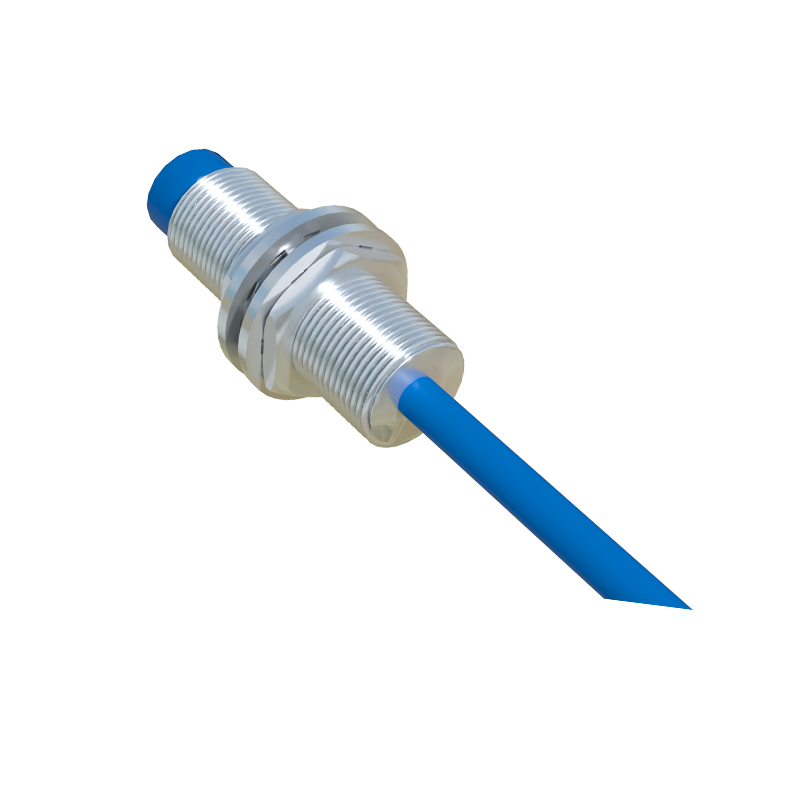
Diffuse Reflective Sensors
Diffuse reflective sensors, often called proximity-mode sensors, are the most common type. Here, the emitter and receiver are housed in the same unit. The sensor detects an object when the emitted IR light reflects off the object's surface and returns to the receiver. The detection range is influenced by the object's color, material, and surface texture—lighter and more reflective surfaces provide longer ranges than dark, absorptive ones. Typical sensing distances range from a few millimeters up to about 2 meters. These sensors are widely used for presence detection on conveyor belts, counting products, and detecting fill levels in transparent containers. Their simplicity and cost-effectiveness make them suitable for high-volume applications, though they can be sensitive to environmental factors like dust or background reflections.
Retro-reflective Sensors
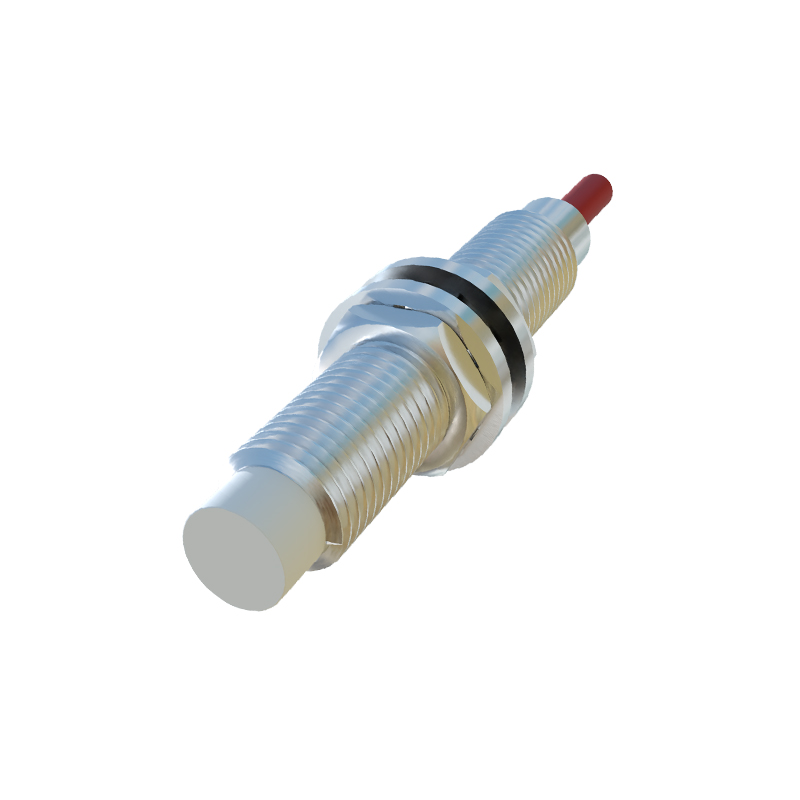
Retro-reflective sensors feature separate units for the emitter and receiver, but both are mounted in the same housing. They require a reflector (a prismatic or tape reflector) positioned opposite the sensor. The emitter sends a continuous IR beam to the reflector, which bounces it directly back to the receiver. An object passing between the sensor and the reflector interrupts this beam, causing the output to switch. This design allows for longer sensing ranges than diffuse sensors, often extending up to 10 meters or more, and is less affected by the object's color or surface. However, they rely on precise alignment with the reflector. Common applications include detecting objects on high-speed production lines, monitoring door positions, and ensuring safety perimeters where a broken beam indicates an intrusion.
Through-beam Sensors
Through-beam sensors, also known as opposed-mode sensors, consist of two separate units: an emitter and a receiver placed directly opposite each other. The emitter projects a continuous IR beam to the receiver. Detection occurs when an object obstructs this beam. This configuration offers the longest possible sensing range (often exceeding 20 meters), highest immunity to environmental interferences (like dust, smoke, or target color variations), and excellent reliability. The key drawback is the need for two separate mounting points and precise alignment, which can increase installation complexity and cost. Through-beam sensors are ideal for critical applications such as detecting small or transparent objects, high-precision counting, and safety light curtains where fail-safe operation is paramount.
Background Suppression Sensors
Background suppression sensors are a specialized subset of diffuse sensors designed to ignore objects beyond a set distance. They use triangulation or optics to focus only on reflections from objects within a predefined "window" of distance. Objects within this window are detected, while those farther away (the background) are ignored. This is particularly useful for detecting objects on a conveyor belt while ignoring the belt itself or a wall behind it. Sensing ranges are typically short to medium (e.g., 20 mm to 300 mm). Applications include precise positioning, edge detection, and distinguishing between overlapping objects.
Analog Output Sensors
Unlike the digital on/off sensors described above, analog output IR proximity sensors provide a continuous voltage or current signal proportional to the detected distance. They measure the intensity of the reflected IR light and convert it into an analog value, enabling precise distance measurement rather than mere presence detection. Common output signals are 0-10V DC or 4-20 mA. These sensors are used in applications requiring continuous monitoring, such as controlling robot arm positions, monitoring material roll diameters, or maintaining precise gaps in assembly processes.
Key Selection Criteria
Choosing the right IR proximity sensor involves evaluating several factors: sensing range, response time, environmental conditions (temperature, dust, humidity), target characteristics (size, material, color), required output type (digital or analog), and electrical specifications (voltage, output configuration). For instance, a through-beam sensor is optimal for long-range