In the realm of modern projection technology, laser projectors have established themselves as a pinnacle of performance, offering superior brightness, color accuracy, and longevity. At the heart of these advanced systems lies a critical component that often goes underappreciated: the image sensor. While lasers provide the light source, it is the image sensor that fundamentally dictates the quality, resolution, and responsiveness of the projected image. This article delves into the technical intricacies of image sensors within laser projectors, exploring their types, functions, and impact on overall performance.
Image sensors in projectors are not capture devices, as in cameras, but are typically part of the imaging engine that modulates light. In laser projectors, this role is frequently fulfilled by micro-display panels like DLP (Digital Light Processing) chips, LCoS (Liquid Crystal on Silicon) panels, or laser beam scanning systems, each interacting with a sensor ecosystem differently. For instance, in a DLP-based laser projector, a DMD (Digital Micromirror Device) chip acts as the reflective spatial light modulator. Each microscopic mirror corresponds to a pixel, tilting thousands of times per second to direct laser light and create the image. The precision and speed of these mirrors are monitored and controlled by integrated sensor feedback systems that ensure alignment, temperature stability, and color consistency.
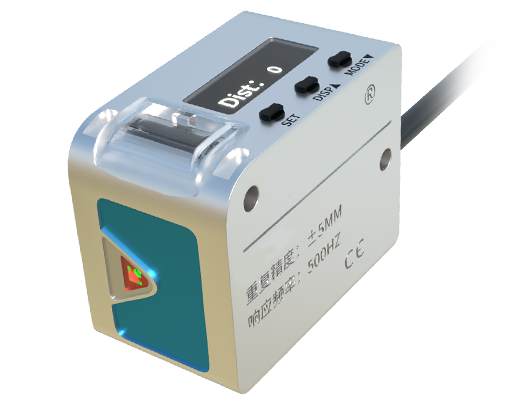
LCoS technology, often found in high-end home cinema and professional laser projectors, uses a liquid crystal layer applied to a reflective silicon substrate. Here, image sensors play a crucial role in calibration and alignment, especially in 3-chip designs where separate sensors for red, green, and blue laser channels must be perfectly synchronized to prevent color fringing and maintain uniformity. Advanced sensors continuously monitor light output and feed data to processing algorithms that adjust in real-time.
A more direct application of image sensing is in laser beam scanning projectors, such as those using MEMS (Micro-Electro-Mechanical Systems) mirrors. In these systems, a rapidly moving mirror directs a laser beam to "draw" the image pixel by pixel. Position sensors are integral to this setup, providing real-time feedback on the mirror's exact angle and movement. This closed-loop control is vital for image stability, preventing jitter and distortion, and is a hallmark of precision engineering in compact and portable laser pico-projectors.
The performance metrics of an image sensor system in a laser projector directly influence key user-experience parameters. Resolution is determined by the number of individual modulating elements (mirrors or liquid crystal pixels). Contrast ratio benefits from sensors that enable precise light control, allowing for deep blacks by completely shutting off light at a pixel level. Color gamut, significantly wider in laser sources compared to lamps, relies on sensors that accurately manage the intensity and mixing of separate laser diodes (typically blue lasers with phosphor wheels or RGB pure laser sources).
Furthermore, sensor-driven features like automatic keystone correction, focus assist, and ambient light adaptation are becoming standard. Sensors detect the projector's orientation and the screen's geometry, instructing the image processor to digitally correct trapezoidal distortion. Ambient light sensors measure room illumination and dynamically adjust brightness and contrast to preserve image quality, a feature where laser's inherent dimming capability excels.
From an engineering standpoint, challenges include managing heat dissipation from both lasers and sensor electronics, minimizing latency for interactive applications, and ensuring long-term reliability. Sensors must operate consistently over thousands of hours, as laser light sources themselves boast lifespans of 20,000 hours or more. Future trends point towards smarter sensor fusion, integrating more CMOS-based sensing for features like gesture control and interactive projection, and the development of higher-resolution micro-displays with finer pixel pitches, pushing into 8K and beyond.
In conclusion, the image sensor subsystem is the unsung hero of the laser projector. It translates the raw, coherent light of lasers into the stable, vibrant, and high-fidelity images we see on screen. Understanding its function—from basic pixel modulation to advanced feedback and calibration—is key to appreciating the technological marvel that modern laser projection represents. For engineers and specifiers, the choice of imaging technology and its associated sensor architecture remains a primary determinant in selecting the right projector for applications ranging from home entertainment to large-scale simulation and digital signage.