The journey of proximity sensors, particularly those designed to detect human presence, is a compelling narrative of technological convergence, driven by the relentless pursuit of safety, efficiency, and intuitive human-machine interaction (HMI) in industrial environments. From rudimentary mechanical switches to today's sophisticated, intelligent systems, the evolution reflects broader trends in sensing technology, control systems, and data integration.
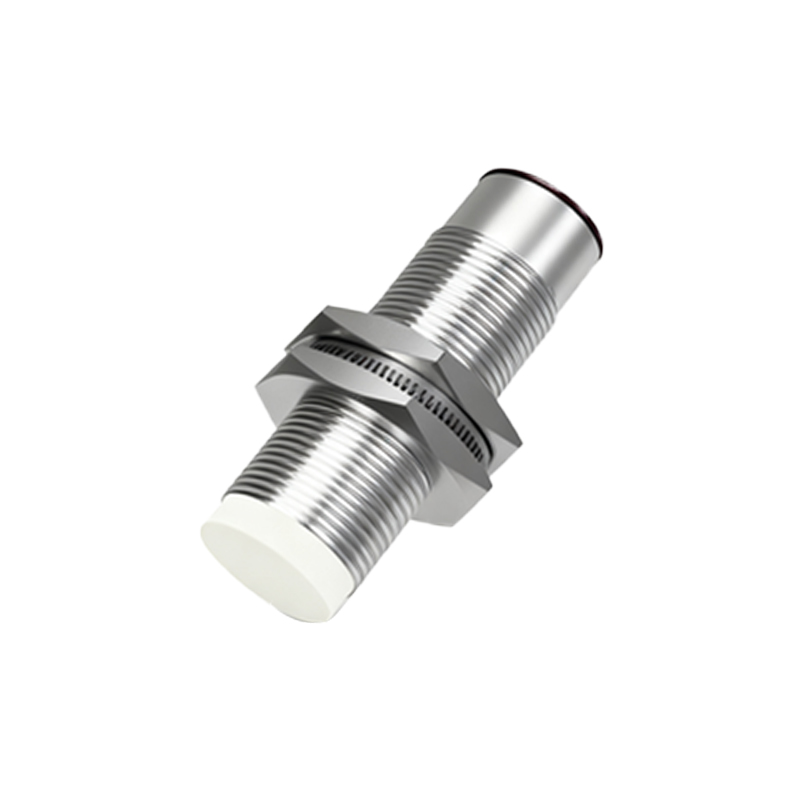
The earliest forms of "proximity" detection were purely mechanical. Limit switches, requiring physical contact to actuate, were the workhorses. The concept of non-contact sensing emerged with inductive and capacitive sensors in the mid-20th century. Inductive sensors, detecting metallic objects, revolutionized automation by enabling wear-free detection. Capacitive sensors extended this to non-metallic materials, including some organic substances. However, these were not "human-specific"; they could be triggered by any object within their field, limiting their application for dedicated personnel safety.
The true genesis of dedicated human proximity sensing began with a focus on safety, notably through safety light curtains and laser scanners. These devices created defined two-dimensional protective fields. A beam interruption would signal a machine to stop or enter a safe state. While highly effective for perimeter guarding, they offered limited information about the nature or precise location of the intrusion. The late 20th century saw the adoption of ultrasonic and passive infrared (PIR) sensors. Ultrasonic sensors, measuring time-of-flight of sound waves, provided rudimentary distance measurement but suffered from environmental interference. PIR sensors detected changes in infrared radiation, effective for motion but poor at detecting stationary individuals and susceptible to thermal noise.
The most significant leap arrived with the maturation of vision-based and advanced RF technologies. The integration of 2D and later 3D vision systems, including Time-of-Flight (ToF), structured light, and stereo vision cameras, transformed the landscape. These systems generate rich point clouds, enabling not just detection but also skeletal tracking, pose estimation, and intent recognition. A machine can now "see" if a person is approaching, turning away, or reaching into a hazardous zone. Concurrently, radar-based sensors, particularly in the 60GHz and 77GHz bands, gained prominence. Offering high precision in distance and velocity measurement, radar is robust against visual obstructions like dust, smoke, or varying lighting conditions, making it ideal for challenging industrial settings.
The current frontier is defined by sensor fusion and embedded intelligence. Modern human proximity sensors are rarely standalone devices. They are nodes in a networked Industrial Internet of Things (IIoT) ecosystem. Data from a ToF camera, a millimeter-wave radar, and an array of capacitive floor sensors can be fused in a local processing unit or at the edge. Artificial Intelligence (AI) and machine learning algorithms analyze this multimodal data stream in real-time. This allows for sophisticated contextual awareness: distinguishing between a worker performing a task and an unauthorized entry, predicting potential path conflicts between autonomous mobile robots (AMRs) and personnel, or adjusting machine speed based on the proximity and trajectory of a human operator—a concept known as speed and separation monitoring (SSM).
Furthermore, the miniaturization and cost reduction of components have led to the proliferation of wearable proximity devices. Smart badges or wristbands worn by personnel can communicate with machine control systems via UWB (Ultra-Wideband) or BLE (Bluetooth Low Energy), creating dynamic, personalized safety zones. This shifts the paradigm from area monitoring to individual-centric protection.
The impact on safety and productivity is profound. Beyond preventing accidents, these advanced sensors enable true collaborative robotics (cobots). Cobots can work side-by-side with humans, their force and speed dynamically limited by the precise, real-time measurement of human proximity. This facilitates flexible, hybrid workcells impossible with traditional hard guarding.
Looking ahead, the development trajectory points toward even greater autonomy and predictive capability. Future systems will leverage digital twins—virtual models of the physical workspace—to simulate and optimize human-robot interaction. Sensors will become more energy-efficient, self-diagnosing, and capable of adaptive learning, continuously refining their models of normal and hazardous scenarios. The integration with 5G and subsequent wireless technologies will ensure ultra-low latency communication, critical for time-sensitive safety functions.
In conclusion, the evolution of human proximity sensors is a transition from simple binary detection to rich, contextual spatial awareness. It is a story of moving from protecting humans from machines to enabling seamless collaboration with machines. As sensing, processing, and communication technologies continue to advance, the boundary between human and machine workspaces will become increasingly fluid, intelligent, and safe, underpinning the next generation of smart manufacturing and Industry 4.0.