Proximity sensors are fundamental components in modern automation, robotics, and countless consumer electronics. Their primary function is to detect the presence or absence of an object within a specified range without physical contact. A critical aspect of their operation and configuration revolves around understanding their output states, commonly referred to as "high" and "low" values. This terminology defines the electrical signal the sensor sends to a controller, such as a PLC, microcontroller, or computer, indicating the detection event.
At its core, the concept is about digital logic levels. A proximity sensor typically provides a discrete, on/off signal. The assignment of "high" and "low" to these states is not universal; it depends on the sensor's internal circuitry and design philosophy, primarily categorized as NPN (sinking) or PNP (sourcing) for DC sensors.
In a standard PNP sensor (commonly associated with positive logic systems), the output transistor switches the positive voltage line. When the sensor detects a target within its sensing range, it activates, connecting the output wire to the positive supply voltage. This state is usually interpreted as a logic "High" or "1". When no target is present, the output transistor is off, and the output wire is effectively disconnected from the positive supply, often pulled to a low voltage (near 0V) by an external or internal resistor. This is the logic "Low" or "0" state. Therefore, for a PNP sensor: Detection = High (ON), No Detection = Low (OFF).
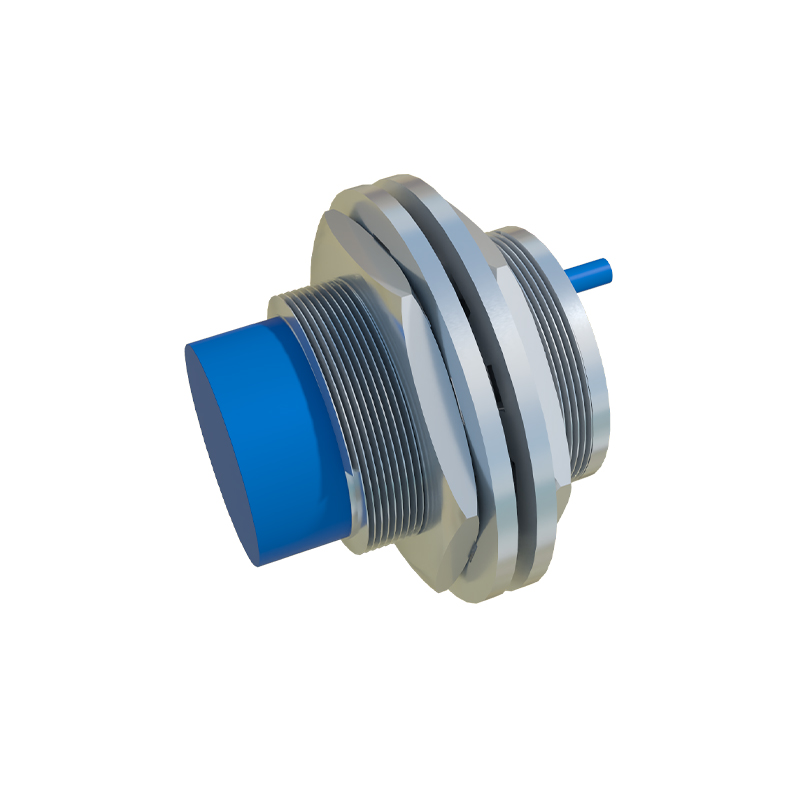
Conversely, an NPN sensor (associated with negative logic) switches the ground or negative line. Upon detection, the NPN transistor activates, connecting the output wire to ground (0V). This closed circuit to ground is typically read as a logic "Low" or "0". When no target is present, the output is off, and the output wire is pulled high (towards the positive supply voltage). This becomes the logic "High" or "1" state. Thus, for an NPN sensor: Detection = Low (ON), No Detection = High (OFF).
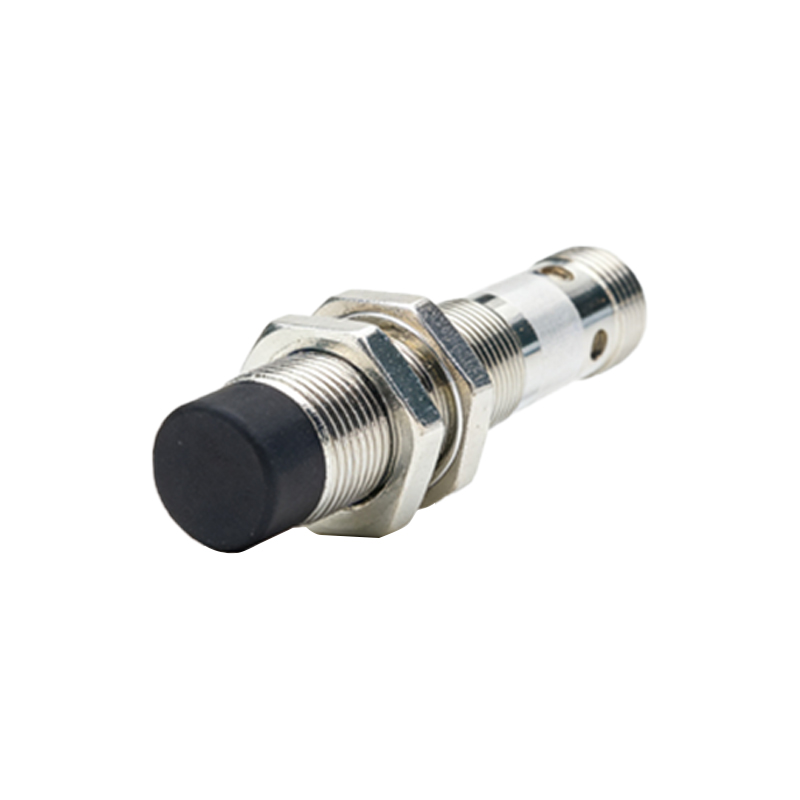
This distinction is paramount for proper system integration. Connecting a sensor with a logic interpretation mismatch can cause a system to behave inversely—interpreting "on" as "off" and vice-versa—leading to malfunctions or safety hazards. Engineers and technicians must always consult the sensor datasheet to confirm its output type (PNP/NPN) and the defined logic levels.
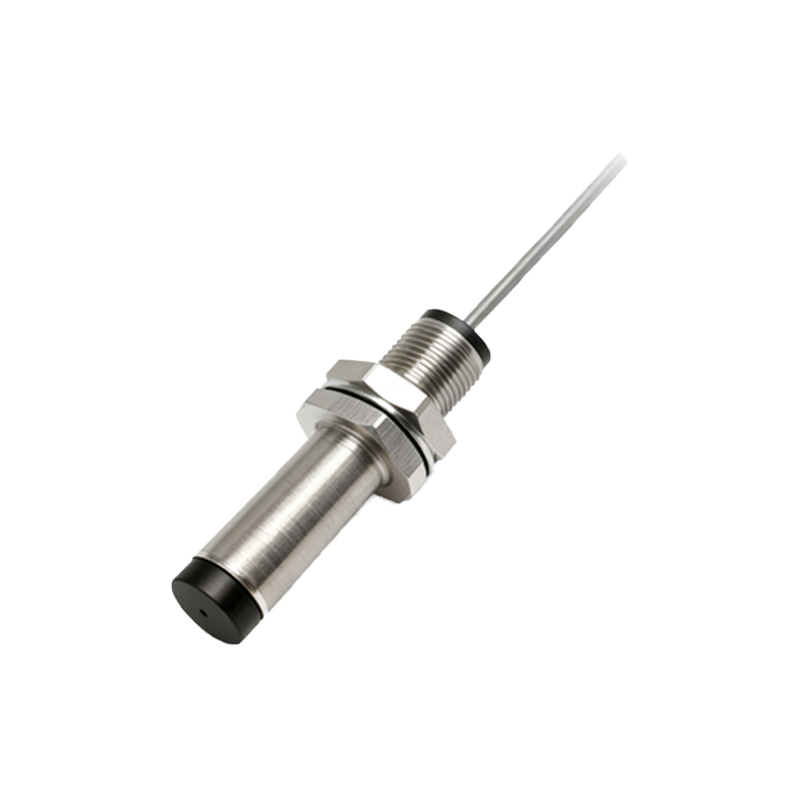
Beyond the basic NPN/PNP definition, the terms "high" and "low" also relate to analog output sensors. Some proximity sensors provide an analog voltage or current signal (e.g., 0-10V, 4-20mA) proportional to the distance to the target. Here, "high" and "low" refer to the actual signal magnitude. A "high" voltage (e.g., 10V) might correspond to the target being at the maximum sensing distance, while a "low" voltage (e.g., 2V) might indicate the target is very close. The exact mapping must be defined in the application's programming. This analog functionality allows for more granular control and measurement, unlike the binary decision of digital sensors.
Configuring the sensing threshold—the point at which the output switches state—is another layer where high/low values are managed. Many sensors feature potentiometers or digital interfaces to adjust the sensitivity or the switching hysteresis. Hysteresis is a deliberate difference between the "turn-on" point (when a target approaches) and the "turn-off" point (when a target recedes). This prevents rapid, chattering output switching if a target lingers at the exact threshold due to vibration or minor positional changes. Effectively, it creates a stable band between a high and low detection limit.
In programming and logic design, correctly handling these signals is essential. Ladder logic for PLCs, or code for microcontrollers like Arduino, must be written with the sensor's active state in mind. For instance, a routine intended to start a conveyor when an object is present might use a "examine if closed" (XIC) instruction for a PNP sensor's high-on signal, but would require an "examine if open" (XIO) instruction for an NPN sensor's low-on signal to achieve the same physical action.
Understanding the high and low values of a proximity sensor transcends simple wiring. It encompasses the electrical design (PNP vs. NPN), the signal type (digital vs. analog), the configuration of operational thresholds and hysteresis, and the subsequent logic interpretation in the control system. A clear grasp of these principles ensures reliable sensor integration, accurate machine operation, and streamlined troubleshooting in any automated environment. Always prioritize the manufacturer's documentation for the definitive specifications of any specific sensor model.