In the realm of industrial automation, precision, reliability, and efficiency are paramount. Among the myriad of sensing technologies available, laser sensors and through-beam sensors stand out as critical components for a wide range of applications, from manufacturing and packaging to robotics and quality control. This article delves into the principles, differences, advantages, and typical use cases of these two prominent sensor types.
Laser sensors operate by emitting a focused beam of coherent light—laser light—toward a target. The sensor then detects the reflected light using a receiver element within the same housing. The time it takes for the light to return, or the triangulation method based on the angle of the reflected beam, is used to calculate distance, position, or presence. This principle is known as diffuse reflection sensing. Laser sensors are highly valued for their exceptional accuracy, often achieving micrometer-level resolution, and their ability to measure small objects or detect minute differences. They are typically compact and allow for precise spot targeting, making them ideal for applications like wafer alignment in semiconductor fabrication, precise height detection, or edge guiding in web processing. However, their performance can be influenced by the target's color, surface texture, and reflectivity; a highly reflective or dark surface might lead to inaccurate readings or require sensitivity adjustments.
In contrast, through-beam sensors, also known as opposed-mode sensors, consist of two separate units: a transmitter and a receiver. The transmitter emits a continuous or modulated beam of light (often infrared, laser, or visible red light) directly toward the receiver unit positioned opposite. The primary function is to detect an object that breaks this beam. The sensing principle is based on beam interruption. When an opaque object passes between the two units, it blocks the light path, causing the receiver to signal an output change. This design makes through-beam sensors extremely reliable for detection tasks, as they are largely unaffected by the object's color, surface finish, or material, provided it is opaque enough to interrupt the beam. They offer the longest sensing ranges among photoelectric sensors and are exceptionally immune to environmental factors like dust or ambient light when properly aligned. Common applications include object counting on high-speed conveyor belts, safety light curtains for personnel protection, and detecting the presence of items in packaging machinery.
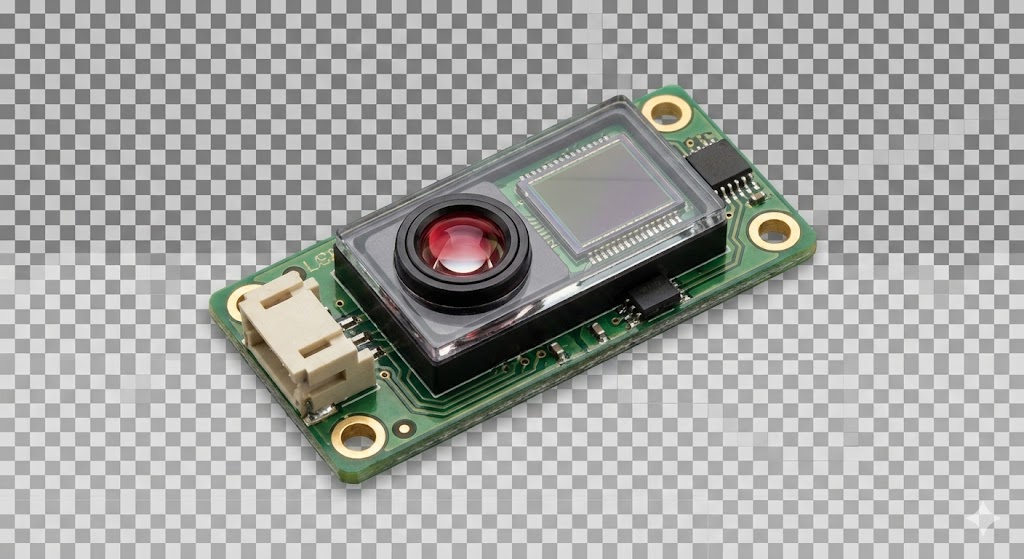
The core distinction lies in their operational setup and what they are best suited for. A laser sensor is a single-unit device performing reflective measurement, excelling in precise dimensional or positional tasks. A through-beam sensor is a two-unit system performing interruption-based detection, excelling in robust, long-range presence sensing. Choosing between them depends on the application's specific demands. For instance, if you need to verify the exact height of a component on an assembly line, a laser distance sensor is appropriate. If you need to reliably detect whether a box has passed a point on a fast-moving conveyor, regardless of its color, a through-beam sensor is often the superior choice.
Both sensor types leverage advanced electronics for stability. Features like background suppression in laser sensors help ignore distant objects, while modulated light and high-speed response in through-beam sensors enhance noise immunity and allow detection of very fast-moving objects. Modern variants may include digital displays for easy configuration, IO-Link for communication, and rugged housings (IP67/IP69K) for harsh environments.

In summary, laser sensors and through-beam sensors are indispensable tools in automation. Laser sensors provide unparalleled precision for measurement and positioning, while through-beam sensors offer unmatched reliability for presence detection over long distances. Understanding their fundamental principles and strengths enables engineers to select the optimal sensor, thereby enhancing system performance, improving product quality, and ensuring operational safety in sophisticated industrial environments.