In industrial automation and control systems, proximity sensors play a critical role in detecting the presence or absence of objects without physical contact. These sensors are widely used in applications ranging from manufacturing lines to robotics, offering reliability and precision. One key aspect that defines their functionality is the type of signal they output. Understanding the different signal types is essential for selecting the right sensor for specific applications, ensuring optimal performance and compatibility with control systems.
Proximity sensors primarily output three types of signals: digital, analog, and pulse signals. Each type serves distinct purposes and is suited to different operational environments.
Digital signals, also known as discrete or switch signals, are the most common output from proximity sensors. They provide a simple on/off state, indicating whether an object is detected within the sensor's range. Typically, digital output sensors operate with two states: a high voltage level (e.g., 24V DC) when an object is present, and a low voltage level (e.g., 0V) when no object is detected. This binary nature makes digital signals ideal for basic detection tasks, such as counting parts on a conveyor belt, triggering alarms, or initiating simple control actions. Common digital output configurations include NPN (sinking) and PNP (sourcing) transistors, which determine how the sensor interfaces with programmable logic controllers (PLCs) or other electronic devices. Digital signals are praised for their simplicity, noise immunity, and ease of integration, but they lack the ability to convey detailed information about distance or position.
Analog signals offer a continuous output that varies proportionally with the distance between the sensor and the target object. Unlike digital signals, analog outputs provide a range of values, typically in the form of voltage (e.g., 0-10V) or current (e.g., 4-20mA). This allows for precise measurement and monitoring of object position, size, or orientation. For instance, in applications like thickness gauging, level control, or robotic positioning, analog signals enable fine-tuned adjustments by conveying exact proximity data. The 4-20mA current loop is particularly popular in industrial settings due to its resistance to electrical interference over long distances. However, analog signals can be susceptible to noise and require more complex circuitry for processing, making them suitable for advanced systems where detailed feedback is necessary.
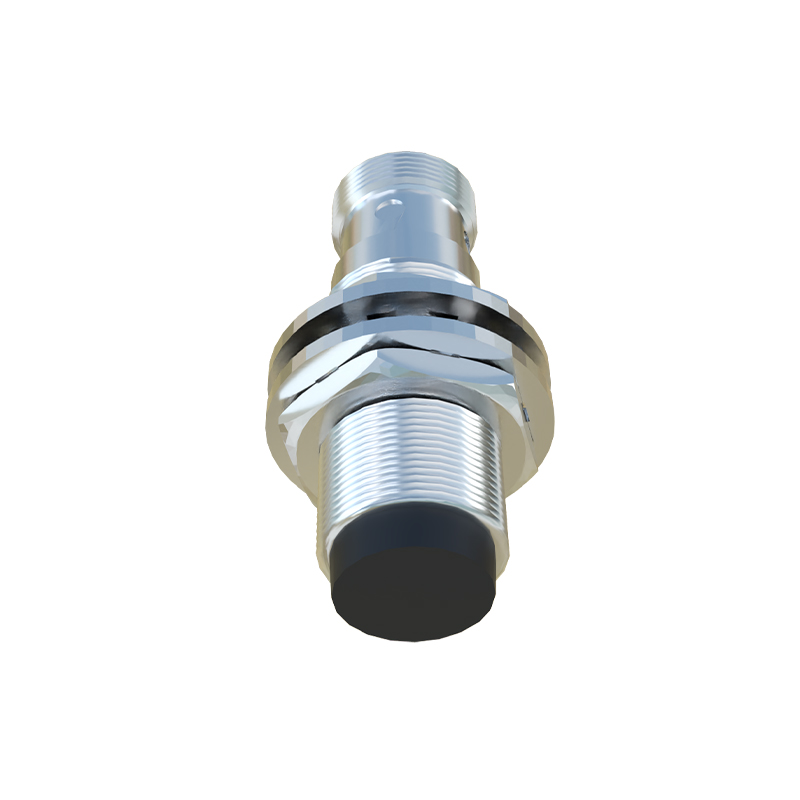
Pulse signals, or frequency-modulated outputs, generate a series of pulses whose frequency or width changes based on sensor input. These signals are often used in specialized proximity sensors, such as inductive or capacitive types, for applications involving speed measurement, rotation counting, or vibration analysis. For example, in motor control or encoder systems, pulse signals can indicate rotational speed by producing a pulse train corresponding to the number of detected objects per unit time. Pulse width modulation (PWM) is another variant, where the duty cycle of the pulse varies with distance, offering a blend of digital and analog characteristics. Pulse signals are valued for their high resolution and ability to transmit data efficiently, but they may require dedicated counters or timers in control units for interpretation.
In addition to these primary signal types, some modern proximity sensors incorporate smart features, such as IO-Link or fieldbus communications, which combine digital data with diagnostic information. These advanced outputs enable real-time monitoring, parameter adjustment, and predictive maintenance, enhancing system intelligence.
When choosing a proximity sensor, factors like environmental conditions, required precision, and compatibility with existing equipment must be considered. Digital signals are best for simple detection, analog for continuous measurement, and pulse for dynamic motion control. By matching the signal type to the application, engineers can optimize automation processes, reduce downtime, and improve overall efficiency. As technology evolves, the integration of multiple signal outputs in a single sensor is becoming more common, offering greater flexibility for complex industrial tasks.
Overall, the signal output of a proximity sensor is a fundamental characteristic that dictates its role in automation. Whether for basic object detection or sophisticated positional feedback, understanding these signal types empowers professionals to design more effective and reliable control systems.