In modern industrial maintenance, the precision and efficiency of thread repair are critical for ensuring equipment longevity and operational safety. Traditional methods often involve manual inspection and mechanical re-threading, which can be time-consuming and prone to human error. However, the integration of laser sensor technology has revolutionized this process, offering non-contact, high-accuracy solutions for detecting and repairing damaged threads in various components, such as bolts, screws, and pipes. Laser sensors operate by emitting focused light beams onto the thread surface and analyzing the reflected signals to create detailed 3D models. This allows engineers to assess wear, corrosion, or deformation with micron-level precision, identifying issues that might be invisible to the naked eye.
The repair process begins with a comprehensive scan using a laser sensor system, which captures data on thread pitch, depth, and profile. Advanced software then processes this information to generate a digital blueprint, highlighting areas requiring intervention. Based on the analysis, targeted repair strategies can be implemented, such as laser cladding or additive manufacturing to rebuild worn threads, or precision machining to correct minor deviations. Unlike conventional techniques, laser-based methods minimize material removal, preserving the structural integrity of the component and reducing waste. This is particularly beneficial in industries like aerospace, automotive, and manufacturing, where components are often expensive or difficult to replace.
One key advantage of laser sensor thread repair is its adaptability to complex geometries and hard-to-reach areas. For instance, in pipeline systems or engine parts, sensors can be integrated into robotic arms for automated inspections, enhancing safety in hazardous environments. Additionally, the non-destructive nature of laser scanning ensures that components are not further damaged during assessment, extending their service life. Real-time monitoring capabilities also enable proactive maintenance, allowing teams to address thread degradation before it leads to catastrophic failures, thus optimizing downtime and operational costs.
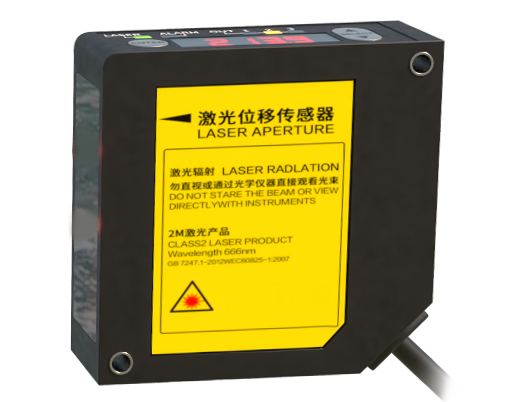
To achieve optimal results, engineers must consider factors such as sensor calibration, environmental conditions (e.g., dust or vibration), and material properties. Regular calibration of laser sensors ensures measurement accuracy, while protective enclosures can shield equipment from industrial debris. Training personnel in data interpretation and repair protocols is equally important, as misinterpretation of sensor outputs could lead to ineffective repairs. Case studies from the oil and gas sector demonstrate that implementing laser sensor thread repair can reduce maintenance time by up to 50% and cut costs by 30%, highlighting its economic and technical benefits.
In conclusion, laser sensor technology represents a significant leap forward in thread repair, combining precision, efficiency, and sustainability. As industries continue to embrace automation and digitalization, the adoption of such advanced methods will likely become standard practice, driving improvements in safety and productivity. Future developments may include AI-enhanced analysis for predictive maintenance and portable laser systems for on-site repairs, further expanding the applications of this innovative approach. By leveraging these tools, engineers can ensure reliable performance of threaded connections, contributing to overall industrial resilience.