Ultrasonic proximity sensor companies are at the forefront of industrial automation, providing critical solutions for non-contact detection, distance measurement, and object positioning. These sensors operate by emitting high-frequency sound waves and analyzing the reflected signals to determine the presence and distance of objects. Unlike optical or inductive sensors, ultrasonic variants excel in challenging environments—they are unaffected by dust, smoke, moisture, or target color and transparency. This robustness makes them indispensable in manufacturing, logistics, automotive, and packaging industries.
Leading companies in this sector continuously push technological boundaries. Key players like Pepperl+Fuchs, Siemens, Balluff, and Banner Engineering have developed sensors with enhanced precision, faster response times, and improved resistance to environmental interference. For instance, modern ultrasonic sensors now feature advanced algorithms for echo processing, enabling reliable detection even with highly absorbent or irregularly shaped objects. Many models offer programmable switching points, analog outputs, and IO-Link connectivity for seamless integration into Industry 4.0 and IoT frameworks.
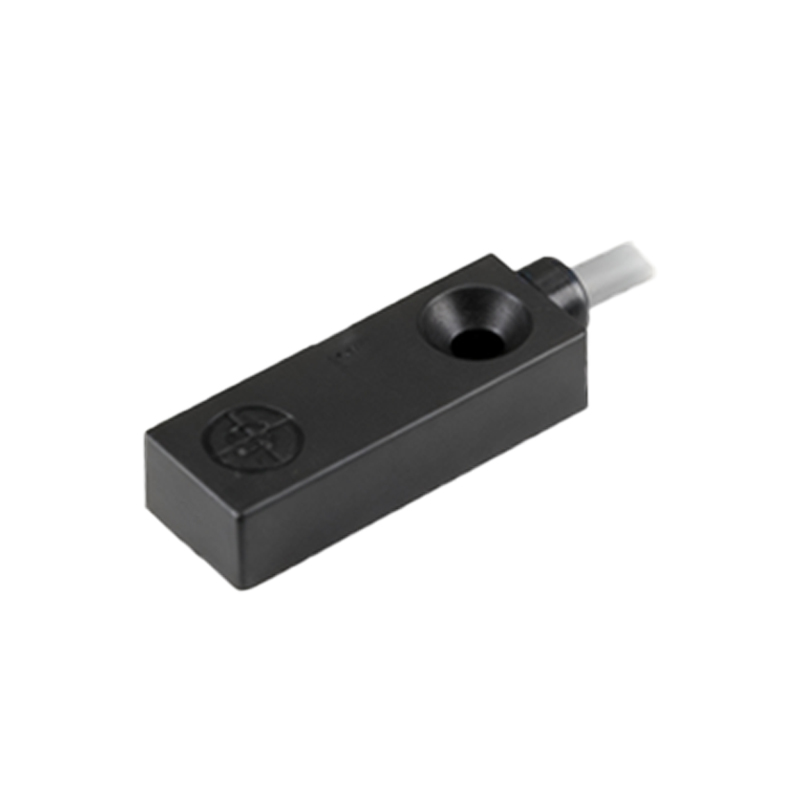
The design philosophy of top-tier ultrasonic proximity sensor companies emphasizes versatility. Sensors are available in both cylindrical and rectangular housings, with variants rated for washdown conditions or hazardous areas. Companies are also miniaturizing components without sacrificing performance, allowing installation in space-constrained applications. Additionally, the adoption of multi-sensor arrays and hybrid sensing technologies—combining ultrasonic with photoelectric or capacitive elements—addresses complex automation tasks like level monitoring in silos or contour detection on assembly lines.
Market trends indicate a growing demand for energy-efficient and smart sensor solutions. Ultrasonic proximity sensor companies are responding by developing low-power models for battery-operated devices and incorporating self-diagnostic functions that predict maintenance needs. The expansion of autonomous mobile robots (AMRs) and automated guided vehicles (AGVs) further drives innovation, as these platforms rely on ultrasonic sensors for collision avoidance and navigation in dynamic settings.
Selecting the right ultrasonic proximity sensor company depends on application-specific requirements. Factors such as sensing range, beam angle, temperature tolerance, and output configuration must align with operational needs. Reputable companies provide comprehensive technical support, including simulation tools and configuration software, to assist engineers in deployment. As industries increasingly prioritize efficiency and safety, ultrasonic proximity sensor companies will remain pivotal in shaping the future of automation, delivering reliable, adaptive, and intelligent sensing solutions that enhance productivity across global supply chains.