In modern industrial and defense systems, sensors serve as the fundamental sensory organs, continuously collecting critical data on parameters such as position, temperature, pressure, and radiation. However, these vital components face a significant and growing threat: laser-induced damage. This phenomenon is not merely theoretical but a practical concern in fields ranging from aerospace to autonomous manufacturing. Understanding the mechanisms, effects, and implications of laser damage on sensors is essential for engineers designing robust systems.
The core principle behind laser damage to sensors lies in the intense, focused energy delivery of laser beams. Unlike broad-spectrum light, lasers emit coherent, monochromatic light that can be precisely directed. When a laser beam, even of relatively moderate power, is focused onto a small area of a sensor's active surface—such as the photodiode in an optical sensor or the sensing element in an infrared detector—the energy density (fluence) can become extraordinarily high. This concentrated energy overwhelms the material's ability to dissipate heat or handle the photon flux, leading to immediate or cumulative damage.
The primary damage mechanisms are thermal and photoelectric. Thermal damage occurs when the absorbed laser energy converts to heat faster than the sensor material can conduct it away. This can cause localized melting, vaporization, or the formation of micro-cracks in semiconductor materials, optical coatings, or metallic interconnects. For instance, a CCD or CMOS image sensor exposed to a pulsed laser may exhibit burned pixels, dead columns, or complete failure of the pixel array due to melted silicon or aluminum traces. Photoelectric damage, often associated with very short, high-peak-power pulses, involves the direct generation of a massive number of electron-hole pairs. This can lead to instantaneous voltage surges that overwhelm and destroy sensitive readout circuitry, even without visible thermal alteration.
The vulnerability varies drastically by sensor type. Optical sensors, including cameras, LiDAR receivers, and photodetectors, are most directly susceptible. A laser wavelength that falls within the sensor's operational spectral band will be efficiently absorbed, causing maximum effect. For example, a laser targeting a 1550nm InGaAs-based LiDAR sensor can blind it by saturating its receivers or physically destroying its detectors. Infrared (IR) thermal sensors can also be disabled by lasers that heat their microbolometer elements, causing erroneous readings or permanent calibration drift. Even non-optical sensors are not immune. High-power lasers can interfere with or damage the protective windows or structural housings of pressure or proximity sensors, or induce electromagnetic interference (EMI) that disrupts their electronic signals.
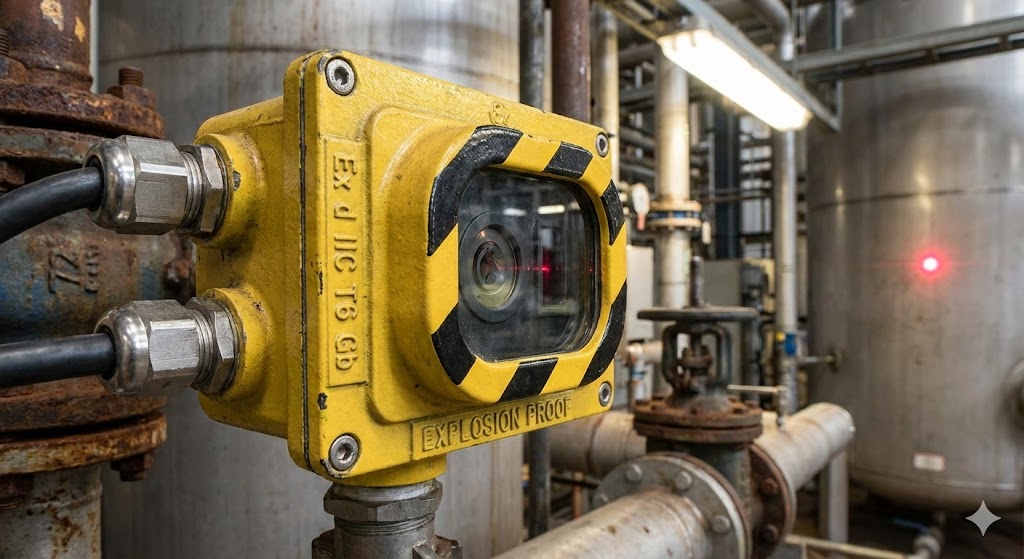
The consequences of such damage in critical applications are severe. In industrial automation, a blinded safety LiDAR on a robotic cell could lead to catastrophic collisions. In aerospace, laser damage to navigation or attitude sensors could compromise vehicle control. In defense contexts, the intentional use of laser dazzlers or counter-sensor systems to disable enemy surveillance and targeting equipment is a well-established tactic. This underscores the dual-use nature of the technology—lasers are invaluable tools for measurement, communication, and machining, but also potent threats to sensor integrity.
Mitigating laser damage requires a multi-faceted engineering approach. Physical hardening is the first line of defense. This includes using optical filters that block specific threat wavelengths while passing operational light, employing hardened coatings that reflect or withstand higher energy levels, and designing sensor housings with apertures that limit the field of view. System-level strategies involve redundancy, using multiple, dissimilar sensors so that the failure of one does not cripple the entire system. Advanced signal processing can also help identify and discard data corrupted by laser interference, such as sudden, implausible spikes in signal.
Furthermore, operational protocols are crucial. In high-risk environments, establishing laser-safe zones and strict controls on laser use is imperative. For systems that must operate in potentially hostile environments, incorporating threat detection systems that can sense an incoming laser attack and trigger protective measures—like momentarily shuttering an aperture—is an area of active research.
In conclusion, the interaction between lasers and sensors represents a critical point of vulnerability in modern engineering systems. As laser technologies become more powerful, portable, and accessible, the risk of accidental or intentional sensor damage increases proportionally. For electrical and systems engineers, a deep understanding of these failure modes is not optional but a core requirement. Proactive design, incorporating materials science, optical engineering, and robust systems architecture, is the only way to ensure that our technological sensory organs can survive and function in an increasingly luminous and hazardous operational landscape.