In the realm of industrial automation and control, precision, reliability, and non-contact operation are paramount. Two fundamental components that deliver on these fronts are proximity switches and displacement sensors. While their names are sometimes used interchangeably in casual conversation, they serve distinct, though occasionally overlapping, functions within a control system. This article delves into their operational principles, key types, applications, and selection criteria from an engineering perspective.
Proximity Switches: The Digital Sentinels
A proximity switch, fundamentally, is a non-contact sensor that detects the presence or absence of a target object within a defined sensing range. Its output is typically a clean, binary signal—ON or OFF, like a switch. This makes it an ideal component for counting, limit switching, position verification, and object detection tasks.
The most common types include:
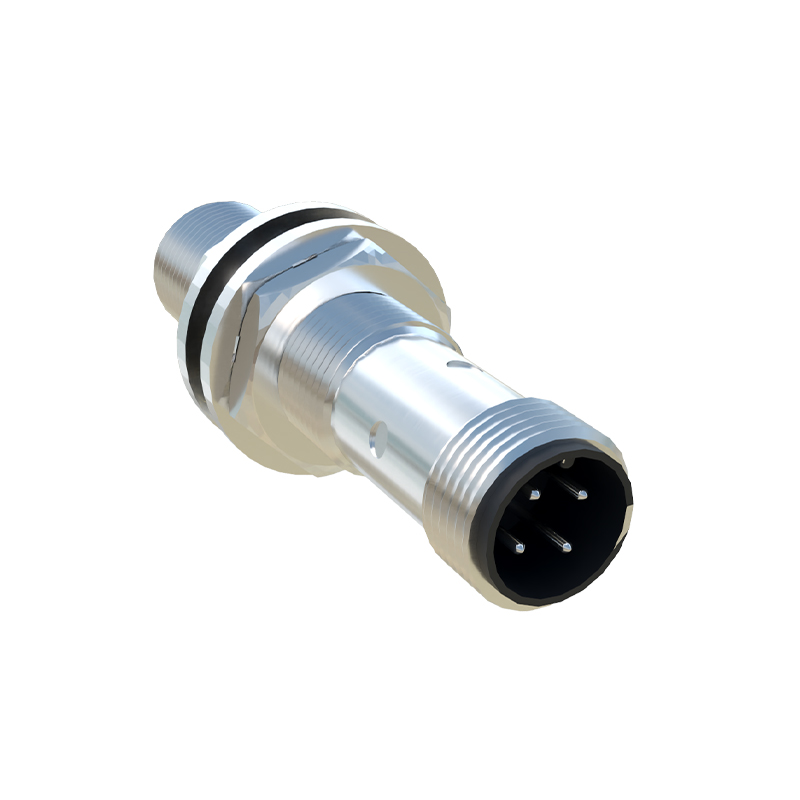
Inductive Proximity Sensors: These detect metallic objects, primarily ferrous metals like steel and iron, but some types can also sense non-ferrous metals like aluminum or copper. They operate by generating an electromagnetic field. When a metal target enters this field, it induces eddy currents, causing a change in the sensor's oscillation amplitude, which triggers the switching output. They are robust, resistant to environmental contaminants like dust and oil, and have no moving parts.
Capacitive Proximity Sensors: These can detect a much wider range of materials, including metals, plastics, wood, liquids, and granular substances. They function by generating an electrostatic field. Any object with a dielectric constant different from air entering this field alters the capacitance, triggering the switch. They are excellent for level detection of non-metallic materials.
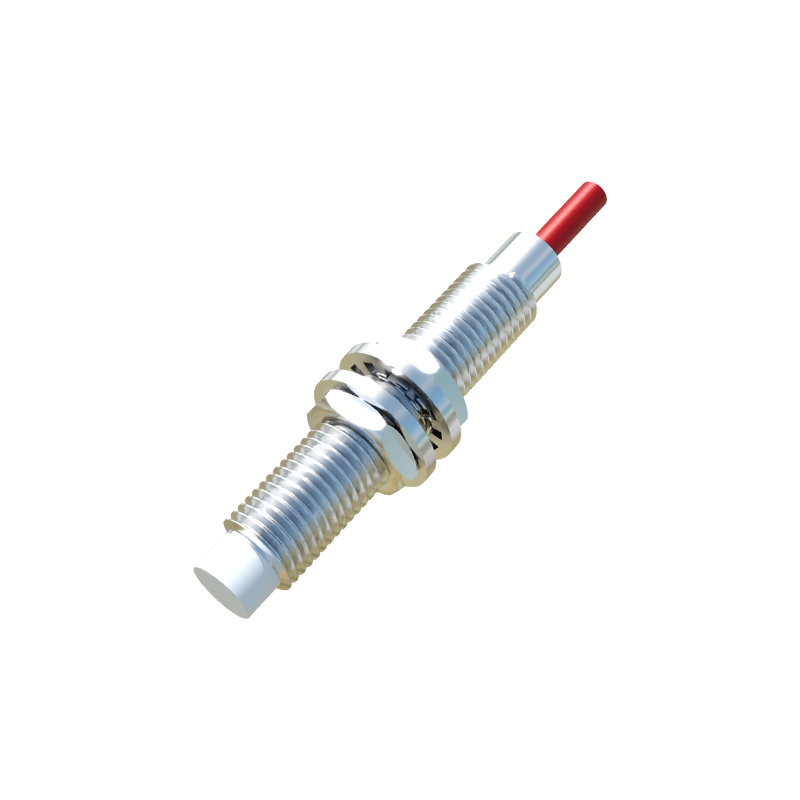
Photoelectric Sensors: While often categorized separately, their function as a presence detector aligns with proximity switches. They use a light beam (visible, infrared, or laser) and detect an object by either the interruption of the beam (through-beam), reflection from the object (diffuse reflective), or reflection from a dedicated reflector (retro-reflective).
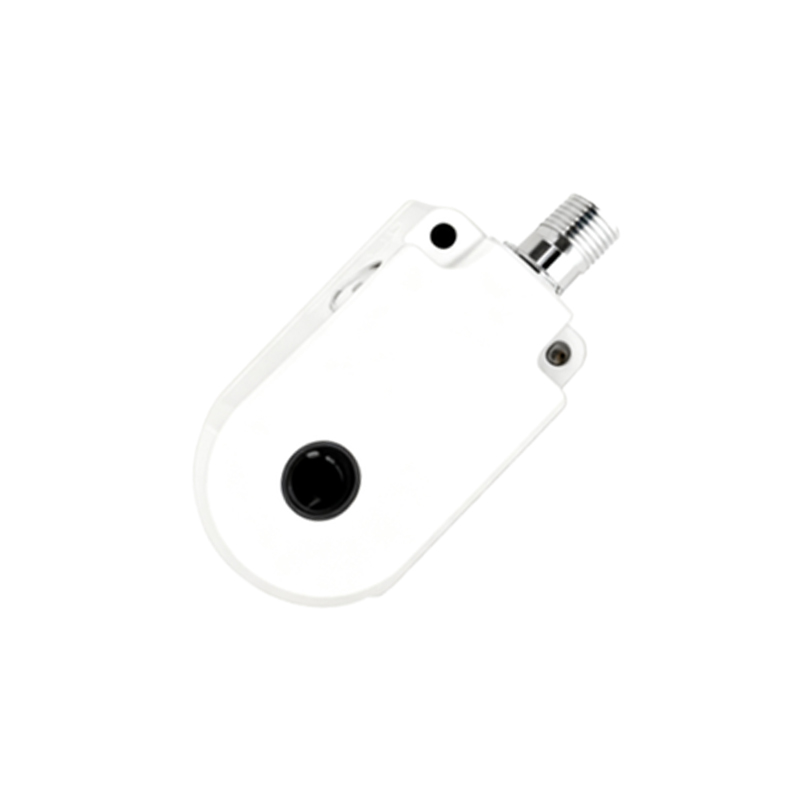
The key specifications for a proximity switch are its sensing distance (nominal and effective), repeat accuracy, switching frequency, output type (PNP/NPN, NO/NC), and environmental protection rating (IP, NEMA).
Displacement Sensors: The Analog Measurers
A displacement sensor, in contrast, provides a continuous, analog (or high-resolution digital) output proportional to the distance between the sensor and the target. Its purpose is not merely to detect presence but to measure the exact position, thickness, vibration, or runout of an object with high precision.
Primary technologies include:
Inductive Displacement Sensors (Eddy Current): These are the analog cousins of inductive proximity switches. They provide a voltage or current output that changes linearly with the distance to a conductive (usually metallic) target. They offer extremely high resolution and frequency response, making them perfect for monitoring shaft vibration, bearing clearance, and precise metal part positioning.
Capacitive Displacement Sensors: Similar in principle to capacitive proximity sensors but engineered for high-precision linear measurement. They excel at measuring the distance to any conductive target or, with proper calibration, non-conductive materials. They are often used for ultra-precise gauging, thickness measurement of thin materials, and runout detection.
Laser Triangulation Sensors: These use a focused laser beam projected onto the target. A receiving lens captures the reflected spot at an angle, and its position on a CCD or PSD array is calculated to determine distance with very high accuracy. They are suitable for both shiny and dark surfaces at varying distances.
Ultrasonic Sensors: They measure the time-of-flight of a sound wave to and from a target. While sometimes used as proximity switches, their analog variants provide continuous distance measurement and are effective on a wide variety of surfaces, including liquids and transparent objects, though they are generally slower and less precise than laser or inductive types.
Critical parameters for displacement sensors include measuring range, linearity, resolution, repeatability, and temperature stability.
Application Scenarios and Selection
Choosing between a proximity switch and a displacement sensor hinges on the application requirement: detection versus measurement.
Use a proximity switch for: Detecting if a robot gripper has picked up a part; counting bottles on a conveyor; ensuring a safety gate is closed; signaling the end-of-travel of a linear actuator.
Use a displacement sensor for: Measuring the thickness of rolled steel; monitoring the vibration amplitude of a motor spindle; controlling the precise gap in a welding head; performing quality control on surface flatness.
Conclusion
Proximity switches and displacement sensors are indispensable tools in the modern engineer's arsenal. The former acts as the reliable digital sentinel for presence detection, while the latter serves